

One of my goals this year has been to read the Bible from beginning to end. Not selectively. Not topically. Just straight through. What has surprised me most is not how ancient it feels, but how current it feels. From the earliest chapters, there is conflict, deception, tribal loyalty, manipulation, power struggles, and people absolutely convinced they are right.
Human nature has not evolved nearly as much as we like to think.
What has changed is scale and speed. We now experience collective emotion in real time. We do not just hear about a controversy; we watch it unfold minute by minute. We do not just hold private opinions; we broadcast them instantly. The crowd is no longer in the town square. It lives in our pocket.
Advertisement — Continue Reading Below
Recently, I read something written by Dietrich Bonhoeffer, the German pastor who resisted the Nazi regime and was eventually executed for his opposition. In his reflections on what allowed such evil to take hold, he wrote about stupidity in a way that had nothing to do with intelligence. He observed that when people surrender independent thinking to group identity, they can become capable of supporting or excusing things they would otherwise question. Not because they lack intellect, but because certainty replaces reflection.
That idea has stayed with me.
Advertisement — Continue Reading Below
Moral Certainty Feels Stable
There is something deeply stabilizing about certainty. In a chaotic world, being sure feels grounding. It removes tension. It eliminates ambiguity. It gives you a side to stand on and a script to follow.
And in our current environment, certainty is rewarded.
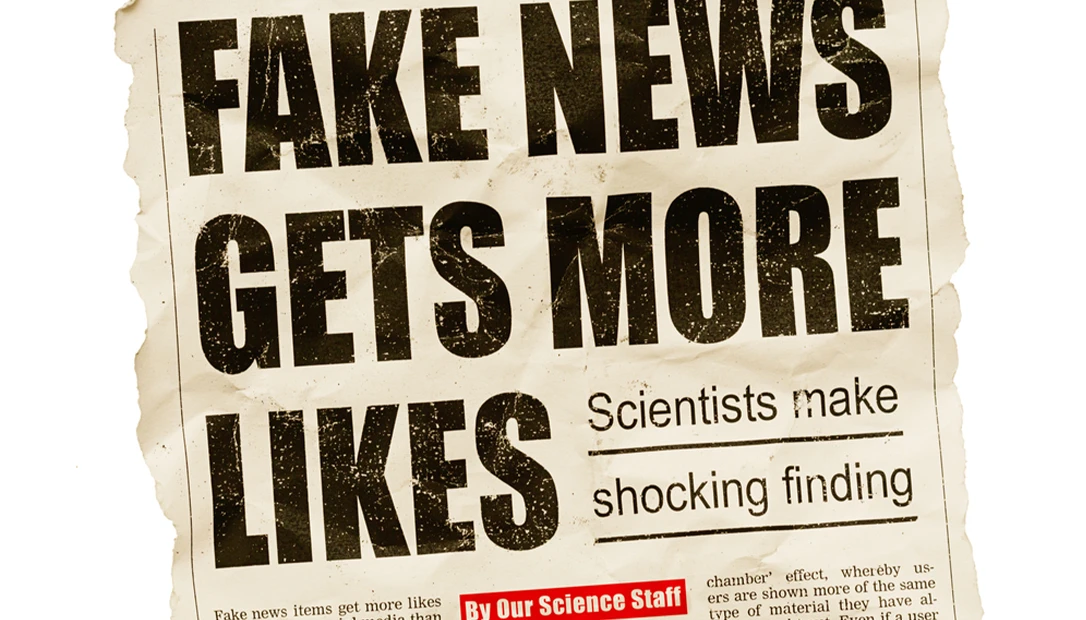
The most confident voice often gets the most attention. The most absolute take spreads the fastest. Nuance is rarely viral. Careful analysis does not generate the same emotional response as outrage or triumph. The algorithms that shape our feeds amplify intensity, not moderation.
Advertisement — Continue Reading Below
You can see it in political debates, corporate environments, cultural conversations, and even local community issues. A short clip circulates without context, and millions quickly decide who is the hero and who is the villain. A headline frames an issue in the starkest possible terms, and we align ourselves accordingly before reading beyond it. Silence can feel risky, so we signal alignment early to avoid being misunderstood.
None of this is confined to one ideology. It happens across the spectrum. Every group is vulnerable to the pull of moral certainty because certainty feels good.
Curious Nature
The problem is not conviction. The problem is when conviction eliminates curiosity.
Advertisement — Continue Reading Below
One of the sneakiest parts of this is how reasonable it feels while it’s happening. Most of us don’t wake up thinking, “Today I’m going to outsource my thinking to a crowd.” It’s more subtle than that. You see a headline that matches what you already suspect, you feel the emotional surge, and before you know it, you’re sharing it, repeating it, or building an entire opinion on it without realizing you never actually checked the foundation.
It happens in harmless places, too. You see it in health debates where one study becomes gospel, and anyone who questions it is labeled dangerous. You see it in parenting conversations where a single “right” approach becomes a badge of honor, and everyone else is treated like they’re failing their kids. You see it in workplace dynamics where the team’s preferred narrative becomes reality, and the person asking honest questions starts to feel like a problem instead of an asset. And if you want proof of how quickly certainty can replace thinking, just spend five minutes watching how we talk about politics.
That’s the real danger. Certainty can start as a shortcut for clarity and slowly become a substitute for thinking. The moment we confuse agreement with truth, or volume with validity, we stop learning. And when we stop learning, we become easier to steer than we’d ever like to admit.
Advertisement — Continue Reading Below
The Crowd Changes Us
Bonhoeffer observed that when individuals join a crowd, something shifts internally. Personal responsibility can dissolve into collective momentum. Actions that would feel questionable alone can feel justified when reinforced by thousands of voices echoing the same message.
We have watched this dynamic play out repeatedly in recent years. Online outrage cycles form within hours. Reputations are damaged before facts are fully established. Careers are impacted by incomplete narratives. On the other side, leaders or institutions are defended reflexively because admitting fault would threaten identity or tribe.
In both cases, the mechanism is similar. Identity fuses with ideology, and questioning feels like betrayal.
Advertisement — Continue Reading Below
The harm often does not look dramatic at first. It looks like dismissal. It looks like dehumanization. It looks like reducing complex individuals into simplified archetypes that fit a storyline. Over time, empathy erodes and dialogue narrows.
History shows us where that road can lead, but we do not have to look only at extreme examples. Even in everyday life, when certainty replaces thinking, relationships suffer. Teams fracture. Communities polarize.
The shift is subtle, but powerful.
Advertisement — Continue Reading Below
It Has Always Been This Way
Reading Scripture reinforces a humbling truth: humanity has wrestled with influence, power, and persuasion since the beginning. People have always tried to shape narratives. Leaders have always rallied crowds. Fear and pride have always distorted judgment.
What feels different now is amplification. Information moves instantly. Emotion travels faster than verification. A single post can reach millions before context catches up.
But amplification does not remove agency.
Advertisement — Continue Reading Below
We still decide what to share. We still decide how to respond. We still decide whether to escalate or pause.
The world may be louder, but our responsibility to think carefully has not diminished. If anything, it has increased.

Thinking Is a Discipline
Independent thinking is not automatic. It requires intention. It requires slowing down when everything around you encourages speed. It requires asking questions when certainty would be easier.
That does not mean abandoning conviction or pretending that truth is relative. It means holding convictions with enough humility to examine them. It means recognizing that strong belief and thoughtful inquiry are not opposites.
There is strength in being able to say, “I believe this, and I am still willing to examine new information.” There is maturity in acknowledging that intelligent, well-meaning people can see the same situation differently. There is courage in refusing to demonize those who disagree.
When we remove curiosity, we often remove growth. And when we remove growth, rigidity sets in. Rigid systems, whether personal or societal, are fragile. They crack under pressure.
A Personal Filter
Lately, I have been trying to apply a simple internal filter before reacting publicly or even privately to something charged.
Am I responding from conviction or from emotion?
Have I looked beyond the headline?
Would I speak this way if the person I am criticizing were sitting across from me?
Am I adding light to the conversation, or simply heat?
Those questions do not make me passive. They make me deliberate. They slow the reflex to align instantly, creating space for thoughtful engagement.
That space matters.
Choosing Thoughtfulness in a Noisy World
There has always been conflict. There has always been evil. There have always been attempts to influence and manipulate. None of that is new. What is new is how present it feels, how constant, how in our face.
But it does not have to dominate our internal lives.
We can model something different in our homes, our teams, and our communities. We can show our kids that disagreement does not require dehumanization. We can demonstrate that strength and humility coexist. We can refuse to let group identity override personal responsibility.
Certainty can feel powerful, but thoughtful conviction is stronger. It allows you to stand firm without becoming brittle. It allows you to engage without being consumed.
In a world amplified by noise, choosing to think carefully may be one of the most countercultural acts available to us. It is rarely loud. It does not trend. But it builds something far more durable than instant certainty. Something we desperately need.

