

The Simple Bucksaw can transform a wilderness experience for very little weight and cost. It was a journey for me, being so lightweight gear-heady. However, it’s an extraordinary tool!
Several years back, I picked up a little 7‑inch retractable Fiskars saw. Finland stamped on the side. Light, cheap, and sharp enough to earn space in my kit. I didn’t care about cutting efficiency then. However, something told me a small saw would save effort when the miles stacked up. That first tool stayed with me until now.
Advertisement — Continue Reading Below
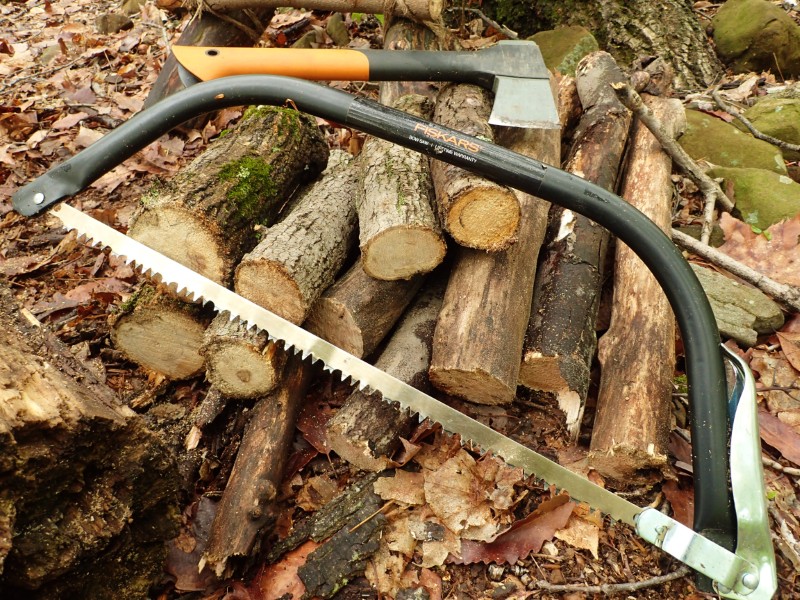
Eventually, I started building a semi‑permanent bush camp I could reach in any season. I needed something tougher. Something I could haul three miles in and leave behind without worry. The Fiskars 21‑inch bucksaw was ten bucks. A gateway into the quiet usefulness of a simple bucksaw when real work begins.
Quick Specs
The Fiskars bucksaw measures 26.5 inches overall, features a 21-inch blade, and weighs 2.4 pounds. It has a safety tension lever and a durable tubular steel frame. You can easily replace the blade with the #7025. While Fiskars claims it uses hardened carbon steel with a rust inhibitor, it looks similar to modern stainless blades. Despite production moving to China, the tool is backed by a lifetime warranty, providing confidence for camp use.
Advertisement — Continue Reading Below
Bow or BuckSaws?
Frame saws, including bucksaws and bow saws, are durable and efficient for turning timber into firewood. The rigid frame of a bow saw-style ensures tight blade control for smooth cuts while remaining lightweight. Saws are safer and more forgiving than axes, rewarding patience with reliable performance. A simple bucksaw is an essential part of any serious camp kit.
Building with the Simple Bucksaw
The first push took several days of steady work, and like any real camp, it’s still evolving. I started with a fourteen‑foot ridge pole about bicep‑thick oak, then cut a mix of support pieces to hold it steady. Wrist‑thick wood handled most of the structure, but winter demands more.
For a pole bed that could withstand cold nights, I cut logs to calf- to thigh-thickness, saving the stoutest pieces for the base. Six long, heavy poles formed the bed platform. The amount of work I knocked out with the bucksaw surprised me. A frame saw gives reach and stability, which means less effort and more progress. Chopping would have taken forever, and the job wasn’t even close to done.
Advertisement — Continue Reading Below
Stakes, Reflectors, and Comforts
Next came the stakes—six big ones to lock the bed poles in place and four long ones for the fire reflector. I drove them into the ground with a wooden maul. The reflector needed thick logs stacked between the stakes, heaviest on the bottom. Maple, poplar, and hornbeam worked well. Once the bed, ridge pole, supports, and reflector stood solid, I added the small luxuries.
Two utility tables took shape fast, one for tools and one for kitchen gear. All of it cut with the same bucksaw. Before the blade dulled, I tackled two bigger projects: a chopping block from dry maple and a swamp‑style bench long enough to sleep on and rig a tarp over. The simple bucksaw mindset kept the work flowing.
Advertisement — Continue Reading Below
Working with a Simple Bucksaw
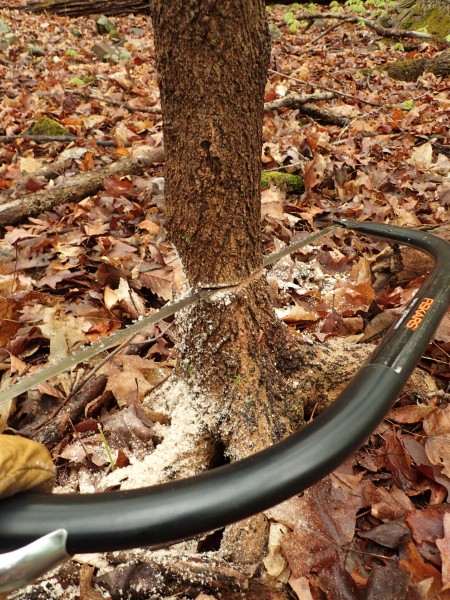
Dropping small trees no thicker than a leg felt easy with the Fiskars saw. I used the same method as with an axe: a forty‑five‑degree wedge on the fall side, then a straight back cut slightly higher. It was quieter and faster than swinging steel. Larger logs needed creativity. When the diameter exceeded the saw’s ten‑inch clearance, I rotated the wood or worked the blade around the curve.
A big maple section took patience, but the method worked. I cut poplar, maple, white oak, red oak, and beech in every length I needed. Long logs fed the winter fire. Shorter pieces became fuel for my hobo stove. I can’t imagine running a winter camp without a bucksaw again.
Safety That Saves Skin
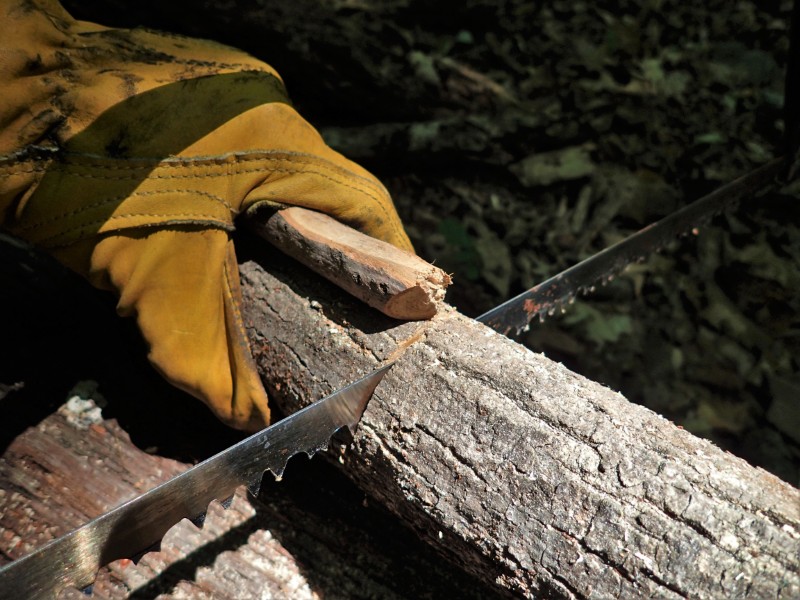
A simple trick prevents ugly cuts. When starting a cut, hold a short stick in the stabilizing hand so it extends a couple of inches past your fingers. If the blade jumps before it bites, the stick takes the hit. I’ve been cut more often by saws than knives, axes, or machetes. Saw cuts are ragged and slow to heal, even when shallow.
Advertisement — Continue Reading Below
A little caution keeps the work moving and keeps your hands intact—especially when you’re relying on a simple bucksaw approach to build something that lasts.
Closing Simple Bucksaw
Best ten bucks I’ve spent on a camp tool. It built the whole setup—tables, chairs, a reflector, a pole bed, a swamp bed, and a season’s supply of firewood. For a saw that lives in camp or rides in a canoe or sled, it’s a smart, simple bucksaw‑friendly choice.
Advertisement — Continue Reading Below

