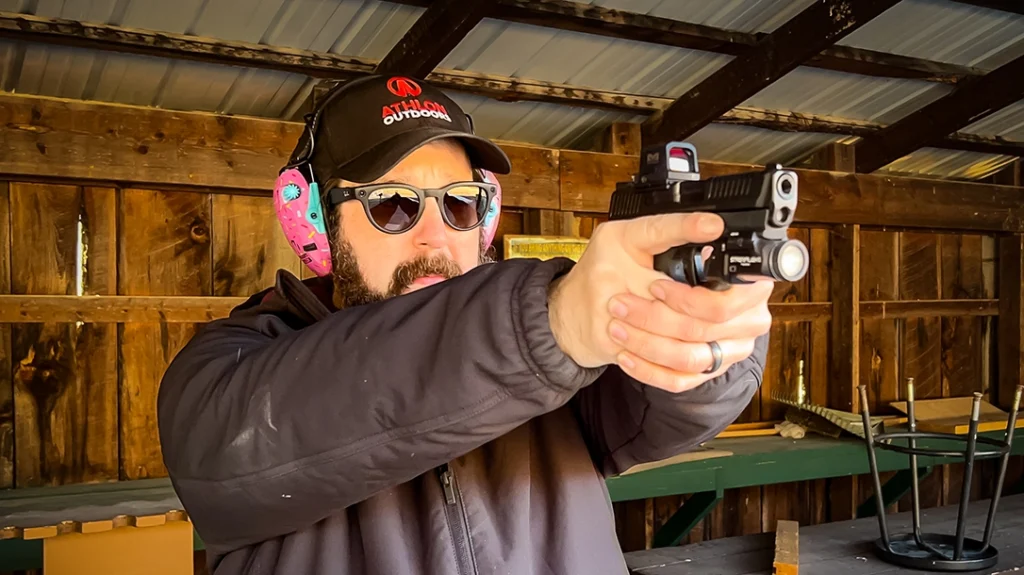

We have been protecting ourselves with handguns since we discovered gunpowder and learned how to make guns smaller, lighter, and easier to live with. The tools evolve. The reasons do not. Somewhere inside Smith & Wesson right now, a team is already working on what comes next. That is the nature of this space. Iteration never stops, and neither does the responsibility to get it right. A perfect example of this is the Shield X from Smith & Wesson.
The Smith & Wesson Shield X
Smith & Wesson reintroduced the M&P name in 2005 as a return to its service pistol roots. This time, in the form of a striker-fired, polymer-framed platform built to compete with Glock and other duty pistols that had reshaped the law enforcement market. Reliability, ergonomics, durability, and adaptability drove the design.
Interchangeable backstraps, a low bore axis, ambidextrous controls, and a stainless steel internal chassis were meant to make a pistol that fit more shooters and survived hard use. Over time, the M&P line expanded into multiple calibers, sizes, and Performance Center variants. As a result, it became one of the most widely adopted American duty pistol families in both professional and civilian use.
Advertisement — Continue Reading Below
The Shield arrived in 2012 as Smith & Wesson’s answer to a growing gap in the market. Shooters wanted a pistol that was thin enough to carry every day but large enough to shoot well. The Shield split that difference. It offered a slim, single-stack profile with service pistol ergonomics and reliability.
It quickly became one of the best-selling concealed carry pistols in the country and helped define what we now think of as the modern carry gun. Over time, it evolved through Shield 2.0 and Shield Plus, adding better textures, improved triggers, higher-capacity magazines, and optics-ready options. Through all of those changes, the Shield remained recognizably a Shield.
Advertisement — Continue Reading Below
Shield X: Still a Shield?
The Shield X feels like the point where iteration becomes reinvention. It keeps the spirit of the Shield intact while changing enough fundamentals that it deserves to be evaluated on its own terms.
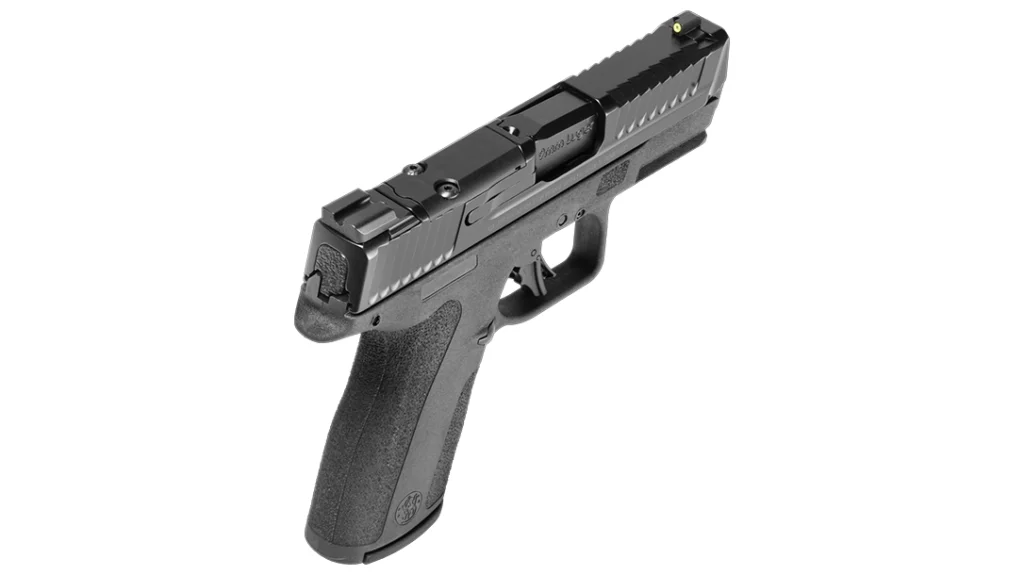
It remains striker-fired and polymer-framed, as well as thin and light. Likewise, it uses a 3.6in barrel and grip frame that allow flush-fit 13+1 capacity and extended 15+1 magazines. It adds an integrated accessory rail that finally allows proper weapon light mounting without aftermarket workarounds.
Advertisement — Continue Reading Below
The grip geometry is reshaped with a deeper beavertail and more protective backstrap. The slide is machined optics-ready for RMSc and K footprint optics. Correspondingly, the cut geometry is designed to keep gas off the optic lens during rapid fire.
The result is not a Shield with accessories added. It is a Shield that has been conceptually updated to reflect how people actually use defensive pistols in 2025.
Impression & Configuration
This is the first Shield I have ever been genuinely interested in. If you have read my work, you know I am not small, and neither are my guns. I carry 1911s and revolvers. Compact pistols are not usually my world.
Advertisement — Continue Reading Below
In the hand, the Shield X presents a full three-finger grip with a flush-fit magazine. The slide measures 0.900 inches wide. The grip with its shallow palm swell never exceeds one inch. It is thin, light, and stable in a way that feels deliberate rather than minimal.
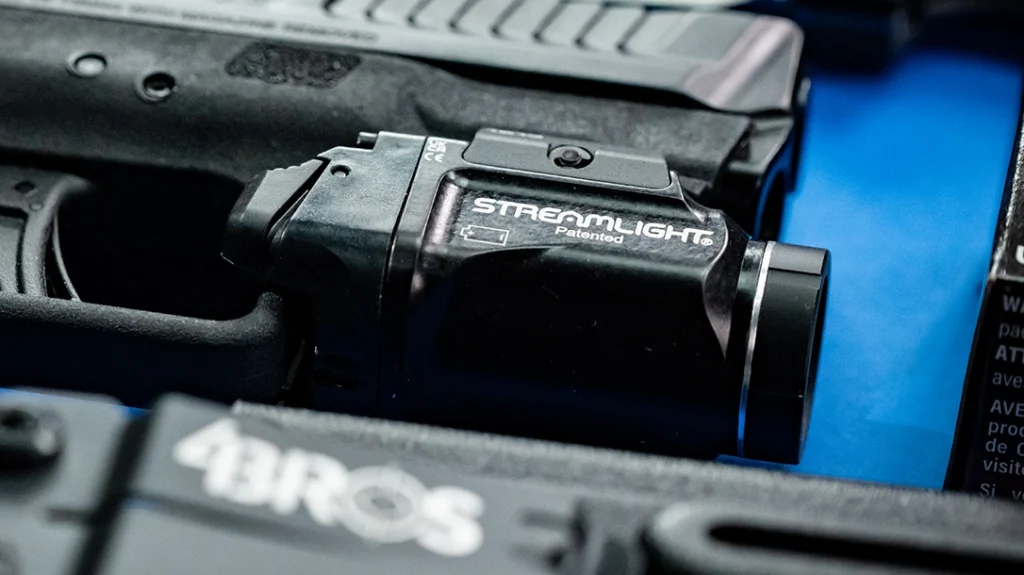
I configured my pistol with a TLR 7 X Sub, a 500-lumen compact weapon light that can run either the SL B9 rechargeable battery or a CR123A. It is ideal for a pistol like this and adds very little bulk.
Advertisement — Continue Reading Below
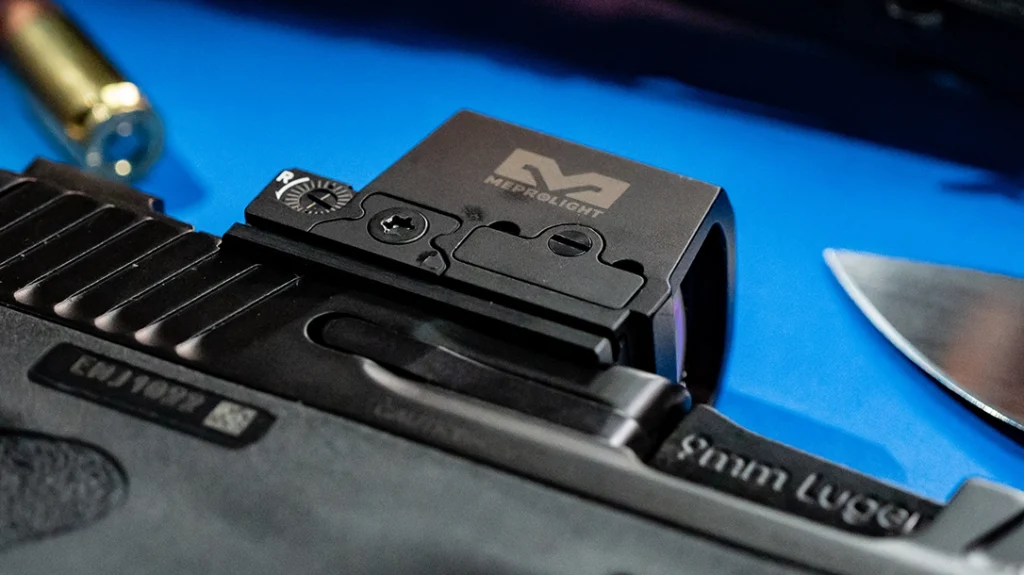
On top, I mounted a Meprolight MPO Pro S enclosed emitter optic. It uses the RMSc footprint, has excellent clarity, and has proven to be extremely durable for its size and price point. One of my absolute favorite optics in the space right now. As configured, the pistol weighs 1 pound 9.8 ounces empty.
Carrying the Shield X
A carry pistol only matters if you actually carry it. For me, that means a proper holster.
Advertisement — Continue Reading Below
Four Brothers Holsters is who I trust for everyday carry setups. Their retention is excellent, the fit is precise, and the overall profile is intentionally flattened to minimize pressure points where the holster contacts the body. The holster pulls the gun into the body rather than letting it protrude. That difference is what separates a pistol you tolerate from one you forget is there.
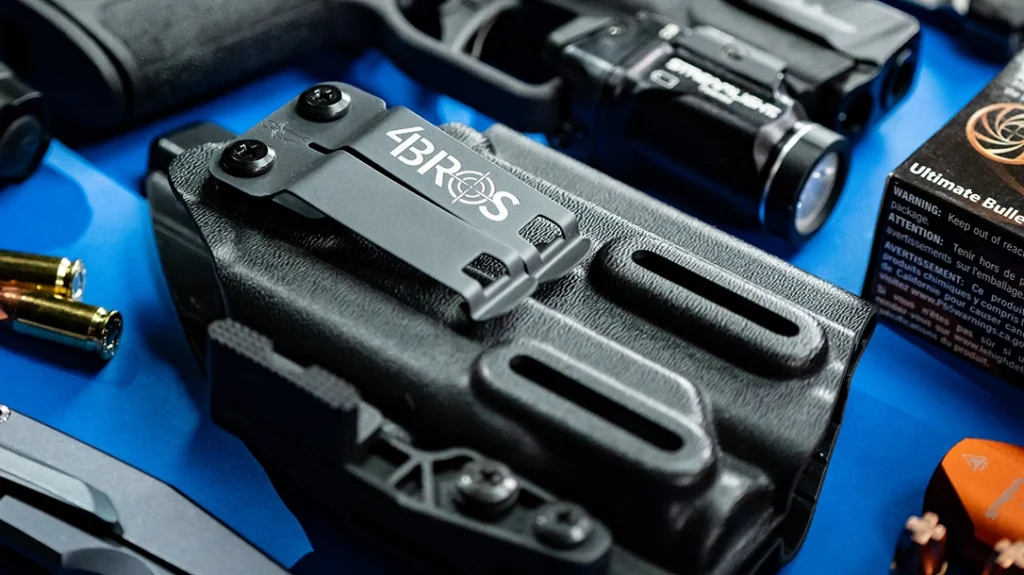
The Shield X uses the proven Shield magazine design. The taper toward the feed lips makes reloads feel smooth and natural. Magazines want to go into the gun. The Four Brothers magazine carrier deserves special mention. Retention is adjustable via a tensioning screw that moves a thumb against the magazine rather than clamping the Kydex around it. That allows extremely fine-tuning of draw resistance.
Design Details
The Shield X ships with a blacked-out rear U-notch and a green dot night sight up front. It is a simple, practical, defensive sighting system.
More important are the changes to the grip geometry and trigger interface. The flat-faced trigger gives consistent finger placement. The sculpted undercut trigger guard allows a higher grip without reducing available grip surface. The beavertail is large and protective. You cannot come out of the holster and get bitten by this pistol. The geometry pushes your hands closer to the bore axis, reducing leverage and helping the gun track flatter in recoil.
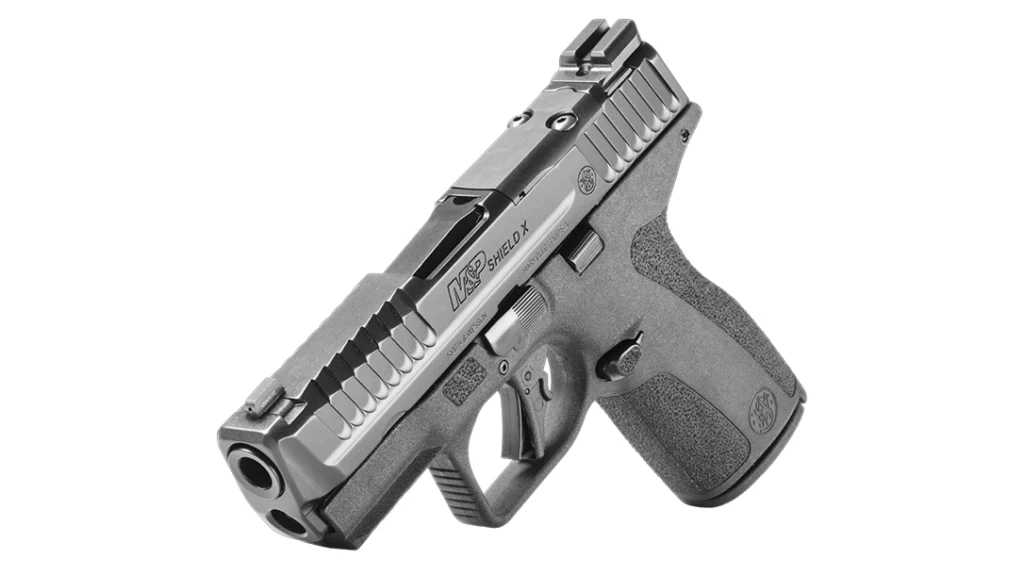
The grip texture is intentionally carry-friendly. It is not abrasive like some duty textures, but it is not slick. It feels secure with cold or wet hands and does not punish you for carrying it all day. Front cocking serrations are aggressive and effective. Combined with the beavertail and undercuts, the pistol feels controllable in a way that belies its size.
This is a compact pistol that shoots like something larger.
Shooting the S&W Shield X
Range impressions reinforce that this is a shootable pistol with a manageable recoil impulse that does not fatigue you. It is fast back on target and predictable.
I ran a variety of duty and practice ammunition through the pistol and chronographed all of it using a Garmin Xero.
| Ammunition | Average Velocity |
| Sellier and Bellot 100 grain XRG | 1274.4 fps |
| Blazer Brass 115-grain FMJ | 1094.3 fps |
| Lehigh Defense 115-grain ME plus P | 1068.0 fps |
| Lehigh Defense 115-grain CF plus P | 1078.2 fps |
| Lehigh Defense 115-grain XP Low Recoil | 1006.6 fps |
| Remington 124-grain FMJ | 1046.4 fps |
| Sellier and Bellot 124-grain FMJ | 1017.8 fps |
| Blazer Brass 124-grain FMJ | 998.4 fps |
| Remington 147-grain BJHP | 955.1 fps |
| HOP Munitions 147-grain Poly | 884.4 fps |
I test pistols the same way each time. Paper at 21 feet, steel at 50 feet, and a USPSA plate between 50 and 100 yards. With this pistol, I focused on defensive-style point-shooting drills. That is what it is built for.
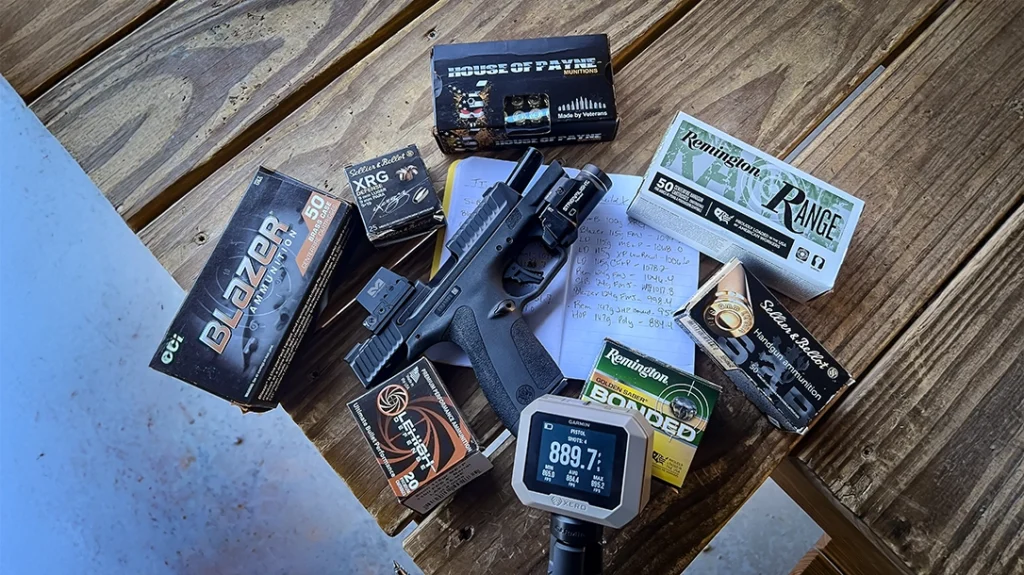
Hits at 80 yards are possible and repeatable. But that is not the mission with this gun. The standout load was the Lehigh Defense 115-grain CF plus P. It cycled well, grouped well, and landed consistent hits at distance while remaining controllable up close.
Final Shots
Is it “updated” or new? The simple answer is, it’s both.
It is updated in lineage. It is new in execution.
The Shield X keeps the idea of what the Shield was meant to be. A pistol you can carry, trust, and shoot well. But it updates that idea to match how shooters actually live now. Lights are normal. Optics are normal. Higher capacity is expected. Ergonomics matter more than ever.
This pistol does not chase trends. It integrates them.
For someone like me, who does not naturally gravitate toward compact pistols, that matters. This is a pistol I want to train with, not merely tolerate. At an MSRP of $599, it is accessible, well supported by the aftermarket, and well thought out from the factory.
It is not just an updated Shield. It is the Shield concept finally executed in its complete form. I knew I was going to keep and carry it the moment I put one in my hand. I suggest you try one. If you’re passing through, stop by and shoot mine.
Can we scale it up and make it full-size now?
Shoot safe.