

For as long as people have been putting food on the table, we have relied on tools that launch projectiles with purpose. From bows to modern cartridges, the evolution has been constant. Today, factory ammunition does an excellent job for most shooters, delivering reliable performance and acceptable accuracy. For those looking to go further, reloading opens the door to tuning ammunition for a specific firearm, a specific task, and even a specific barrel length.
That is where burn rate becomes important.
Powder Is Not an Explosion
One of the most common misunderstandings in reloading is the idea that gunpowder explodes. It does not. Powder burns, and that burn generates gas and pressure that pushes the bullet down the bore.
The actual explosive component in a cartridge is the primer. Modern primers use a combination of lead styphnate, barium nitrate, and antimony sulfide. That mixture ignites rapidly and provides the initial energy needed to start the powder burn. From there, the powder sustains the pressure curve that drives the projectile forward.
Advertisement — Continue Reading Below
Understanding that distinction is critical. You are not managing an explosion. You are managing a controlled burn.
Burn Rate and Powder Geometry
Powder shape and size play a role in how that burn progresses. Fine spherical or small-grain powders have more surface area exposed relative to their size, which allows them to ignite and burn more quickly. Larger flake powders burn more progressively, and coatings applied during manufacturing can further control the rate at which energy is released.
This is where powders like Hodgdon Lil’Gun and Alliant Unique begin to separate in purpose.
Lil’Gun is a slower-burning powder designed for higher pressure applications. It sustains its burn over a longer period, which allows it to continue pushing the bullet as it travels down the bore. Unique, by comparison, is a faster-burning powder. It reaches peak pressure quickly and expends most of its energy early in the bullet’s travel.
Advertisement — Continue Reading Below
Neither is better in a general sense. They are designed for different roles.
Barrel Length Changes Everything
The relationship between burn rate and barrel length is where things get interesting.
In a shorter barrel, such as a four-inch handgun, a faster-burning powder like Unique can be very efficient. It builds pressure quickly and converts most of its energy into velocity before the bullet exits the muzzle. There is little wasted energy, and performance is predictable. A slower powder like Lil’Gun behaves differently in that same short barrel. It may still be burning as the bullet exits, which means some of its potential energy is lost as muzzle flash and blast rather than velocity.
Now extend the barrel.
In an eight-inch bore, like the Rossi Brawler used for this test, Lil’Gun has more time to complete its burn. That extended pressure curve now works in your favor, pushing the bullet longer and often producing higher velocities than a faster powder could achieve in the same setup. Unique, on the other hand, has already done most of its work early and gains little from the additional bore length. This is the core concept. Burn rate must match barrel length to maximize efficiency.
Advertisement — Continue Reading Below
.300 Blackout Test Bed
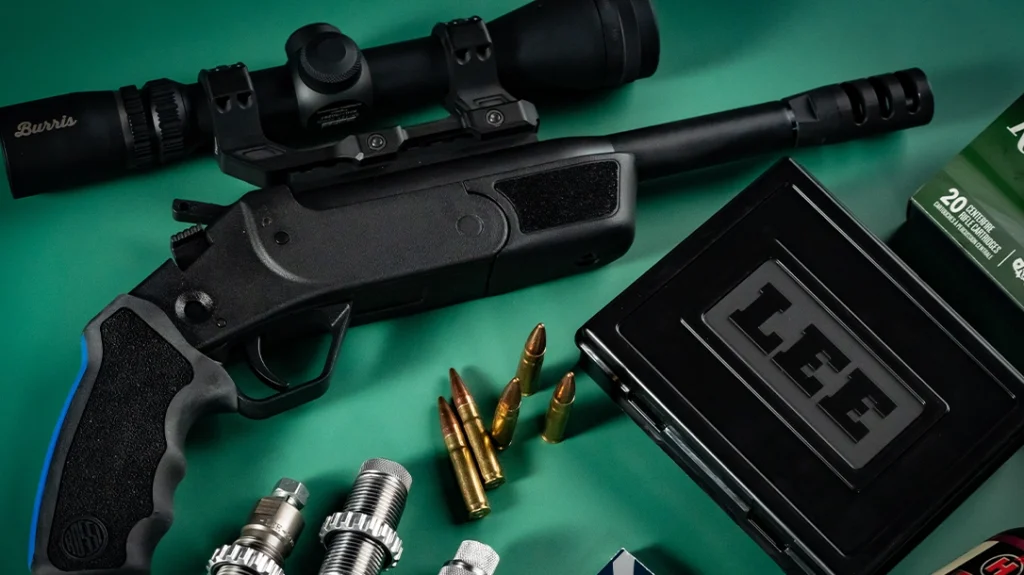
For this evaluation, the focus was on the .300 Blackout using a 125-grain projectile. This cartridge is uniquely flexible, capable of performing across a wide range of barrel lengths, which makes it an excellent candidate for exploring burn rate behavior. The test platform was a Rossi Brawler with an eight-inch barrel, equipped with a Midwest Industries brake and a Burris 3-12×32 pistol scope mounted on a reversed Warne monolithic mount. This setup provides a stable and repeatable platform for evaluating performance at distance.
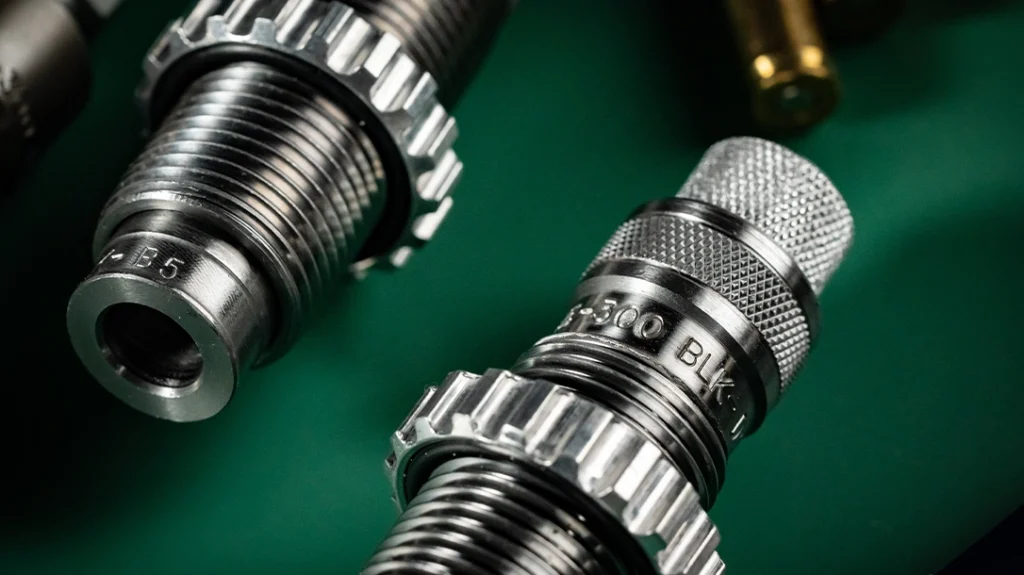
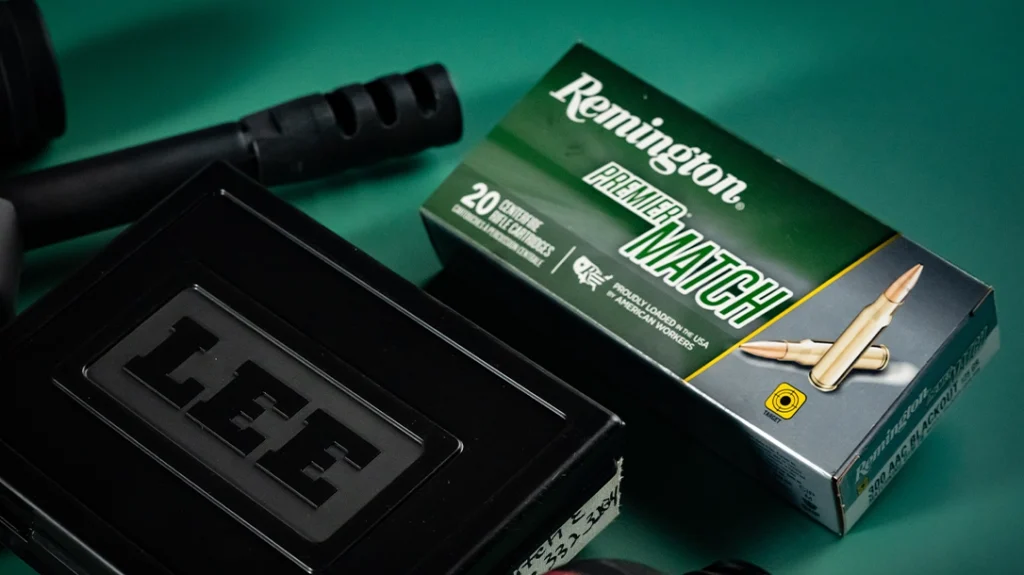
Factory ammunition came in the form of Remington 125-grain Match, advertised at 2215 feet per second. Pulled apart, the powder revealed itself to be extremely fine, indicating a slower burn profile intended to maintain pressure over a longer duration. The handload used a 125-grain Hornady projectile over approximately 17.8 grains of Hodgdon Lil’Gun, ignited by a CCI 400 small rifle primer. From a 16-inch barrel, this load chronographs at 2335 feet per second.
Burn Rate: What the Data Shows
Out of the eight-inch Rossi, the results were telling.
The Remington factory load averaged 2062 feet per second across a four-shot string. The handloads came in slightly higher at 2124.1 feet per second. That difference is not dramatic at 100 yards, translating to roughly an inch of point-of-impact shift, but it becomes more meaningful as distance increases.
Advertisement — Continue Reading Below
More importantly, both loads demonstrate how barrel length impacts velocity. The same handload that produces 2335 feet per second in a 16-inch barrel drops over 200 feet per second in the shorter eight-inch bore. That is lost dwell time. The powder simply does not have as long to work. This is where reloading becomes valuable.
Tuning for Your Barrel
Factory ammunition is designed to perform across a wide range of firearms. It is a compromise by necessity. Reloading allows you to remove that compromise.
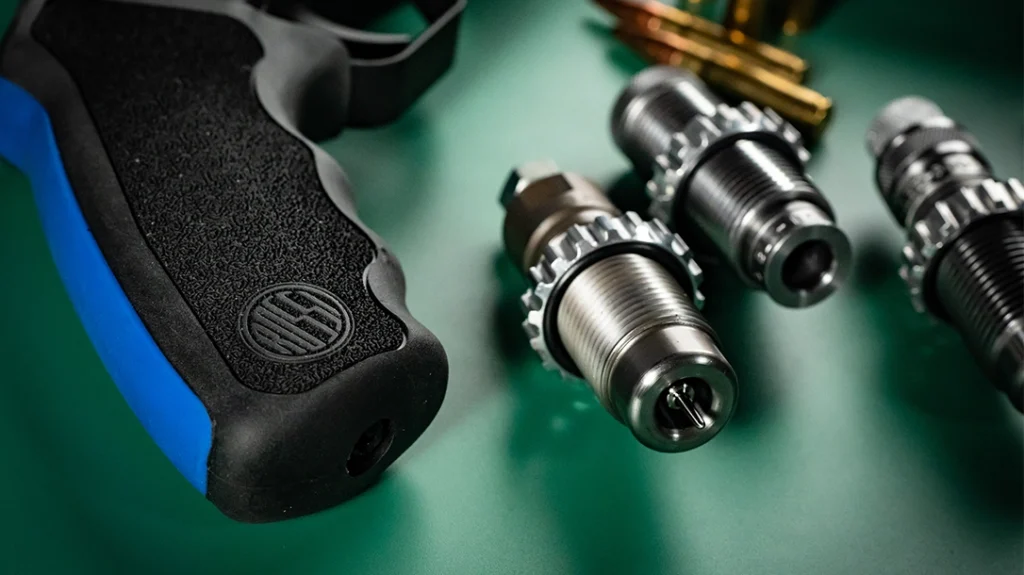
With a shorter barrel like the Rossi, selecting a powder that matches the available bore length can improve efficiency, reduce wasted energy, and tighten consistency. That does not always mean chasing maximum velocity. It means building a load that burns effectively within the space you have.
In this case, Lil’Gun performs well because the eight-inch barrel provides enough dwell time to take advantage of its slower burn. A faster powder may have reached peak pressure sooner, but it would not necessarily have delivered better overall performance. Accuracy followed suit. With a proper zero at 100 yards, extending to 200 yards produced consistent results, with four-inch groups that are more than respectable for a platform like this.
Advertisement — Continue Reading Below
Where it Counts
Burn rate is not just a technical detail. It is one of the primary levers you have as a reloader. Matching powder characteristics to barrel length, bullet weight, and intended use allows you to build ammunition that performs more efficiently than factory offerings in your specific firearm. It also helps manage pressure, recoil, and consistency in a way that off-the-shelf ammunition cannot.
The takeaway is simple. You are not just loading cartridges. You are shaping how energy is delivered.
And when you get it right, even a short-barreled platform like the Rossi Brawler can reach out and perform in ways that surprise people.
Shoot safe.
Advertisement — Continue Reading Below
WHY OUR ARTICLES/REVIEWS DO NOT HAVE AFFILIATE LINKS
Affiliate links create a financial incentive for writers to promote certain products, which can lead to biased recommendations. This blurs the line between genuine advice and marketing, reducing trust in the content.

