

Charter Arms is a persistent brand that has made defensive revolvers for over sixty years. The company is best known for its .38 Special Undercover and .44 Special Bulldog revolvers. But its lineup ranges from .22 Long Rifle all the way up to .45 Colt. .32 caliber revolver cartridges occupy a sweet spot between power, capacity, and shootability. So, Charter Arms also makes a .32 H&R Magnum revolver in its Undercoverette model.
The Charter Arms Undercoverette
The .32 has waxed and waned over the years, with revolver lines coming and, just as quickly, going. It was effectively dead, save for brief interest around the .327 Federal Magnum, until the Smith & Wesson UC series brought the .32 H&R Magnum back from the brink.
However, Charter Arms never abandoned the humble .32 and has cataloged the Undercoverette for years. In this review, I shot and carried the Undercoverette to see what it has to offer.
Advertisement — Continue Reading Below
What’s in the Box?
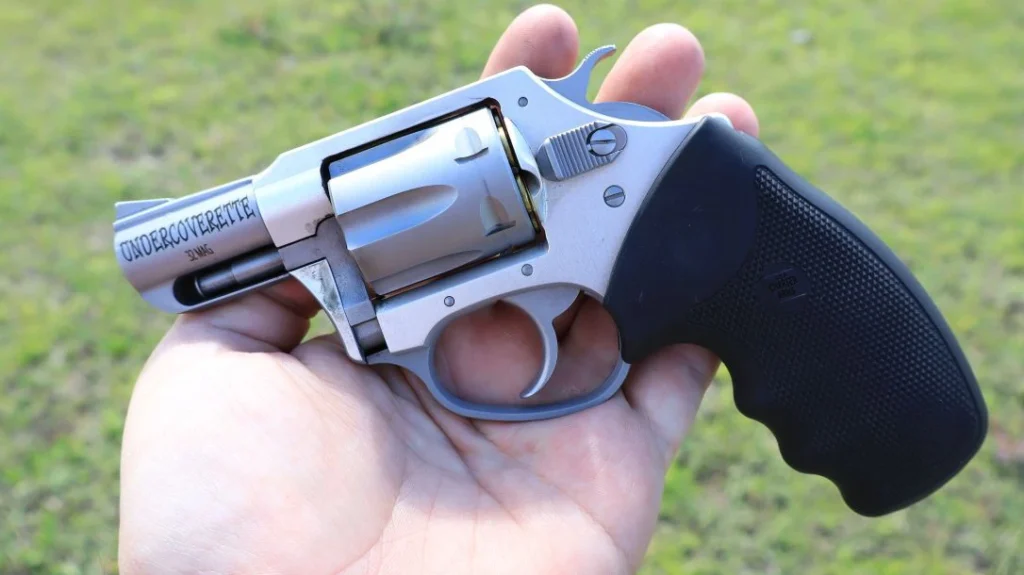
The Charter Arms Undercoverette is a double-action six-shot revolver chambered in .32 H&R Magnum. It is based on the five-shot .38 Special Undercover model that Charter has produced since 1964. It features an aluminum frame and a two-inch steel barrel and fluted cylinder.
The line includes the Off Duty model in a black or clear anodized frame with a hammerless design. The conventional Undercoverette has a spur hammer for double-action or single-action shooting. It comes with either a pink or clear anodized frame.
Advertisement — Continue Reading Below
Like all of Charter’s guns, this model has a transfer bar safety and a fully-shrouded ejector rod. The revolver has a polymer grip frame and wears Charter’s standard full-size rubber grips that emphasize control over an otherwise dainty handgun. You also get the typical gutter sights—a milled square notch rear sight and a small, fixed front ramp.
Mechanically, the Undercoverette is a beneficial mix of other revolver features. It has a one-piece frame and transfer bar safety, like what would later be used by Ruger. The revolver has a Colt-like lockup and a push-forward cylinder release latch as seen on Smith & Wesson revolvers.
Advertisement — Continue Reading Below
Why Not .327 Federal Magnum?
The .327 Federal Magnum debuted in 2008 and rivals lower-powered .357 Magnum loads. However, it can be put in a smaller package with more rounds in the cylinder. Whenever a .32 revolver hits the market, it inevitably elicits the question: Why isn’t it in .327 Federal Magnum instead?
The answer is both cost and weight. .327 Magnum revolvers are built around steel-framed or scandium-framed revolvers, which are either heavy or expensive. The lower-pressure .32 H&R Magnum is up to the job in an aluminum-framed revolver and still rivals standard-pressure .38 Special in power.
With the .32 Magnum, you still get less recoil and an extra round in the same package as a comparable .38. You also get the benefit of shooting the shorter .32 S&W and .32 S&W Long cartridges, if the shoe fits.
Advertisement — Continue Reading Below
Initial Impressions of the Undercoverette
Charter Arms sometimes gets lost in the stack of revolver makers. The company has always made economical revolvers specifically for personal protection, but quality has swung wildly with changes in ownership. However, under the leadership of Nick Ecker, the build quality and innovation are on the upswing. My own experience has been more than lukewarm, having owned or tested several newer models over the last fifteen years.
There are aspects of some of Charter’s new models I am not a fan of, and the Undercoverette is included here. The larger rubber grips are hand-filling, but tend to print under clothing. I am also not a fan of the thinner polymers used in their grip frame.
Leaving those reservations aside, the Undercoverette is solidly built and finished. The cylinder and barrel are bead blasted, and the clear anodized coating on my example has no waviness or marks. Internally, there are a few machining marks, and the action is smooth, straight out of the box. There is no polish to the Undercoverette, but no major oversights either.
Advertisement — Continue Reading Below
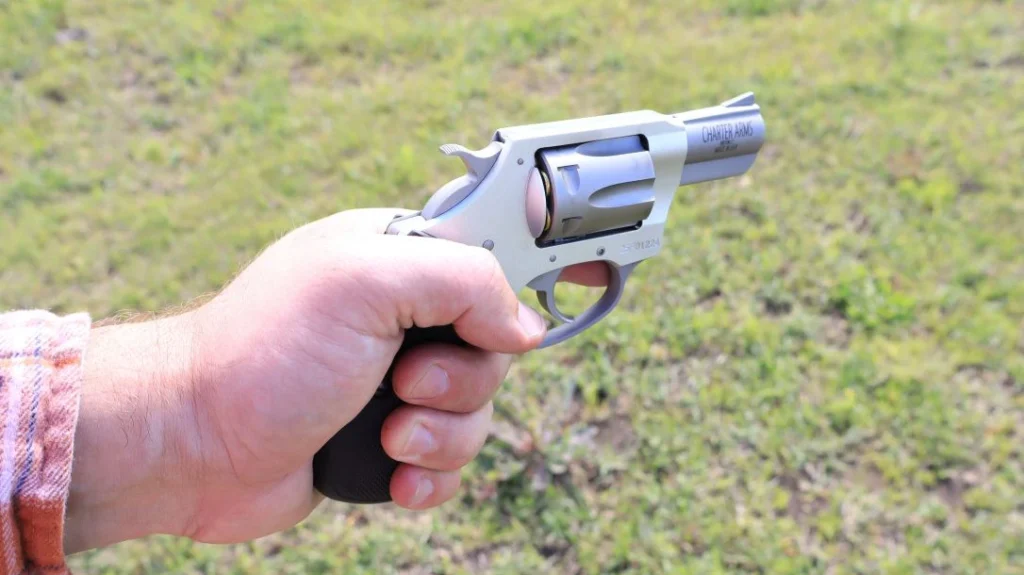
On my Lyman trigger scale, the double-action trigger pull breaks at a respectable 7 lbs. The single-action pull with the hammer cocked is only 2 ½ lbs. The trigger stacks heaviest in the middle of its travel before it relaxes toward a rapid break.
Far and away, the greatest takeaway from initial handling is how front-heavy the pistol is compared to the rear. It is a very light revolver, but most of the mass is concentrated at the bull barrel and cylinder. I imagined that would help with whatever recoil the .32 caliber round would generate. The only way to find that out was to get to the range to see for myself.
Advertisement — Continue Reading Below
On the Range with the Charter Arms Undercoverette
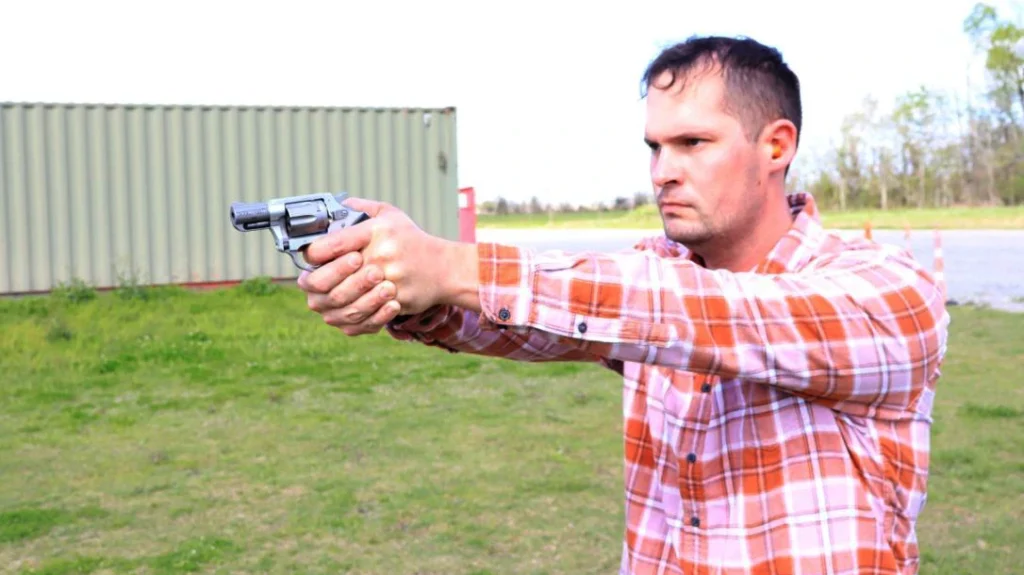
Out of all the Charter Arms snubbies I have fielded over the years, the Undercoverette may be the most approachable. The .32 H&R Magnum cartridge generates little recoil and blast, which challenges neither the shooter nor the handgun. Correspondingly, the revolver itself is hand-filling thanks to its full rubber grip.
The simple manual of arms and a surprisingly smooth trigger pull are the icing on the cake. Its price point is more reflected in aesthetics than performance.
Loading and Unloading the Snubbie
To load the revolver, press the cylinder release forward and swing the cylinder out to the left side of the frame. From there, you drop the ammunition into the cylinder and close the cylinder shut.
While I mostly loaded the revolver from ammunition boxes on the firing line, I also used HKS 32-J speedloaders. On most revolvers, larger grips are not cut for speedloaders, and they tend to get stuck and not release the ammunition. The Undercoverette does not have this issue.
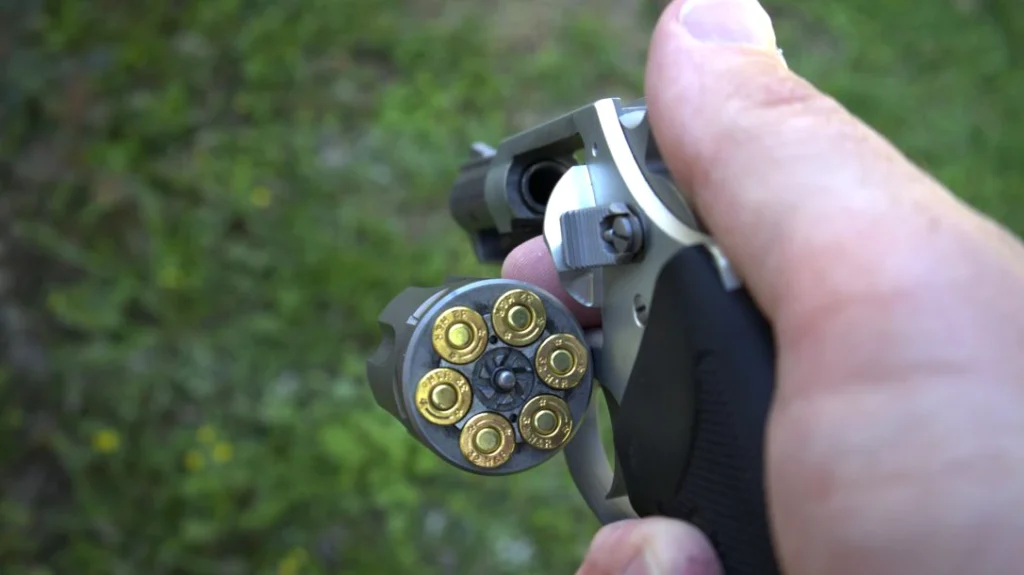
No matter how you load, you can fire by simply pressing the trigger in double-action mode. The Undercoverette has a wide spur hammer that can be cocked for a lighter, shorter single-action pull. While the single-action pull is easier, I always shoot better in double action as I don’t change my grip to thumb back the hammer.
Accuracy and Recoil
I warmed up with a box of Remington .32 S&W Long 98-grain lead rounds. These were smoky, but the revolver barely moved under recoil. I was able to get six for six at 10 yards inside a three-inch cluster at the point of aim.
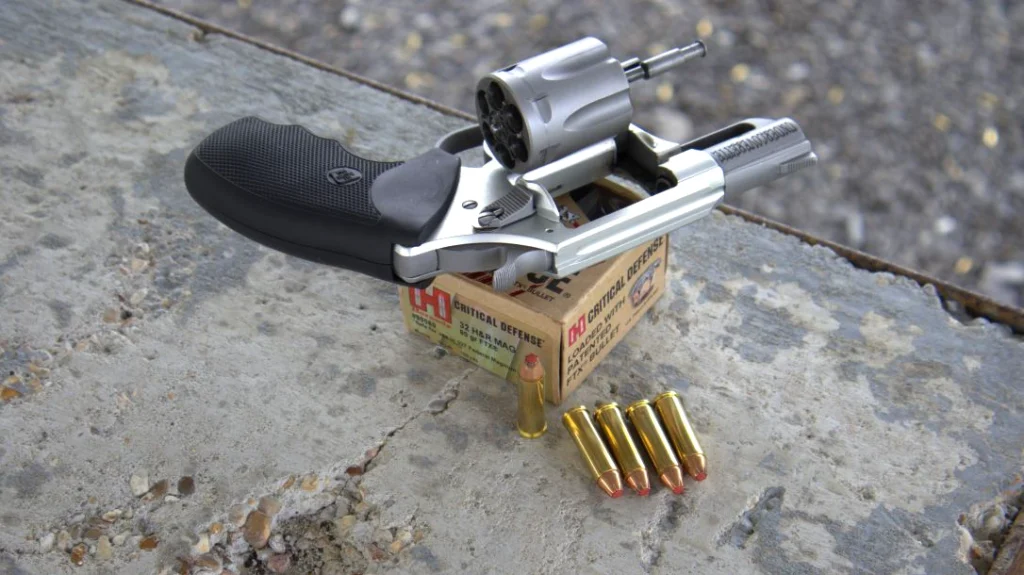
I followed that up with some Hornady .32 Magnum 80-grain FTX loads. There was more blast and slightly more recoil, but only enough to scare the sights. The front-heaviness of the bull barrel then pulls the sights naturally back on target.
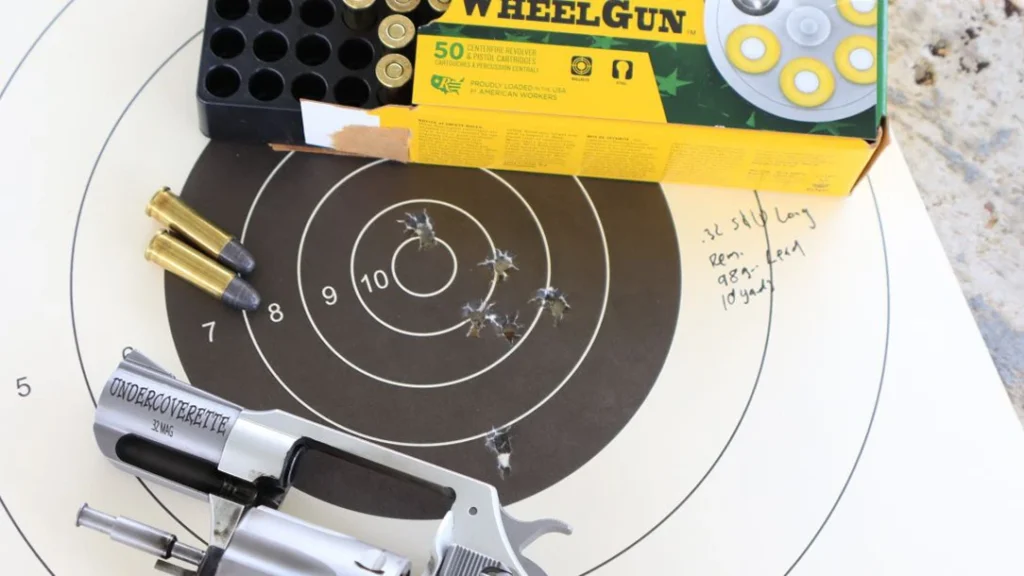
I then went back and forth between Sellier & Bellot 100 grain .32 Long wadcutters and Steinel .32 Magnum 85 grain XTP hollow points. My ten-yard groups are as found in the chart below.
Unloading is just as easy as loading. You open the cylinder in the usual manner, but you hit the ejector rod to kick the empty brass out. The .32 S&W Long and .32 Magnum do not generate high pressures, so the short ejector rod has no problem extracting the cases with thumb pressure.
Sights, Grip, and Controls of the Undercoverette
The sights on this clear anodized revolver are low profile and grey-on-grey. But as I shot the Undercoverette out to twenty-five yards, I noticed the rear notch is wider than that of other revolvers. This brings the front sight into stark relief for quick visibility.
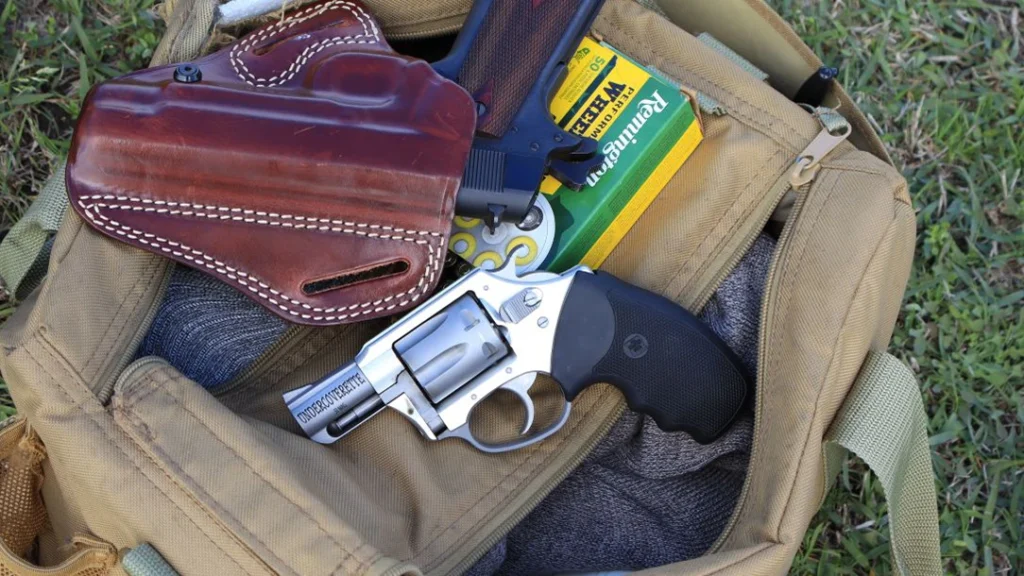
The rest of the revolver checks out in its usual straightforward fashion. Although I would prefer a smaller grip for carry, the stock Charter grip provides a high and comfortable firing grip. The cylinder release is intuitive to use, and the cylinder rolls out of the revolver freely as it is only locked in the rear when in battery.
Reliability
The Undercoverette was a companion across several range sessions and a two-hundred-round count. There were no failures to fire, eject, or cycle. But after the first hundred rounds downrange, the revolver became progressively harder to load on some chambers.
That issue was caused by a combination of grit and internal tool marks. A quick cleaning session with a bronze bore brush and cloth patches brought the Charter back up to speed.
Charter Arms Undercoverette: The Why Not .32
Small frame snubnose revolvers remain a popular concealed carry platform, and with good reason. In spite of the march of the micro-nine, new revolvers are out every year. In the last few years, interest in the .32 caliber family of cartridges has renewed. The .32 H&R Magnum, with its balance of low recoil and good energy, seems just about ideal in a lightweight handgun. But new interest and demand do not mean prices will fall with supply.
The Charter Arms Undercoverette never chased that trend, as it has stayed around during the ebbs and flows. What it lacks in spit and polish, it makes up for in its everyday performance. If the allure of the .32 is for you, but the sticker shock is not, you might take a look at the Undercoverette.
Charter Arms Undercoverette Specs
| Caliber | 32 H&R Magnum |
| Capacity | 6 |
| Barrel Length | 2 inches |
| Overall Length | 6.75 inches |
| Height | 4.75 inches |
| Width | 1.29 inches (at the cylinder) |
| Weight | 16 oz. (loaded) |
| MSRP | $410.20 |
Performance
| S&B 100 gr. Wadcutter | |
| Group | 2.8 inches |
| Muzzle Velocity (fps) | 652 |
| Rem. 98 gr. LRN | |
| Group | 2.8 inches |
| Muzzle Velocity (fps) | 676 |
| Hornady Critical Def. 80 gr. FTX | |
| Group | 3.4 inches |
| Muzzle Velocity (fps) | 902 |
| Steinel 85 gr. XTP | |
| Group | 3.2 inches |
| Muzzle Velocity (fps) | 948 |
WHY OUR ARTICLES/REVIEWS DO NOT HAVE AFFILIATE LINKS
Affiliate links create a financial incentive for writers to promote certain products, which can lead to biased recommendations. This blurs the line between genuine advice and marketing, reducing trust in the content.

