

The early days of auto loaders are chock full of attempts to get away from straight blowback designs. Sure, straight blowback worked, but it was known for its violent action, increased recoil, and caliber limitations. The guns created in this era absolutely fascinate me. There is a bit of romanticism to the designs and the attempts to build a better mousetrap. However, they ultimately became mechanical dead ends.
Notable Mechanical Dead Ends
Interestingly enough, most of these guns were successful. In fact, only one of these guns wouldn’t have been considered a success. With that in mind, let’s look at some mechanical dead ends.
The Remington Model 51 and the Hesitation Lock
The Remington Model 51 is what happens when you can’t use short recoil, but want to produce a fairly compact, light recoiling gun, and you employ John Pedersen. The Model 51 used a hesitation-lock design. The Model 51 uses a breech block separate from the slide or bolt carrier.
Advertisement — Continue Reading Below
The breech block rests slightly forward of the locking shoulder. When the gun fires, the case, bolt, and slide move together a short distance until the breech block strikes the locking shoulder and stops. The slide keeps going, and the breech remains locked. As the slide keeps moving, it lifts the breech block from the recess and pulls it rearward, allowing the firing cycle to complete.
This reduces the need for a heavy slide or spring to keep the breech closed. It also means you have light recoil for the most part. The Model 51 was a modest success, and they upscaled to the Model 53 in .45 ACP, but the Model 53 never succeeded. Remington famously produced the R51 in 9mm, which was an utter failure.
Advertisement — Continue Reading Below
It seems like the system might not have scaled up to calibers beyond .380 and .32 all that well. The Swiss did produce the MKMO SMG, which was supposedly a great gun, but too expensive for military use. The hesitation lock didn’t succeed because, well, in handguns, Browning’s short recoil was better and easier to manufacture, and seems to scale up a bit better.
Schwarzlose Machine Gun and the Toggle Lock
Andreas Wilhelm Schwarzlose has two guns on this roster. The most successful being the Schwarzlose Machine Gun. The right time, right place can make a big difference when it comes to firearms adoption. In 1908, the age of the belt-fed machine gun was rearing its head. Schwarzlose got in early and produced the M.7/12 medium machine gun.
The system used a toggle-delayed blowback system. Instead of a massive bolt or heavy spring that your normal blowback system uses, the bolt’s movement is delayed by a toggle. The mechanical lever ensures the breech remains closed long enough for the projectile to leave the barrel.
Advertisement — Continue Reading Below
As the bolt is pushed rearward by blowback, a hinge joint is lifted. The hinged joining, or toggle, provides the leverage to keep the bolt closed until the projectile leaves the barrel.
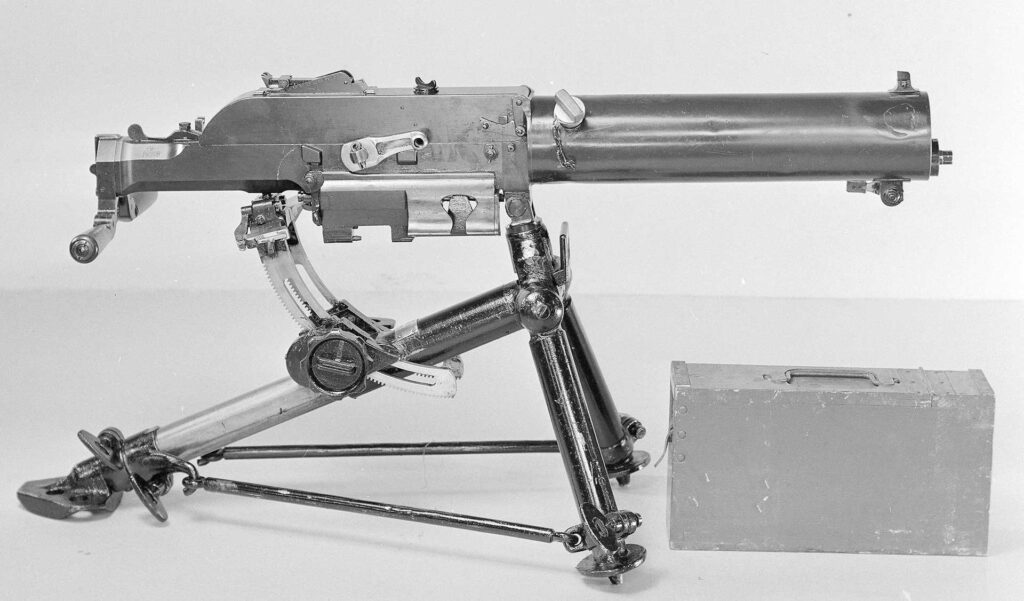
The M.7/12 was a belt-fed, water-cooled, tripod-mounted, open bolt machine gun chambering a variety of cartridges. It was adopted by numerous countries and used extensively in World War I. The gun resembled the Vickers but was much simpler internally. This made it easier and cheaper to produce. That said, it required an integrated oil pump to lubricate the cartridges.
Advertisement — Continue Reading Below
Unlike the Vickers, it suffered when pushed into roles outside of the infantry. It was difficult to use on planes due to difficulties in synchronizing the gun with the plane’s rotors. After World War I, the MG 7/12 saw little use and faded away for the more complex, but more versatile, recoil and gas-operated designs. The toggle lock blowback design would be revisited in the Pedersen rifle years later.
Schwarzlose Model 1908 and Blow Forward
Since we already brought up Andreas Wilhelm Schwarzlose, let’s talk about his less successful venture. The Schwarzlose Model 1908 was a semi-automatic pocket pistol chambered in my personal favorite cartridge, the 7.65 Browning. The pistol used a six-round detachable magazine and was quite small at about 5.5 inches longer overall.
Blowback was a popular design approach for small guns of the era, but Andreas was creative enough to think differently. He designed a blow-forward operating system. The pistol lacks a slide, and the barrel is projected forward by gas pressure and the literal friction of a round passing through the bore.
Advertisement — Continue Reading Below
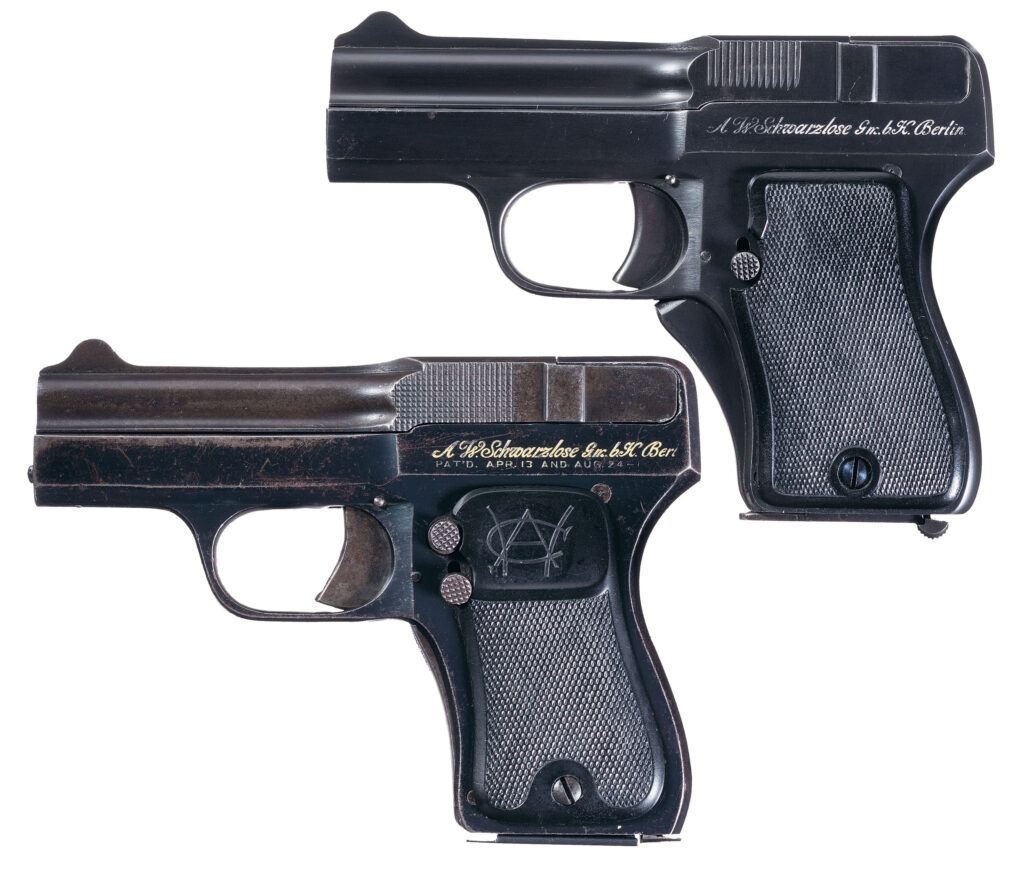
A recoil spring drove the barrel rearward, which allowed it to chamber the next round from the magazine. The little idea was nifty, but it had a seriously odd recoil impulse. It moved forward, away from the shooter rather than rearward. In small cartridges like the .32 ACP, it was fine, but the hand offered a bit more resistance to a firearm recoiling rearward rather than forward.
It’s somewhat obvious why the system didn’t succeed. It offered no real benefit over blowback guns. Arguably, the odd recoil impulse would be a bit counterintuitive even if it were relatively minor.
Advertisement — Continue Reading Below
The Thompson and the Blish Lock
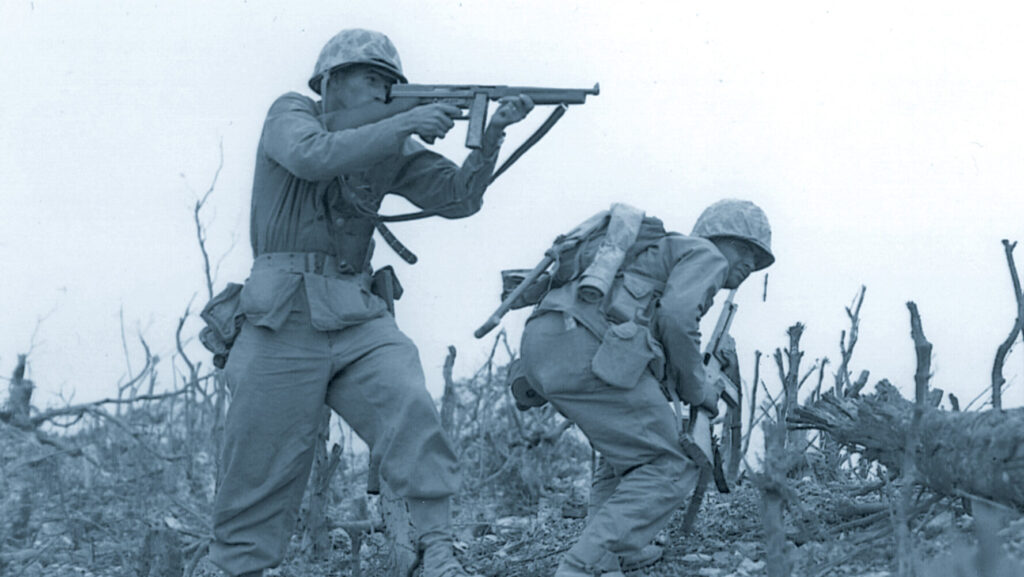
The Thompson SMG wasn’t the first submachine gun, but it was fairly close. The gun became extremely successful and served with the U.S. military before, during, and after World War II. The Thompson is a vibes-gun. It’s heavy, long, and expensive to produce, but it’s got those unbeatable vibes.
Part of the Thompson’s sell sheet included the fact that it was .45 ACP, quite reliable, and offered automatic fire for individual soldiers. Oh, and the Blish lock. Remember, folks were already a bit sick of straight blowback guns. They tend to be a bit rough to handle, so if you could offer an alternative or a delay mechanism, your gun would have an upside.
Advertisement — Continue Reading Below
The Blish lock was a bronze H-shaped wedge inside the steel bolt. The principle was that under extreme, sudden pressure, the dissimilar metals would temporarily adhere to one another. This would create friction and delay the bullet’s exit from the barrel until the breech opened.
It sounds really neat, but ultimately it did virtually nothing. The Thompson operated on a basic straight-blowback principle. If there was any effect, the oil used to lubricate the gun surely defeated it. By the time WW2 rolled around, the Thompson was simplified to the M1A1 and the bronze wedge discarded.
The Savage Model 1907 and The Rotating Barrel
The Savage M1907 is one of my all-time favorite pistols. It’s one of the earliest handguns to use a double-stack magazine. The M1907 is a striker-fired, designed for concealed carry, and they even had influencer marketing in an era before that term existed. It’s such a fun gun, and at the time, it promised to use a recoil-reducing delayed-blowback system.
Advertisement — Continue Reading Below
The entire engineering philosophy was that the torque generated by the bullet rotating through the barrel would force the barrel to twist and keep the action closed until the projectile exited the barrel. The gun had an exposed barrel and a partial slide in its operation, giving it an Art Deco look.
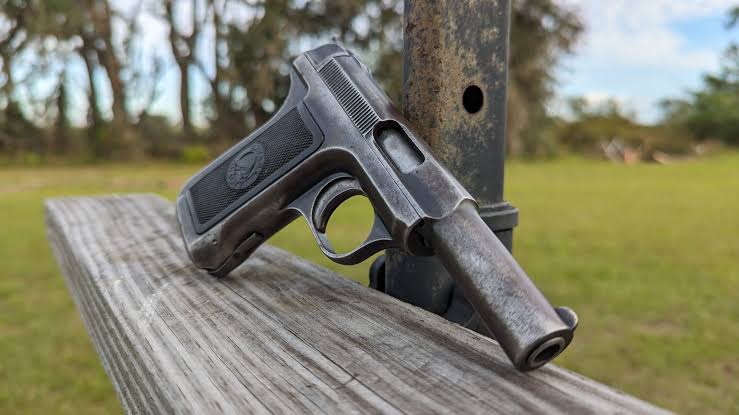
The M1907 was massively successful. It was a winner for Savage, and they produced them for decades, with some seeing action in World War I. The gun had a great reputation, and to this day, they are still solid shooters. The thing is, people like Ian at Forgotten Weapons had high-speed camera footage of the gun operating.
It turns out the rotating barrel does nothing. It’s just a fancy straight blowback-operated gun. The delay effect wasn’t something they could capture in 1907, so they assumed their theory was correct. While the M1907 was successful, Beretta, Glock, and a few others have used rotating barrels; none ever attempted to use the Savage method.
Mechanical Dead Ends
I feel like the creativity of eras gone by has long been lost. We know what works, and people are less likely to experiment these days. It’s sad, but true. Ultimately, it’s for the better, but you can’t look at creativity and not appreciate it. Even when it becomes a mechanical dead end.