

A balanced look at today’s fastest-growing concealed-carry method.
Most people still carry a handgun on or just behind the strong-side hip. That method has served generations of shooters well and remains an excellent choice. Competitive disciplines such as IDPA and PPC, along with many law enforcement academies, continue to emphasize strong-side carry because it reinforces consistent draw strokes and safe gun handling.
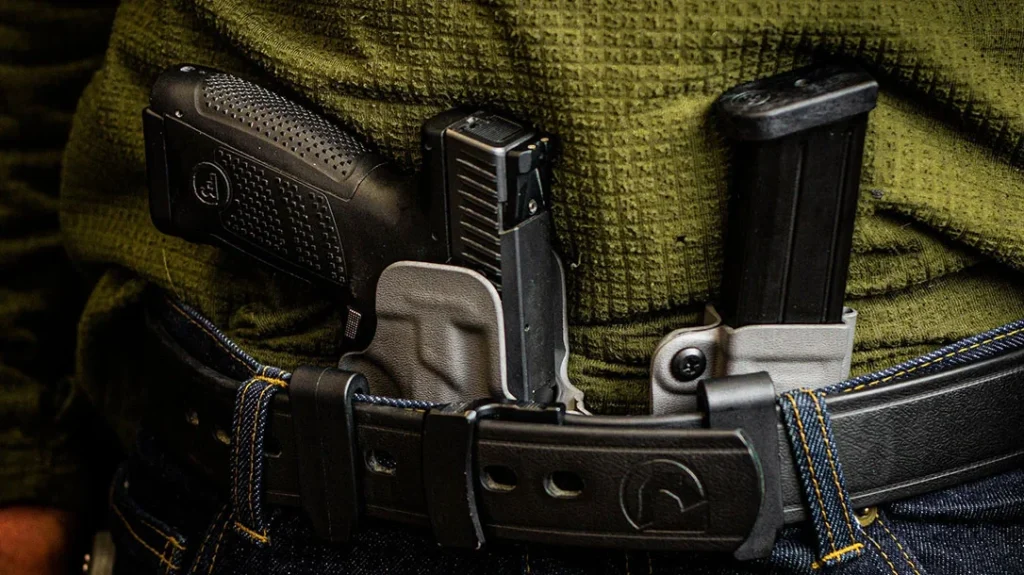
Appendix carry approaches the problem from a different angle. By positioning the handgun in front of the body, proponents argue that the pistol is often easier to conceal, easier to defend from a gun grab and quicker to access when your hands are already near your midline. In close-contact encounters, instructors such as Craig “SouthNarc” Douglas have long demonstrated how AIWB can offer advantages during entangled fights where reaching behind the hip becomes difficult.
Advertisement — Continue Reading Below
Neither method is automatically better. Body type, daily activities, clothing choices, and experience all influence which position works best. The important point is choosing a carry method that allows you to safely conceal the handgun, access it efficiently, and practice consistently.
Appendix Carry vs. Strong-Side Carry
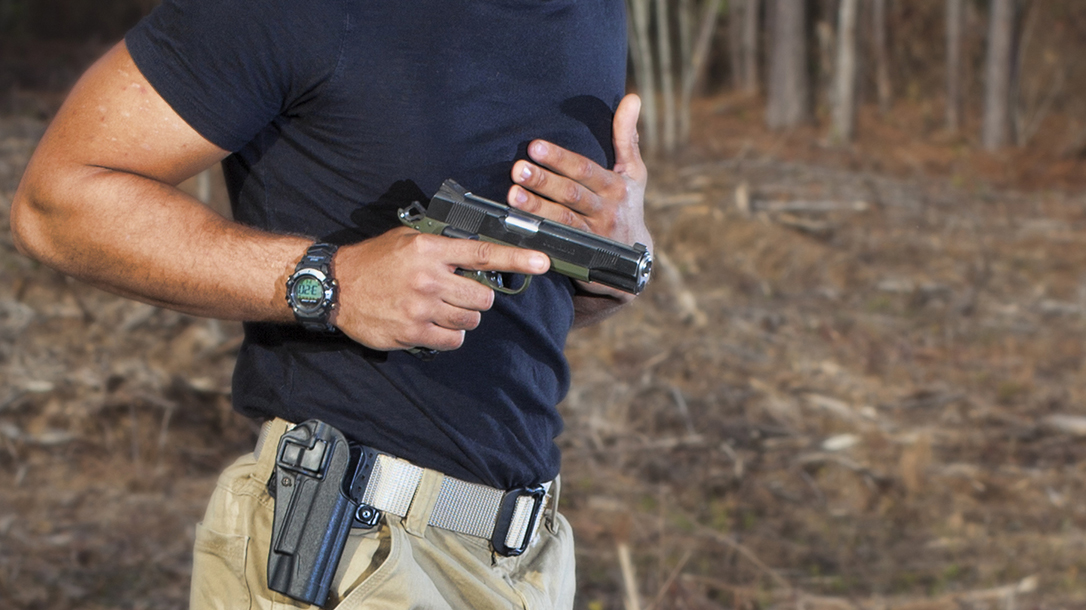
For decades, carrying a handgun on or just behind the strong-side hip has been the standard. There’s a good reason for that. It works well, it’s familiar, and it’s the method taught by many law enforcement academies and competitive shooting organizations. Sports such as IDPA and PPC restrict competitors from carrying forward of the hip, reinforcing a draw stroke that many shooters practice thousands of times.
Advertisement — Continue Reading Below
That repetition matters. If you train from a strong-side holster on the range, you’re more likely to perform the same movement under stress. A consistent draw stroke builds efficiency and confidence. Strong-side carry also conceals well for many people. A cover garment naturally drapes over the hollow behind the hip, making even a full-size pistol disappear under the right clothing. For many body types, it remains one of the most comfortable ways to carry a handgun throughout the day. Appendix carry takes a different approach.
Supporters argue that positioning the handgun in front of the body offers several advantages. Because our hands naturally spend much of the day in front of our torso, reaching an AIWB holster may require less movement than reaching behind the hip. In a close-range confrontation, where an attacker is within arm’s reach, that difference can matter. Neither approach is universally better. Clothing style, body shape, flexibility and daily activities all influence which carry position works best. The goal isn’t to follow trends. The goal is to choose the carry method that allows you to safely conceal your handgun, access it efficiently and train consistently.
Appendix Carry Safety: Where the Debate Begins
If one topic dominates every discussion about appendix carry, it’s safety. The concern isn’t carrying the pistol. It’s reholstering it. When a handgun rides in the appendix position, the muzzle naturally points toward areas of the body that contain major blood vessels and vital organs. An unintended discharge during reholstering can have catastrophic consequences. That reality explains why appendix carry continues to generate debate among respected instructors.
Advertisement — Continue Reading Below
Several highly publicized negligent discharges during the last decade fueled that discussion. Some instructors chose to prohibit AIWB holsters during open-enrollment classes because students of varying experience levels would perform hundreds of draws and reholsters over the course of a weekend. Others continued teaching appendix carry but placed much greater emphasis on slow, deliberate reholstering and proper equipment.
The lesson wasn’t that appendix carry is inherently unsafe. The lesson was that careless gun handling is unsafe regardless of holster position. AIWB simply leaves less room for error. That makes proper training even more important.
Advertisement — Continue Reading Below
Safe Reholstering Is Never a Race
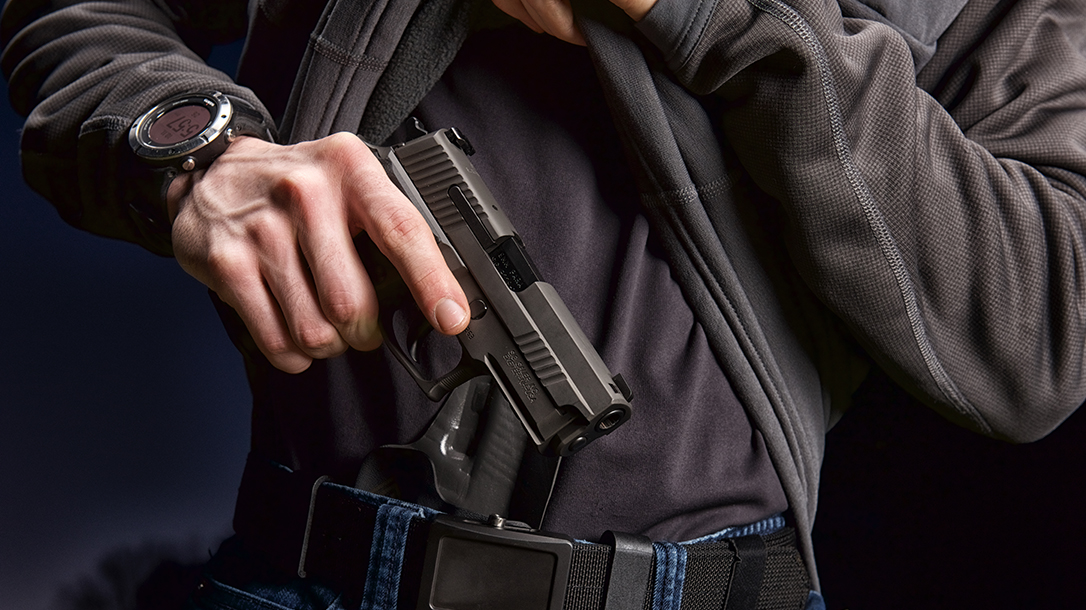
Experienced instructors often say that no one has ever won a gunfight by reholstering quickly. Drawing the pistol may need to happen in a fraction of a second. Reholstering rarely does. Whenever possible, remove your finger from the trigger well before returning the pistol to the holster. Visually confirm that clothing, drawstrings or jacket material cannot enter the trigger guard. Reholster slowly and deliberately without forcing the handgun into place.
Many experienced shooters slightly lean their upper body rearward while reholstering an AIWB holster. This changes the muzzle angle and helps reduce the chance of covering sensitive areas of the body. Others prefer removing the holster from the waistband, inserting the unloaded pistol, and then replacing the holster during administrative handling or dry practice. Either approach emphasizes the same principle: slow down and eliminate unnecessary risk.
Advertisement — Continue Reading Below
A quality holster is equally important. It should completely cover the trigger guard, retain the pistol securely and remain open after the draw so the handgun can be safely returned without collapsing material interfering with the trigger.
Appendix Carry Draw Speed: Does AIWB Have an Advantage?
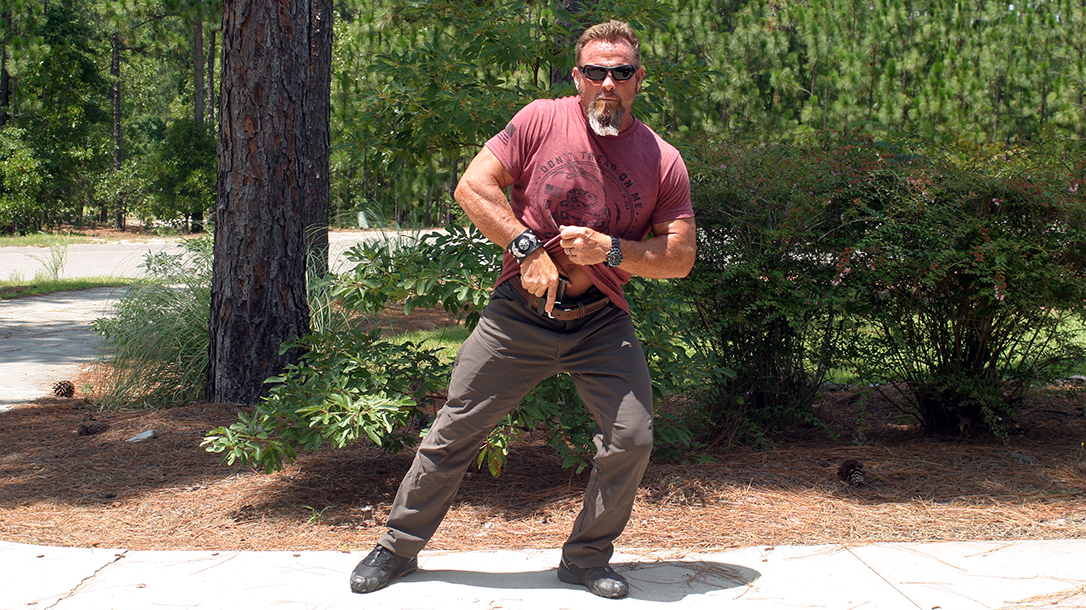
One of the biggest arguments in favor of appendix carry is speed. Like many things in the firearms world, the answer depends on the circumstances. If you recognize a potential threat before violence begins, both strong-side and appendix carry allow you to discreetly prepare. A shooter carrying on the hip can blade slightly away from the suspect and establish a firing grip without exposing the handgun. Likewise, an AIWB carrier can naturally position both hands in front of the body, allowing the support hand to clear the cover garment while the strong hand establishes a firing grip. In many situations, the difference is negligible.
Advertisement — Continue Reading Below
When both hands are available, appendix carry can be exceptionally fast. The support hand clears the garment while the strong hand acquires the pistol in one fluid motion. Modern AIWB holsters and proper concealment garments make this movement surprisingly efficient. One-handed draws tell a different story. If your support hand is occupied protecting a loved one, fending off an attacker or carrying an object, strong-side carry beneath an open-front garment may offer an advantage. Your hand can sweep the garment aside as it moves toward the pistol. With appendix carry under a closed-front shirt, you often need an additional movement to clear the garment before you can establish a firing grip.
Neither method wins every comparison. Clothing, body position and the nature of the encounter all influence the outcome. Regardless of carry position, efficient access comes from consistent practice rather than the location of the holster.
Comfort and Everyday Practicality
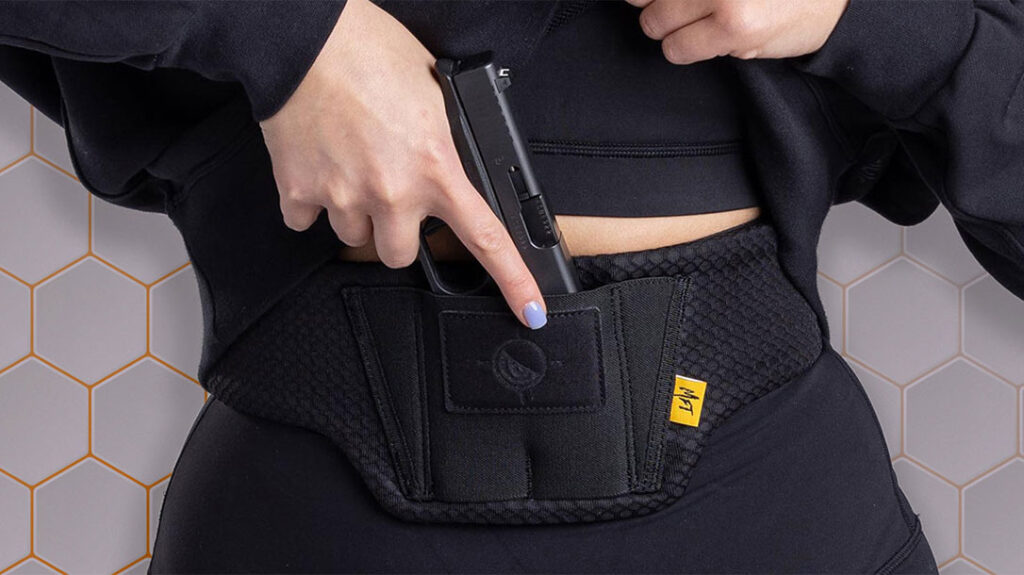
Comfort is a highly subjective factor. Got bad hips? The weight of a holstered gun near the iliac crest can become agonizing, but carrying the gun in an AIWB position against soft abdominal tissue might be a whole lot more comfortable. Conversely, some find the gun digs into their groin or thigh juncture mercilessly when seated with an AIWB rig, especially with a longer-barreled gun. It’s up to the individual, and one’s build is going to have a lot to do with it.
What about driving? Some AIWB carriers find they can reach the gun much faster than behind the hip when seat-belted into a bucket seat. But some others find that having a lap belt can pin your cover garment down; that slows down a draw from an AIWB rig. Once again, it’s subjective: You have to try both with an empty or dummy gun to find what’s going to work best for you.
If you choose to carry in an AIWB position, I have two words for you: Spencer Keepers. This guy is the master of AIWB carry. His holsters for this carry position feature a cushioning inner wedge that levers the muzzle away from vulnerable body parts, and they’re also comfortable. His seminars on how to properly work from AIWB rig earn rave reviews from experts whose opinions I deeply respect. In the end, the choice is yours, except at certain ranges and in certain disciplines. Choose wisely.
The Bottom Line on Appendix Carry
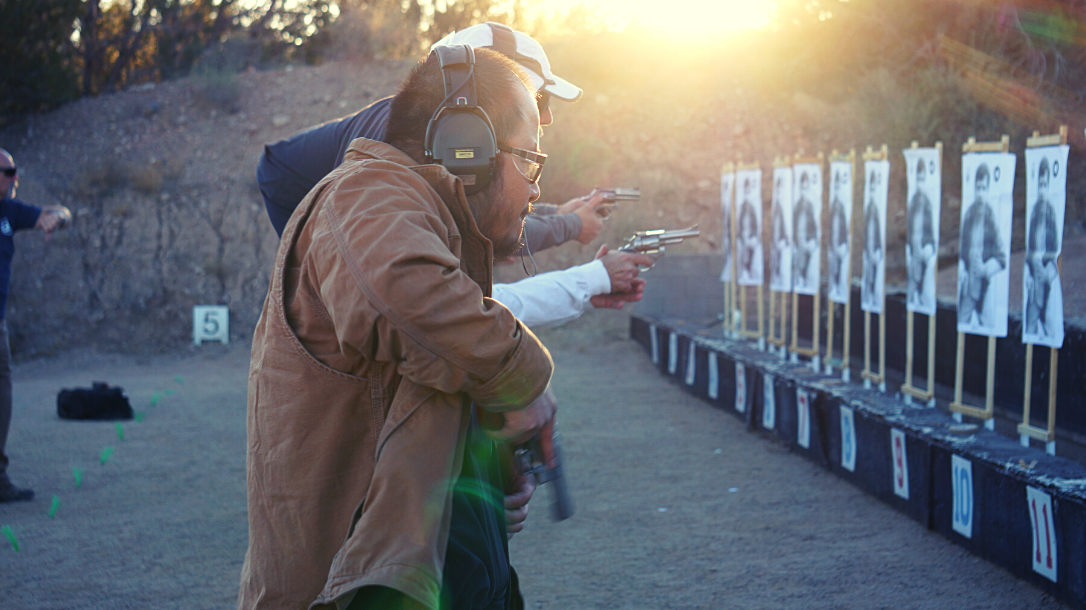
The debate over appendix carry isn’t likely to end anytime soon, and that’s probably a good thing. Healthy discussions about equipment and technique encourage shooters to think critically about their choices instead of simply following trends. For some people, AIWB offers outstanding concealment, quick access and excellent weapon retention during close-range encounters. For others, strong-side carry remains more comfortable, more practical and better suited to their daily routine. Neither approach is automatically right or wrong.
What matters most is that you choose quality equipment, practice with purpose, and handle your firearm safely every time it leaves the holster. A quality holster that completely covers the trigger guard, a rigid belt, and disciplined gun handling will always do more for your safety than the holster’s position itself. If you decide to carry a spare magazine, slow down when reholstering, verify that clothing is clear of the trigger guard, and never rush the pistol back into the holster. The fight is over. There is no prize for being the fastest person to put the gun away.
Ultimately, Appendix Carry: Is AIWB the Right Choice for You? has only one honest answer: it depends. Your experience, body type, clothing, daily activities and willingness to train all play a role. The best carry position is the one that allows you to safely conceal your handgun, access it efficiently under stress and practice often enough that your skills remain sharp.

