

Putting rounds where you intend to put them has been the driving force behind firearms development since the very beginning. Whether the goal was food on the table, defense of home and land, or later competition and precision shooting, the challenge has always been the same. Read the environment correctly, apply the right data, and execute the shot. What has changed over time are the tools that help us close the gap between intent and impact.
Today we sit in a strange moment where technology is advancing faster than trust. Shooters are rightfully skeptical of gear that feels like a solution in search of a problem. In precision shooting especially, experience still matters more than screens, and fundamentals cannot be replaced by software. That context is important when discussing an optic like the Burris XTR PS. This is not a novelty item and it is not a gimmick. It is a serious riflescope that happens to bring a digital backbone with it, and the difference matters.
Burris XTR PR & the Long View
Burris Optics is not a new name chasing relevance. Founded in 1971 by Don Burris, a former Redfield design engineer, the company earned its reputation by solving real shooting problems. Burris began with rings, bases, and iron sights before launching the Fullfield scope in the 1970s. That scope became a staple because it worked, not because it was flashy.
Advertisement — Continue Reading Below
Over the decades Burris continued to refine optical performance and mechanical reliability with features like multi-coated lenses, the Posi-Lock system, and the Ballistic Plex reticle. When Burris became part of Beretta Holding in 2002, the company gained global reach while maintaining its practical approach to design. Today Burris covers everything from hunting optics to competition glass, and it backs those products with a Forever Warranty that signals long-term confidence. I am a huge fan of their pistol scopes too.
That history matters when Burris introduces something like the XTR PS. This is not a company dabbling in software for attention. This is a company attempting to solve a precision shooting problem in a way that respects shooters who already know what they are doing.
Advertisement — Continue Reading Below
Without The Tech
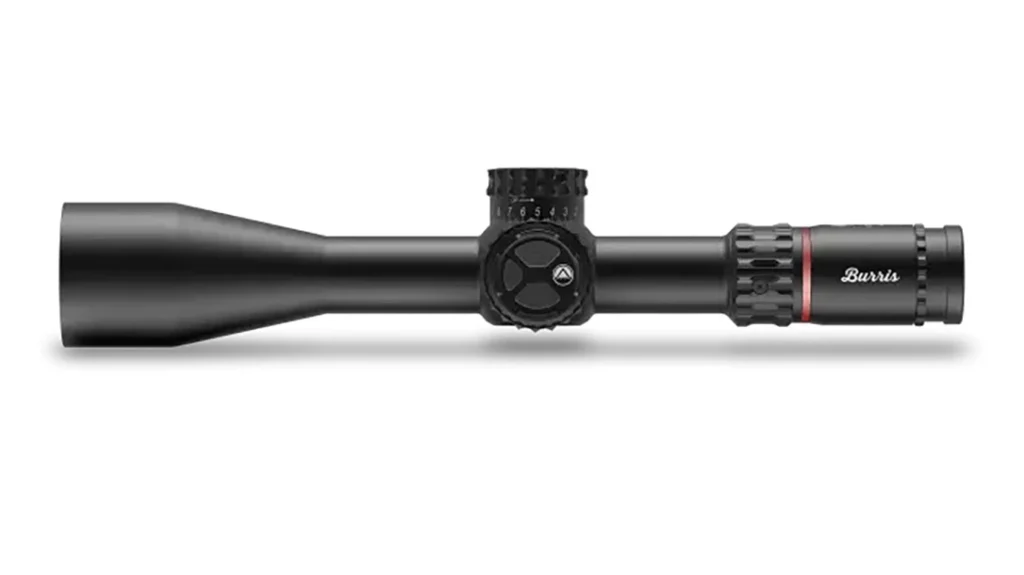
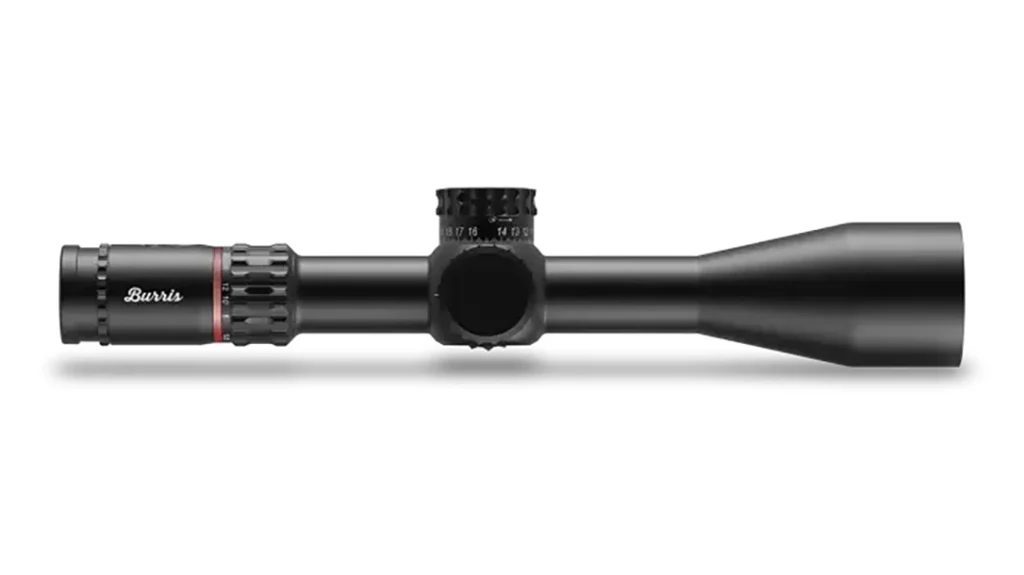
Before talking about software or digital overlays, the XTR PS needs to stand on its own as a scope. In this regard, it does. The 5 1/2 to 30 power magnification range paired with a 56mm objective makes it flexible from mid-range work out to extended distances. The one-piece 34mm tube is machined from 6061-T6 aluminum and carries an IPX7 rating, meaning it can handle water exposure and real-world abuse without complaint. Knobs and physical interfaces index well. They’re not loose but they’re not so stiff you can’t move them with wet / cold hands.
The glass quality is what you expect from a premium optic. Burris uses ED glass with fully multi-coated lenses, and the image stays sharp, bright and usable throughout the magnification range. Contrast holds up well and edge clarity does not fall apart when you start pushing past mid magnification. Low light performance at dawn and dusk is solid, which matters whether you are hunting or stretching range time.
Advertisement — Continue Reading Below
The SCR 2 illuminated first focal plane reticle is clean, readable, and well suited for precision work. Holds remain consistent at all magnifications and the illumination is there when you need it without being overpowering. Parallax adjustment is handled through a side focus knob, and the digital level built into the optic gives immediate feedback if the rifle is not square.
If every battery were removed from this optic, it would still be a capable long-range scope. That matters because many tech-heavy products forget that their first job is still to work mechanically and optically.
Rifle & Ammo
I mounted the XTR PS on a 24-inch barreled rifle chambered in 6.5 Creedmoor. Distances ranged from 300 to 700 yards, which is a practical window for evaluating repeatability, dialing precision, and real-world ballistic solutions.
Advertisement — Continue Reading Below
A spread of Nosler ammunition backed the testing. I ran Nosler Trophy Grade with a 140 grain Partition, Nosler Whitetail with a 140 grain projectile, and Nosler Match using a 140 grain HPBT. All three loads advertised a muzzle velocity of 2650 feet per second, and real-world chronograph data showed very consistent velocities across all three boxes. I had considered only using one kind of ammo but they all shot a sub 1in group at 100 yards and I enjoyed playing with this scope while Burris let me, so I kept shooting. Deviations were tight enough that after building individual profiles, I stopped switching between them during the session.
That consistency helped isolate what the optic was doing rather than chasing ammunition variables.
Advertisement — Continue Reading Below
Digital Backbone
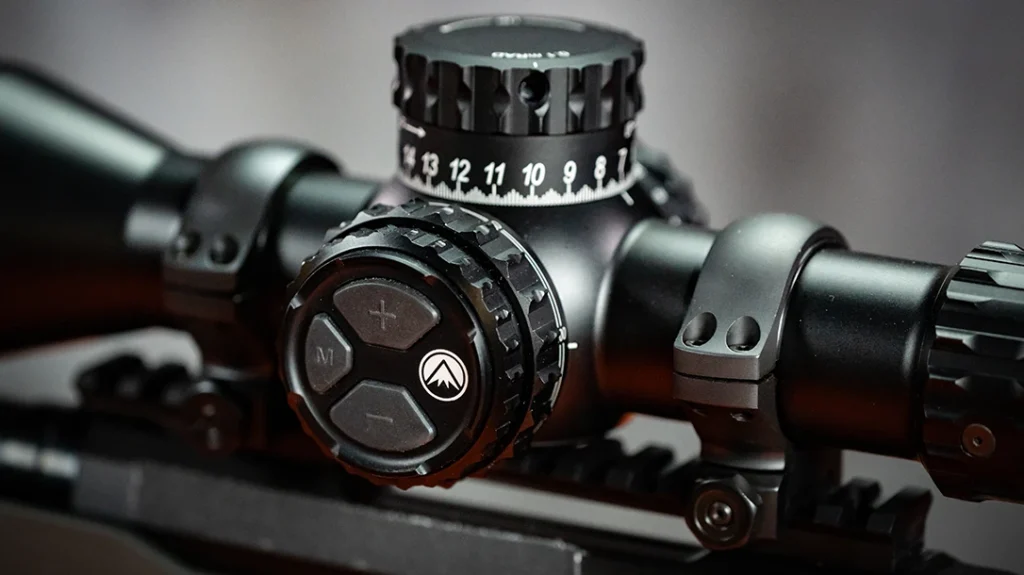
On the surface, the Burris XTR PS behaves like any high-end scope. The difference emerges when you power it on. The scope integrates Burris’s Programmable Elevation Knob system, referred to as the PEK. Instead of traditional mechanical clicks, the PEK uses a digital position sensor that allows for adjustments as fine as 1/30 MIL.
That level of granularity is more precise than most shooters can physically hold, and that is the point. Rather than forcing you into coarse steps, the system allows the firing solution to land exactly where the data says it should and at 1000 yards that will pay you back in spades. The elevation knob rotates smoothly with no detents, and the scope’s internal heads-up display shows your exact dialed value in real time.
Advertisement — Continue Reading Below
This is paired with a digital HUD that displays dial-to-distance information, wind hold recommendations, wind direction, density altitude, angle compensation, and a digital level. For competitors, there is also a countdown timer. All of this lives inside the scope’s field of view, meaning you never have to break position to reference a card or device.
BurrisConnect the Pacticality
The XTR PS pairs with the BurrisConnect mobile app via Bluetooth. The app allows you to build ballistic profiles specific to your rifle, ammunition, and environmental conditions. You can input cartridge data, muzzle velocity, zero distance, and atmospheric conditions. The app supports more than twenty density altitude curves, which lets the system adapt to changing environments.
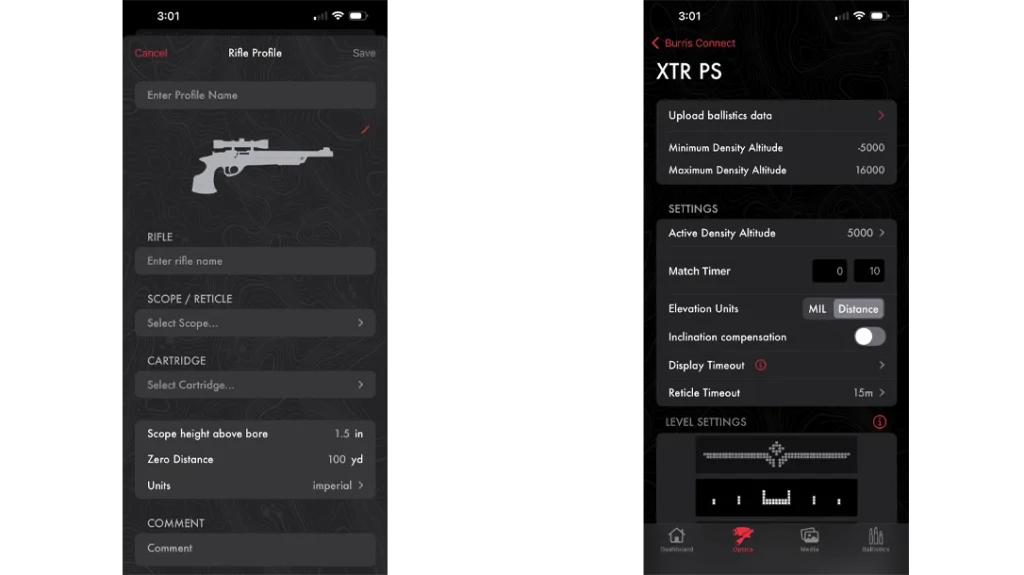
Once profiles are uploaded, the scope stores them internally. You do not need your phone present for the optic to function in the field. This matters because it keeps the system from becoming dependent on connectivity. The app is a setup and refinement tool, not a leash.
I appreciated that Burris does not assume every rifle lives permanently inside their ecosystem. The app allows you to store multiple rifles, other scopes and profiles, and swapping between them is straightforward. For rifles that already have proven data, the transition is simple. Confirm zero, verify velocity, and you are back to shooting.
Using the System
In practice, using the XTR PS did not feel radically different from my existing workflow. Every rifle I own has a dope card taped to the rear lens cap. I already verify velocity and environmental data. The difference here is that the information lives inside the optic rather than on paper.
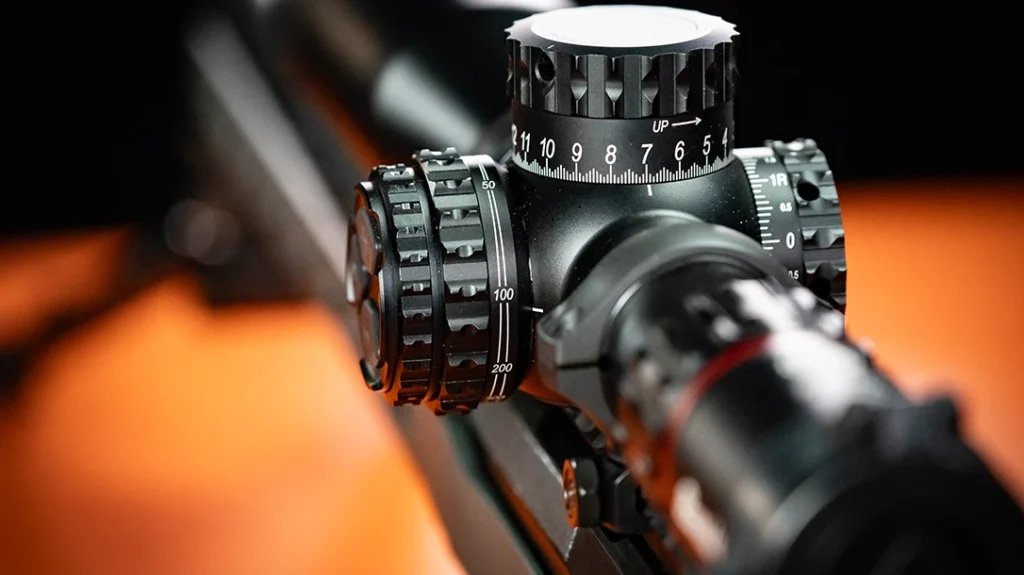
Once range is known, dialing elevation becomes a matter of rotating the knob until the HUD matches the target distance. There are no clicks to count and no mental math to double check. Wind holds are displayed clearly, and I used the recommended values with good results. Hits were consistent and repeatable across distances, and the system showed no lag or delay. Distance readouts and dial values updated instantly. I just needed to have good trigger pulls and marksmanship fundamentals.
What struck me most was that the system did not try to replace fundamentals. It simply removed friction. All of the calculations that normally happen between your ears or on a card are still based on the same inputs. The scope just handles them faster and with fewer opportunities for error.
Practical Considerations
The XTR PS runs on a CR123A battery. Rechargeable batteries are not supported, and if you plan to store the optic for more than a month, Burris recommends removing the battery. This is not a flaw so much as a reality of electronics and storage. Battery life during use was not an issue during testing. But will change on how you drive it and the environment you’re in. Cold coldweather is tough on battery life.
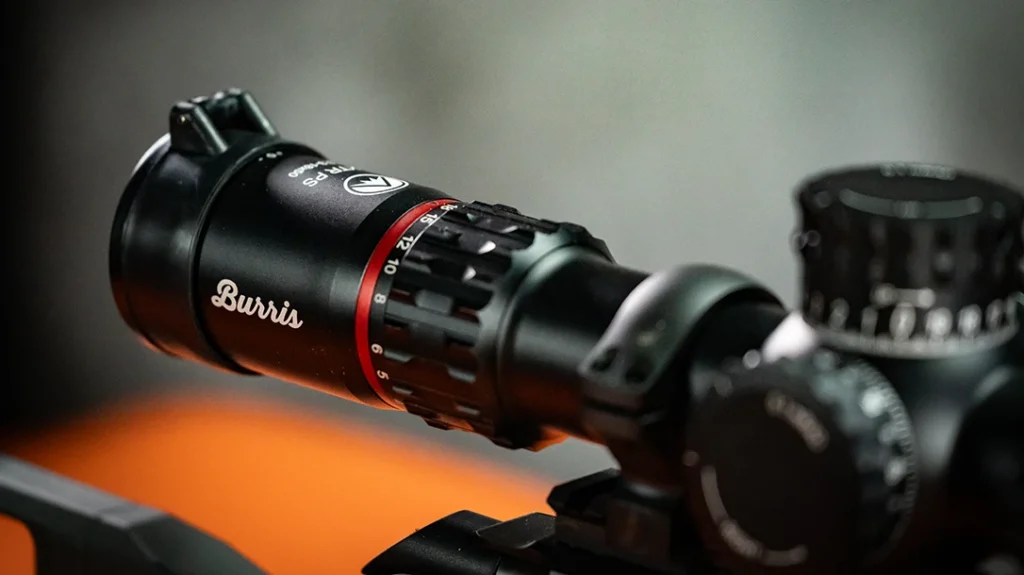
Importantly, the scope remains fully functional as a traditional optic if the battery dies. You lose the digital overlay, but the glass, reticle, and mechanical integrity remain. If you know how to run a traditional scope I bet you still land some good hits.
Final Shots
I have seen a lot of digitally assisted shooting systems over the years. Many feel clunky or incomplete. Others trap you inside proprietary ecosystems that punish you for stepping outside their boundaries. The Burris XTR PS does not feel like that.
At around $2700, it sits in a competitive space. The reality is that even without the software, this is a solid precision optic. With the digital backbone in place, it becomes something more. It feels like a bridge between experience and execution rather than a replacement for skill.
I’m not entirely sure Burris will get this optic back.
WHY OUR ARTICLES/REVIEWS DO NOT HAVE AFFILIATE LINKS
Affiliate links create a financial incentive for writers to promote certain products, which can lead to biased recommendations. This blurs the line between genuine advice and marketing, reducing trust in the content.

