
There are hundreds of cleaver styles across various cultures. Decorative and purpose-built, each has a story and a rich heritage behind the design. I’ve been fortunate enough to see cleavers used in countries abroad and have come to a conclusion. I’ve categorized cleavers into three groups: vegetable, meat, and heavy-use. The latter, leaving it reserved for chopping large carcasses and wood.
Cleavers: A Comprehensive Guide to Cleaving
The Pinch Grip
Kitchen knives and cleavers excel when used in a pinch or chef’s grip. Place your thumb and index finger on either side of the blade just above the handle, hovering over the spine. Curl the remaining three fingers around the handle. This grip improves control, reduces wrist strain, and stabilizes the tip for precise cuts.
Advertisement — Continue Reading Below
Chinese Chef’s Knife
Here’s where confusion sets in. A Chinese Chef’s Knife is called a Caidao, which translates to “vegetable knife.” Another name is Chuka Bocho, the Japanese term for a knife that looks like a cleaver —and it is. However, it’s thin and very lightweight, yet it’s the multi-tool of an Asian kitchen. Besides the obvious vegetable and meat slicing, it smashes garlic and scoops up the raw ingredients off the cutting board.
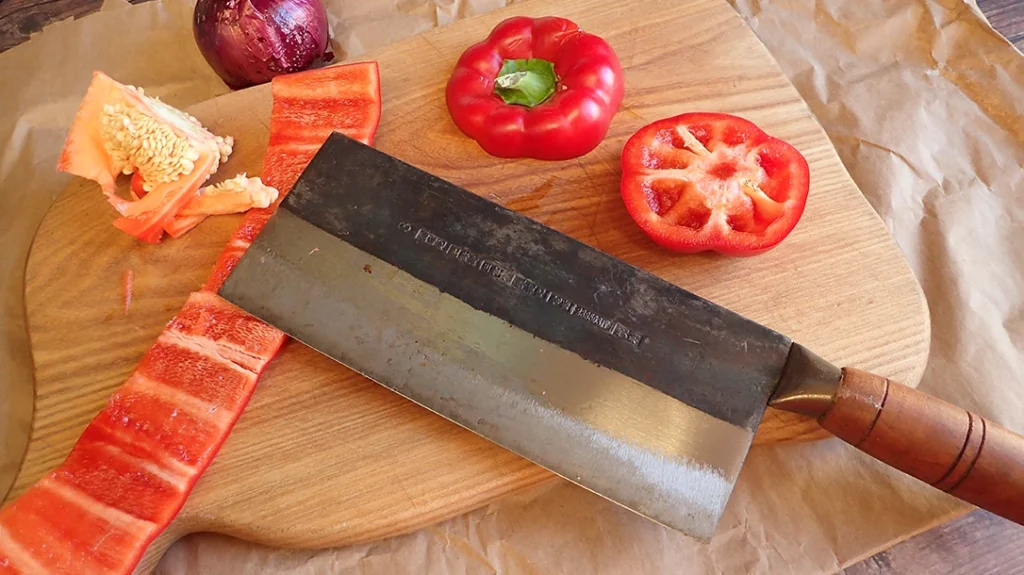
Although the Caidao is thin, they use the back of the blade to chop or crack chicken bones. The Chinese use the blade’s spine to tenderize tough cuts of pork and beef. The front of the squared-off Caidao and the spine are yet more tools in the arsenal. Chinese chefs and home cooks move ingredients around the cutting board with these sections, like a painter on their palette.
Advertisement — Continue Reading Below
All-purpose Cleaver
I got two Caidao knives in Hong Kong back in 2018 and immediately “got it!” I swore off typical chef knives until the last year and a half, when I started reviewing more kitchen cutlery. Still, I compared everything to my Chinese cleavers, as I called them.
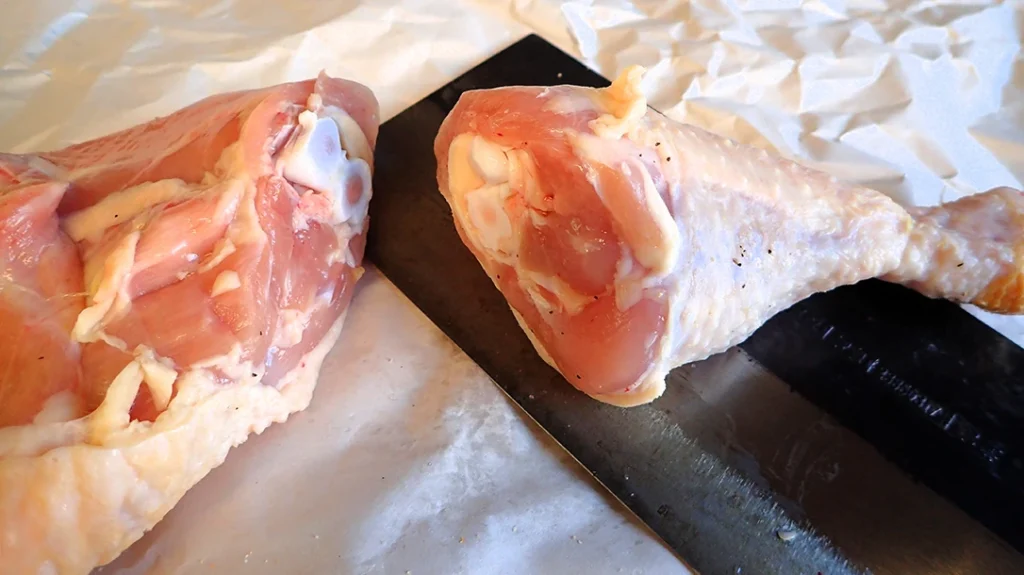
I’ve butchered whole chickens with these thin-slicing gems in about 5 minutes. One thing to note is that I never chopped through any joints to quarter it. Separating the drumstick and thigh is easy if you know where to cut.
Advertisement — Continue Reading Below
There’s a fat line that most people try to cut through, but that’s wrong. I slice more towards the drumstick, and the thin, sharp blade easily cuts through the joint. Deboning chicken thighs isn’t hard if you practice a roll-cut. It works well, and I’ve been doing it with a smaller knife for years.
Fine work, like mincing garlic, is easy with the sharp front-corner tip of the Chinese veggie cleaver. What’s even easier is how fast it is to scoop up ingredients. I recommend it to everyone!
Meat Cleaver
Medium-heavy cleavers live in the sweet spot between featherweight slicers and bone-crunching brutes. Although it’s not specifically designed as a bone chopper, its thicker bevel and increased weight enable it to handle significant tasks. They carry enough heft to power through poultry bones, pork ribs, and cartilage without flinching. They won’t split a beef femur, but they’ll laugh at chicken joints.
Advertisement — Continue Reading Below
Their weight makes dense meats easy to portion, whether you’re breaking down a duck or trimming a roast. Typically, chefs will make rough cuts quickly and then refine their slices afterwards. Hard vegetables like squash or cabbage don’t stand a chance against their edge.
The flat sides crush garlic, crack crab shells, and even tenderize meat when called upon, better than the Caidao. Compared to lighter cleavers, they bring muscle. Compared to heavy cleavers, they keep their agility. In short, they’re the all-rounders—tough enough for bone, nimble enough for prep, and versatile enough to earn a permanent spot on the board.
Advertisement — Continue Reading Below
El Chappo Fits the Bill
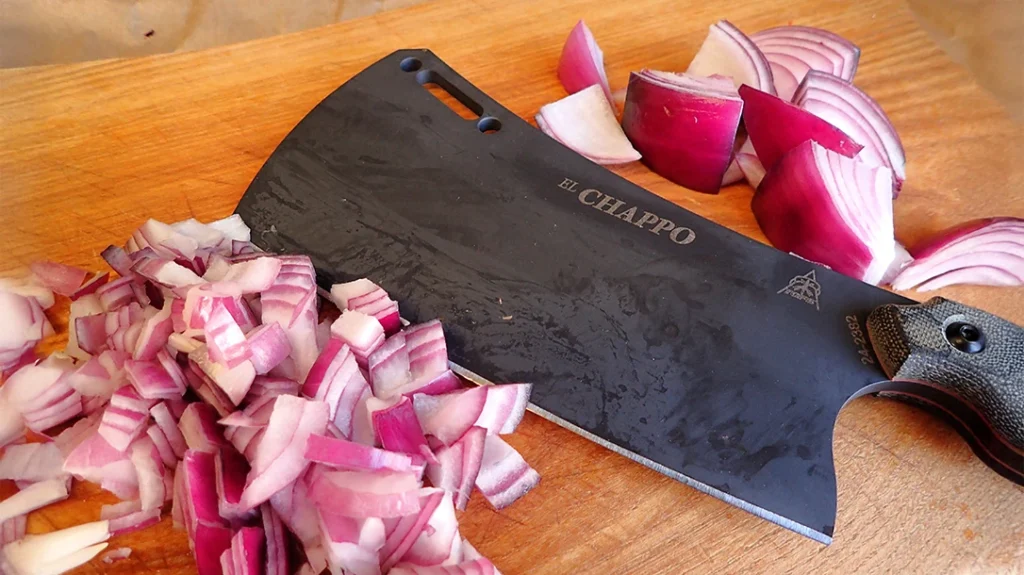
The TOPS Knives El Chappo cleaver doesn’t just chop—it commits. With an overall length of 11 inches and a 6-inch blade, it balances reach and control like a seasoned butcher. The blade is 1095 high-carbon steel, a favorite among survivalists for its edge retention and toughness. TOPS coats it in Sniper Gray, a finish that shrugs off rust and blends into gritty environments.
At 15.9 ounces, El Chappo swings with authority but won’t wear out your wrist mid-session. The handle stretches roughly five inches and wears black Micarta scales that grip like a vice, even when wet.
Advertisement — Continue Reading Below
Whether you’re breaking down game in the field or prepping ribs in the kitchen, this cleaver handles meat, bone, and dense veg with zero hesitation. It scoops, smashes, and slices with the confidence of a tool that knows its job—and does it with flair!
Benefits stack up quickly: it chops meat like a butcher’s tool, doubles as a camp cleaver, and shrugs off abuse. In short, El Chappo is a cleaver that works as hard in the field as it does on the cutting board.
MSRP: $240.00
Advertisement — Continue Reading Below
On the Cutting Board
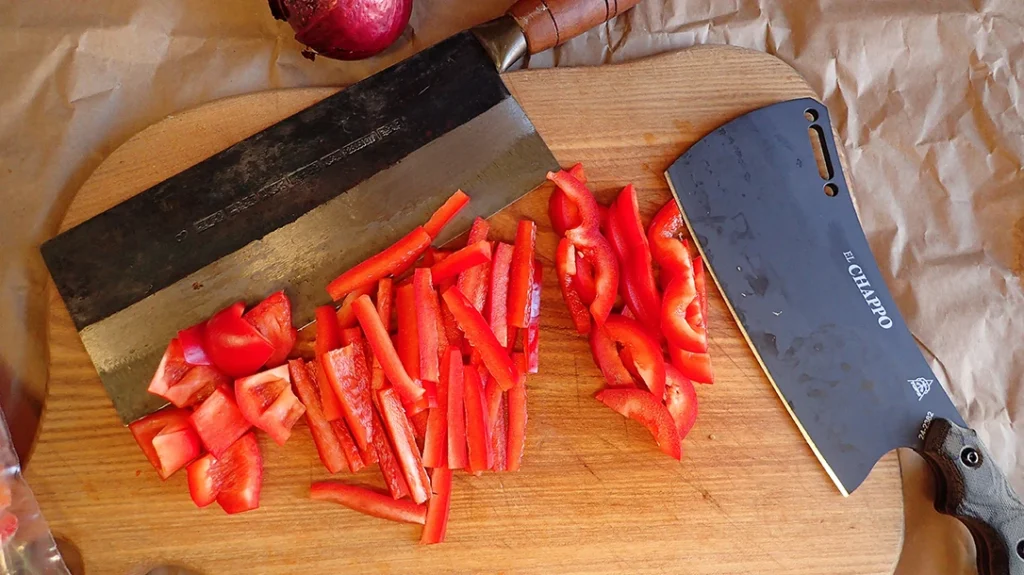
As expected, chopping through chicken bones was a cinch. Opposite to the thin Chinese cleaver, the El Choppo lived up to its name. Instead of slicing to separate the chicken legs, a close enough chop made easy work without any arguments. I removed the backbone from the thigh and effortlessly chopped it into three pieces.
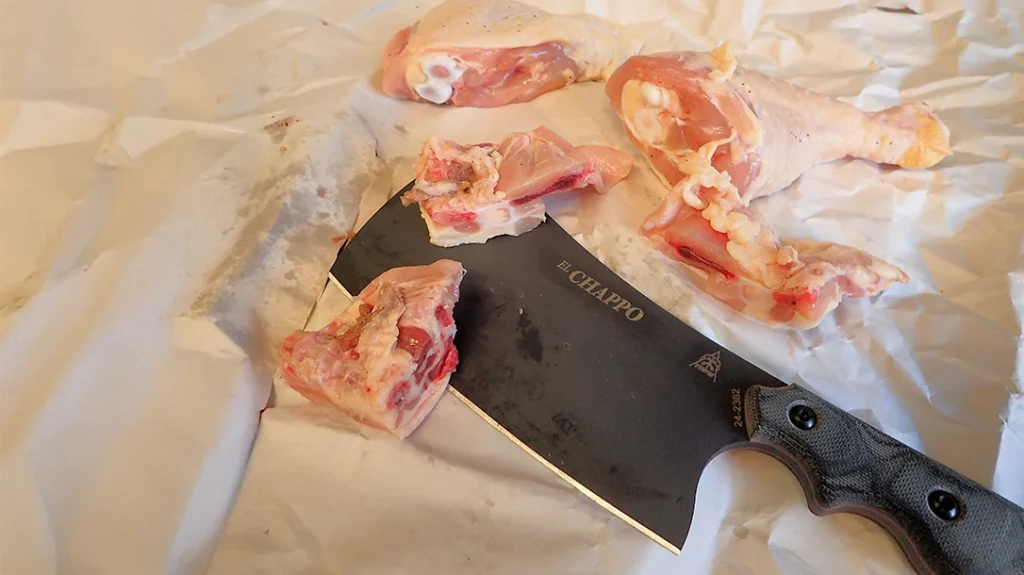
The El Choppo went head-to-head with the Chinese cleaver, chopping onions and peppers, and it kept up just fine. The meat cleaver weighted El Choppo would be more fatiguing over time than the thinner cleaver, obviously. However, when push-cutting, the weight helped get through the stack of peppers more easily.
Advertisement — Continue Reading Below
Heavy Weight Carcass Cleaver
A heavy-weight chopping cleaver dominates jobs that demand brute force and precise impact, splitting ribs and severing joints cleanly in the butcher shop. On the farm, it breaks down carcasses, portions large cuts, and readies meat for storage or feed. In the field, it handles whole game, tackles frozen meat, and turns stubborn tendons into manageable pieces.
Its thick spine and mass deliver chopping energy without relying on a hacking sawing motion. Compared with medium-heavy cleavers, it trades nimble finesse for unrivaled bone-breaking power. Compared with light Chinese cleavers, it performs tasks that those blades politely avoid.
Butcher’s cleavers lean even heavier, built for industrial carcass work that demands maximum force. Keep a heavy chopping cleaver close for jobs that would ruin a chef’s favorite knife.
K-Night Cleaver
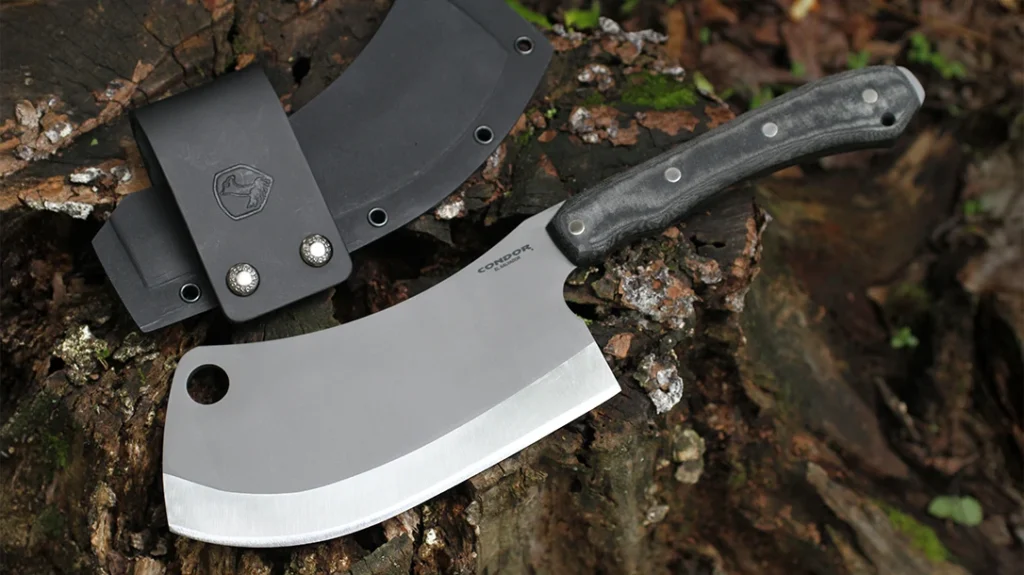
The Condor Tool & Knife K-Night Cleaver, designed by Jason Breeden, defies simple categorization. While labeled a cleaver, it’s more than a kitchen utensil; it’s part of Condor’s tactical lineup, engineered for rugged field use and outdoor environments.
Measuring 16.07 inches overall, the K-Night balances reach with usable heft. Its 8.15-inch blade provides a dominant cutting edge ideal for chopping and batoning. Made from 1075 high-carbon steel with a blasted satin finish, the blade offers toughness and easy sharpening, with a thickness of 0.20 inches for structural stability during heavy use.
The handle, measuring 7.92 inches, utilizes sculpted Micarta for a secure, non-slip grip. As a full-tang design, Condor built it to endure demanding tasks without fail.
Weighing 1 pound 14 ounces, the cleaver is light enough for extended use while providing ample momentum for effective chopping. With a unique Persian aesthetic, the K-Night Cleaver is a versatile utility tool, perfect for survival and challenging situations.
MSRP: $164.98
The Sweetgum Killer
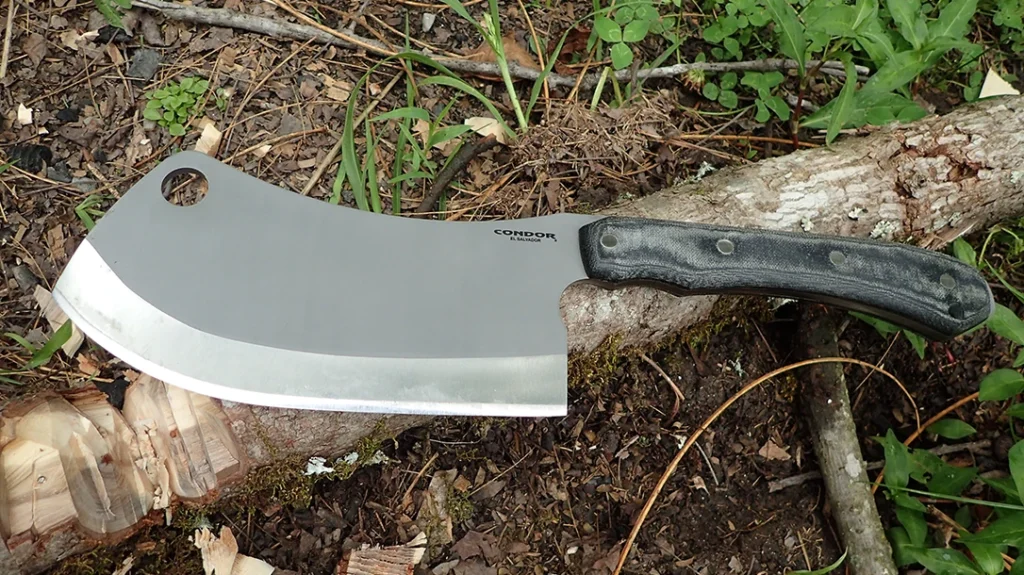
I got the K-Night Cleaver at Blade Show and stayed in Georgia after with plenty of wood to chop. Sweetgum became my victim. I knew this heavy chopping tool would cleave meat and bones like a champ, so I tried it on woodsy tasks.
We always have a fire roaring in Georgia, even in the summer. Prepping fire is like prepping food. It takes time and reliable tools. The K-Night Cleaver chopped sweetgum and several finger/thumb to broomstick-thick dead branches for small fuel and kindling.
The Condor convex grind is perfect for heavy chopping, and the handle is purpose-built. Gripping the handle near the end adds leverage, which equals power. At times, it felt like an axe, but it could still crank out fine, curly feathers for tinder.
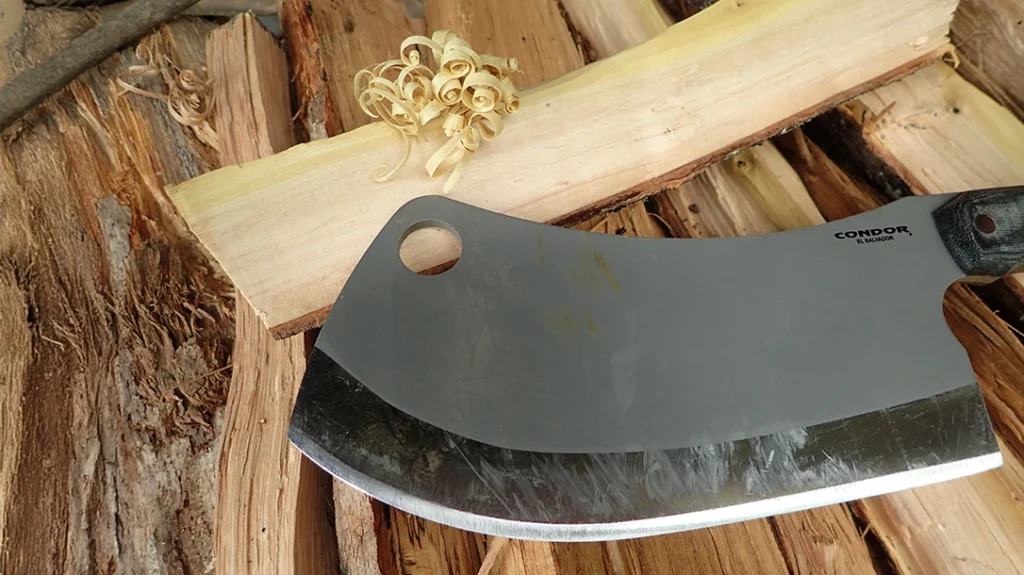
While kneeling or bending forward, I used it two-handed like a hatchet. As for the cupcake’s topping, the spine was sharpened to a 90-degree angle, making it a true survival tool. A ferro rod, fatwood, or thin, scraggly bark could be shaved easily with the extra tool (the spine).
Yes, there’s a sheath. I can’t imagine anyone wanting to carry this behemoth on their belt. The Kydex sheath with leather is well-made and very secure as a transport sheath. Excellent work, Jason and Condor Tool & Knife!
Cleaver Quick Specs
Chinese Chef Knife (General Size)
| Overall | 12”-13” |
| Blade | 8.5” |
| Material | Carbon or Stainless Steel |
| Handle | 4” Wood |
| MSRP | $7-$40 |
TOPS Knives El Chappo
| Designer | Leo Espinoza |
| Overall | 11” |
| Blade | 6” |
| Material | 1095 High-Carbon Steel |
| Handle | 5” Micarta Black |
| MSRP | $240.00 |
Condor Tool & Knife K-Night Cleaver
| Designer | Jason Breeden |
| Overall | 16.07” |
| Blade | 7.92” |
| Material | 1075 High-Carbon Steel |
| Handle | 7.92 |
| MSRP | $164.98 |

