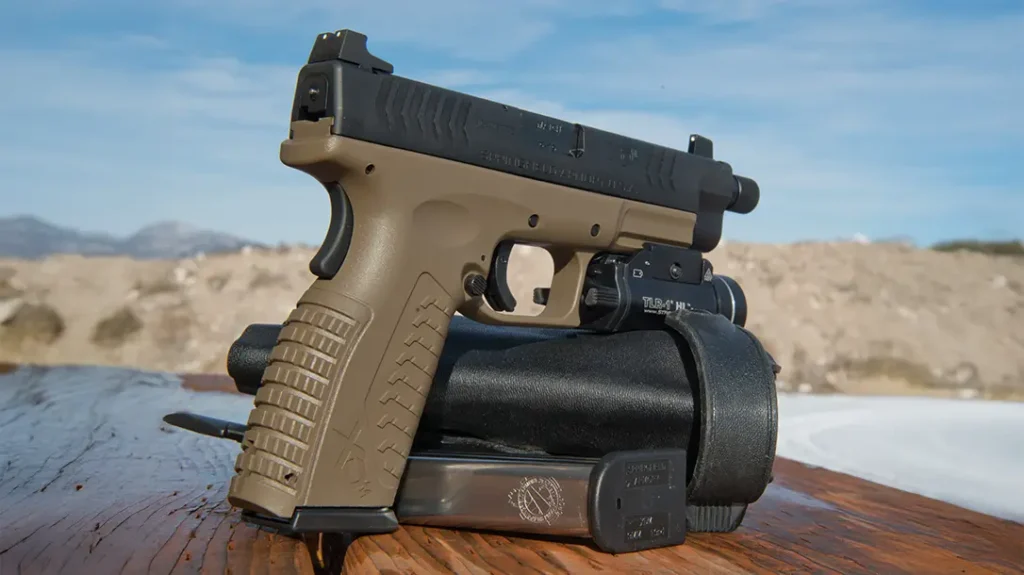

Grip safeties on a pistol have been around since at least the introduction of the 1911 pistol, with at least one revolver using them in the late 1800’s. They still exist on most 1911 pistols today, as well as a few others. But do they make your pistol safer? Or are they a liability?
Grip Safeties on a Pistol
The prevailing thought was that the grip safety was added so the 1911 could be safely fired (not into the horse) one-handed. This was a general requirement for the cavalry. It was also considered an additional safety to allow “cocked and locked” carry.
Over the years, most, if not all, 1911 pistols have them. However, there have been several “fixes,” most notably the Novak grip safety replacement. They can be altered to be inoperable yet remain intact. Various methods have been used over the years and continue to be used today.
Advertisement — Continue Reading Below
It seems that for about as long as the grip safety has existed on the 1911, someone has been trying to either disable or remove it. Why? And is it a good idea?
Why Do Grip Safeties Still Remain?
Pretty simple, actually. It provides a second means of ensuring you are properly gripping the pistol with the intention of shooting it.
Advertisement — Continue Reading Below
On single-action pistols, where the trigger pull is light, in conjunction with the slide safety, it is one of the safest designs. So long as one of the two is activated, the pistol will not fire. Many see this as a significant plus, choosing this design purposely.
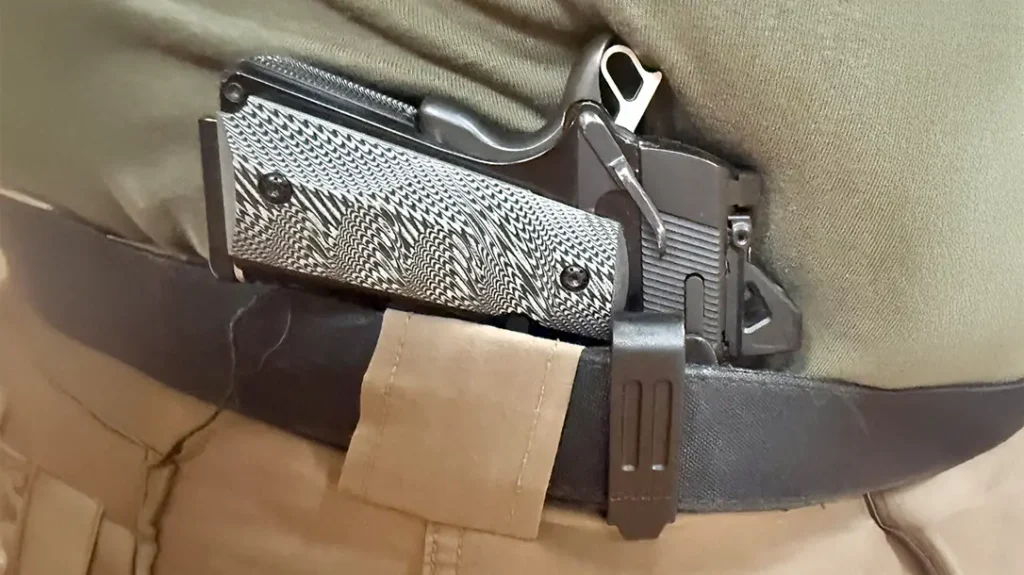
Several of my clients over the years will shoot nothing else, especially those carrying Appendix Inside a Wasteband (AIWB). They seem to like the idea that during the presentation or holstering, so long as the slide safety is on, it will not fire.
Advertisement — Continue Reading Below
There are also those states that see anything altering an originally designed safety as a liability risk. Not sure that has ever been real, but it is a real perception. Many agencies that want to use a 1911 will not allow any safety to be altered and carried on duty. It’s why companies like Staccato and others are building what amount to 1911 or 2011 pistols from the factory without them requiring any alteration.
While a few (Springfield Armory XD) have added a grip safety, most make an effort to disable it, remove it, or just learn to live with it.
Downsides?
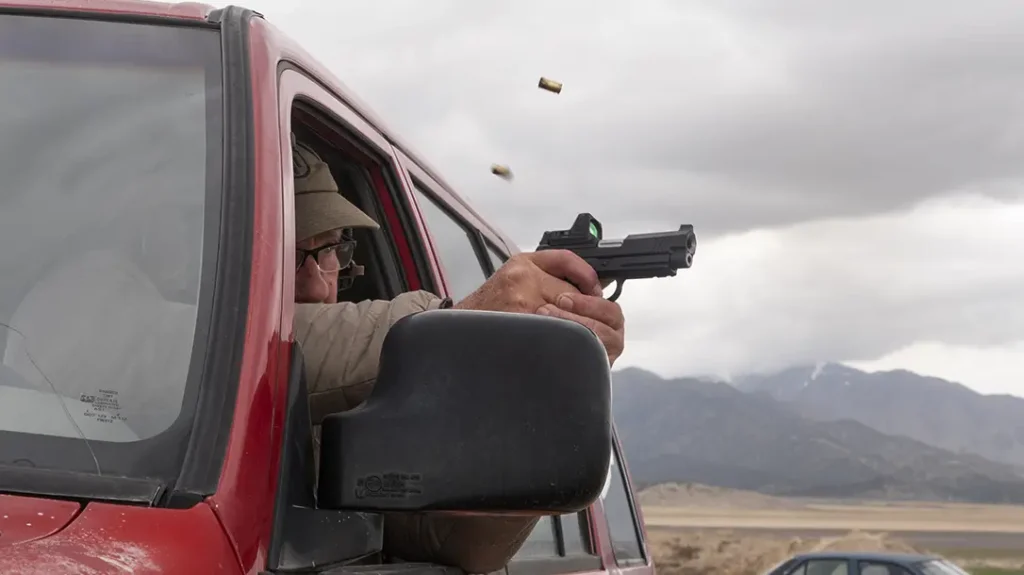
Probably the biggest downside is failing to deactivate the grip safety when trying to fire the pistol. These days, most have a bump on the bottom, making it easier to depress. However, if your grip is not perfect, pressing the trigger gets you silence. Frustrating on the range, deadly on the street.
Advertisement — Continue Reading Below
Going back decades, competitors would disable it or cause it to deactivate on the lightest touch. Rules required they work, so they did. But breathe on them too hard, and they release.
Another issue for some is the added complexity. Especially if you see no value—it’s just something to go wrong. While the 1911 or 2011 are not all that complicated, they are parts-intensive, and it is just more parts.
Advertisement — Continue Reading Below
For most, the value of the design lies in accuracy and a certain feel, qualities the grip safety does nothing to enhance.
Alternatives to the Grip Safety?
Advantages of the single-action trigger design are well known and well proven. Most of Glock’s, and any other striker-fired pistol’s, existence consists of trying to make the trigger feel “like a 1911.” It has resulted in a massive aftermarket of various triggers trying to be 1911-like.
Other options are similar pistols designed ground up without a grip safety. The best example is Browning’s successor to the 1911, the “Browning High Power.” Using a pivoting trigger, it has many of the advantages without a grip safety.
Advertisement — Continue Reading Below
Sig Sauer SAO (Single Action Only) pistols are very successful examples. The trigger feels much like a 1911, no grip safety, with an ambidextrous slide safety. Having used these for years, they are much preferred over a 1911.
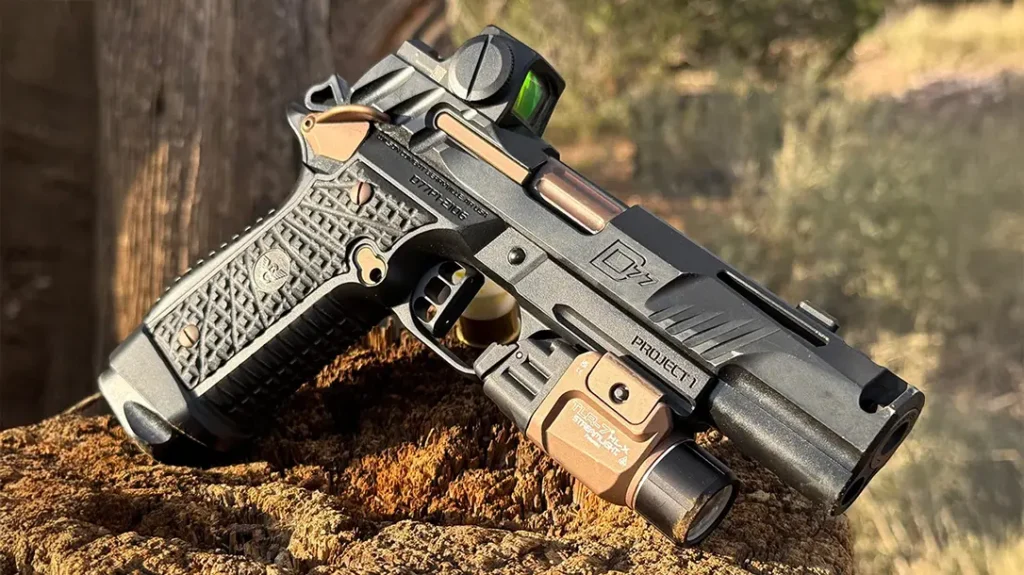
Wilson Combat designed the EDC X9 ground up with a 1911 upper and a lower with a 1911 trigger and no grip safety. I have been carrying one for years. Their latest Division 77 Project 1 may be the epitome of this design. It provides everything a 1911 has, without a grip safety.
Advertisement — Continue Reading Below
The last couple of years, Staccato introduced the HD line using a 2011 style upper and lower that takes Glock Mags with no grip safety. Several customs are out there with the same theme. CZ has been building excellent single-action pistols without a grip safety, and they are popular worldwide.
All told, there are several viable alternatives that provide all the advantages of the 1911 design without a grip safety.
Grip Safety? Or No Grip Safety?
Experts certainly disagree, but the only time my preference includes a grip safety is when carrying a 1911 AIWB. Given the number of instances of people shooting themselves in the crotch, the added safety is nice. I worked a case as an SME where a suspect literally blew his genitals off “speed holstering” his striker-fired pistol. So, yes, it happens.
Advertisement — Continue Reading Below
Granted, AIWB is not my favorite carry in general, but a grip safety remains my preference when I do. Outside that purpose, my pistols generally do not have a grip safety, or they have been “tuned” to ensure it is activated when gripped.
If it is your preference, fine, there is nothing wrong with that. However, it means you really need to practice a grip that ensures that safety is deactivated. I see students fail to depress that safety all the time, and it throws them a curve. Make sure you practice and understand that it can be an issue.
Is it safe? Sure. But there is such a thing as too safe, especially when it comes to mechanical devices. If it is so safe that it won’t fire when you need it, the safety is pretty meaningless.