

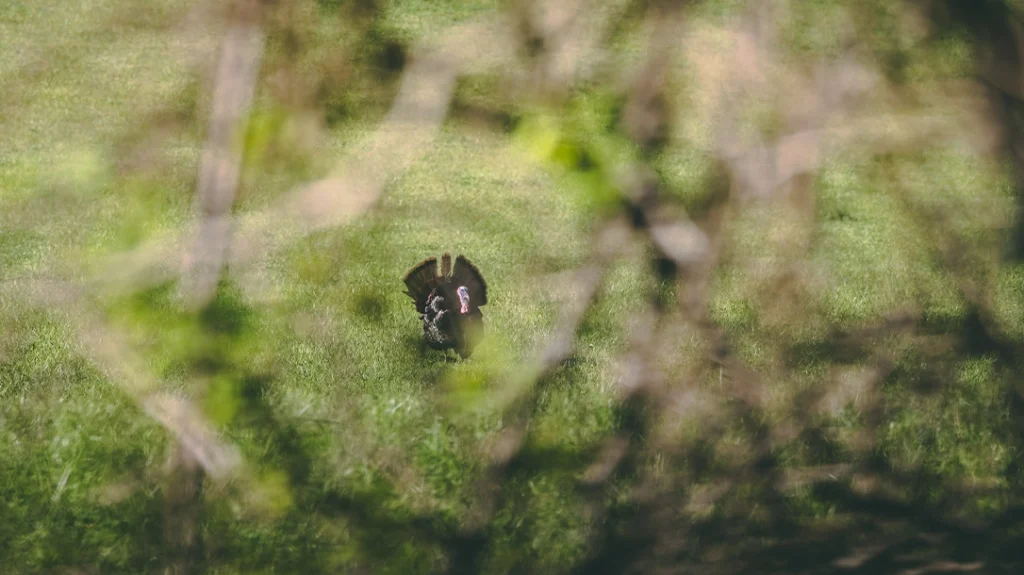
If you’ve chased spring gobblers for any amount of time, you’ve been here before. A bird answers every call, cuts the distance, blows up into full strut, and then, hits the edge of a field and locks up just out of range. He’ll stand there gobbling his head off, pacing, drumming, putting on a show for what feels like forever, but he will not take those last few steps.
It’s one of the most frustrating scenarios in turkey hunting, and honestly, it happens more than most guys care to admit. The reason is pretty simple, turkeys love open ground, but they don’t trust it. Fields give them visibility, bugging areas, and a place to strut, but they also leave them exposed and vulnerable. And a mature gobbler didn’t get old by being careless. If something doesn’t look right, even just a little off, he’s going to hang tight and wait you out.
That’s where decoy placement along field edges and transition zones can make all the difference between watching a show and filling a tag.
Understanding the Edge
It doesn’t take long to realize that field edges are where a lot of the action happens. Birds naturally travel these lines as they move from roost to feed and back again, but more importantly, it’s where gobblers expect to see hens. Instead of trying to pull a bird across a wide-open field, you’re better off making him think the hen is already where he wants her, right on that field edge. That small shift in thinking will kill a lot more turkeys than trying to drag one across 60 or 80 yards of open ground.
Advertisement — Continue Reading Below
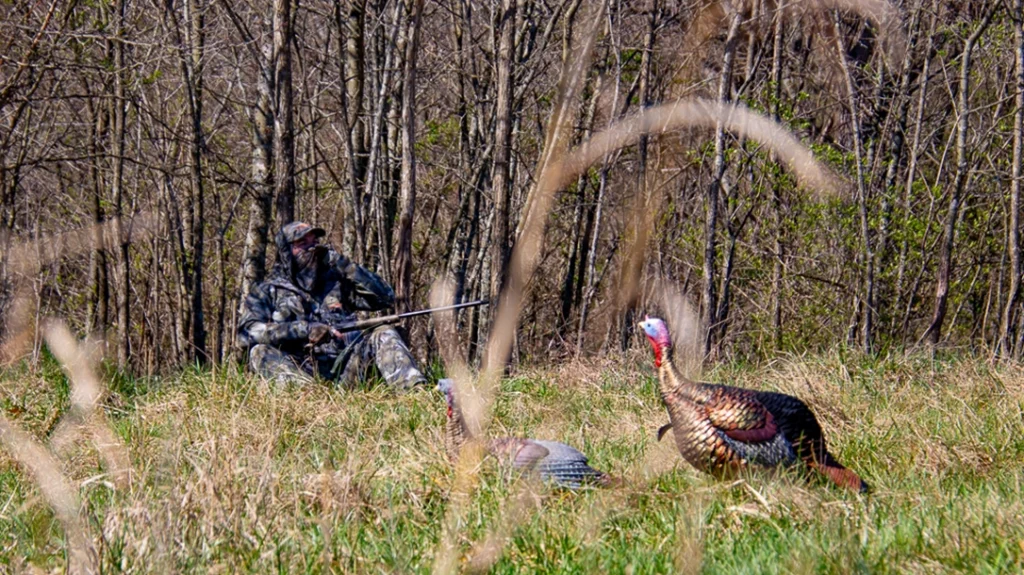
Edges also give you what you need as a hunter, cover. Whether it’s brush, saplings, a fence row, or just that shadow line where the timber meets the field, it helps break you up. And just as important, it gives that gobbler a sense of security. He can approach, check things out, and still feel like he’s got an escape route if something isn’t right. Set your decoy right on that transition, and now you’re giving him exactly what he’s looking for, a hen he can see without fully committing too early. Pair that with the right calling, and more times than not, that’s enough to tip the odds in your favor.
Don’t Put the Decoy Where You Want the Shot
A mistake I see a lot of hunters make is putting the decoy exactly where they want to shoot the bird. It makes sense in theory, but in the real world, it’s why a lot of gobblers hang up just out of range or inside the timber. You’ve got to think about where that bird is going to see the decoy first, not where you want him to end up.
Turkeys can pick things apart from a long way off, remember they have great vision. If a gobbler is out in the field or working the opposite edge, your decoy needs to be visible from that distance. Setting it 10 to 15 yards inside the field edge does two things, it makes it easy to spot, and it naturally pulls the bird closer when he commits. From there, slide yourself back another 15 to 20 yards into cover. That separation keeps your movement hidden and puts the bird right where you want him when he comes to the decoy.
Use the Terrain to Your Advantage
Not all field edges are created equal. The little details, things most guys walk right past, are what can make a setup come together. A slight rise, a dip, thicker grass, a brushy corner, even an old fence line, these are all things turkeys use when they move. They don’t just wander aimlessly across a field edge. They follow the easiest, most natural path. Before heading out look at a birds eye view of the property on OnX and try to identify some of these key features.
Advertisement — Continue Reading Below
When you’re setting decoys, think about how a turkey wants to approach. If there’s a corner in the field, use it. Set your decoy so that bird has to step around it to see what’s there. That forces him to commit before he can stand back and pick everything apart. Same goes for thicker cover. If there’s a patch of taller grass or a brush pocket, putting your decoy just past it makes it look like a hen eased out into the field to feed. It’s a small detail, but it makes the whole setup feel right, and with turkeys, “right” is what kills them.
Simple Decoy Spreads Work Best
When hunting field edges, less is often more. A simple hen decoy can be deadly in these situations because it looks natural and doesn’t intimidate approaching gobblers. Early in the season, a single feeding hen positioned slightly quartering toward your setup can be enough to convince a lonely gobbler that a hen is feeding just inside the field.
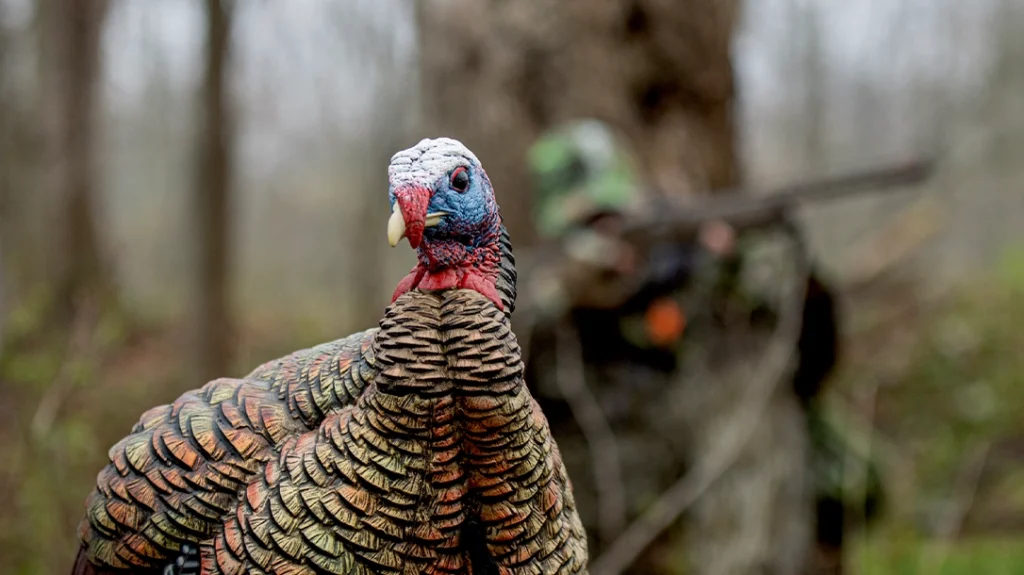
As the breeding season progresses and birds become more territorial, adding a jake decoy can trigger a completely different response. A jake standing over a hen often sends mature gobblers into a rage. When placed correctly along a field edge, this setup can pull birds out of the timber quickly as they rush in to challenge what they believe is a rival. The key is making the scene look natural and realistic. Turkeys are incredibly visual animals, and unnatural positioning can cause them to stall or circle.
The decoy itself matters just as much as the setup. Options from Avian-X are built to look right at a distance, which is critical when a gobbler is standing out in the field picking everything apart. Turkeys don’t tolerate “close enough,” and a decoy that looks off is often all it takes to make one hang up.
Advertisement — Continue Reading Below
Calling Completes the Picture
Decoys alone won’t always seal the deal. Your calling cadence should reinforce what the gobbler sees. If you’re running a hen decoy along a field edge, keep the calling soft and realistic. A few yelps and clucks on a quality pot call or mouth call can suggest a relaxed hen feeding along the edge.
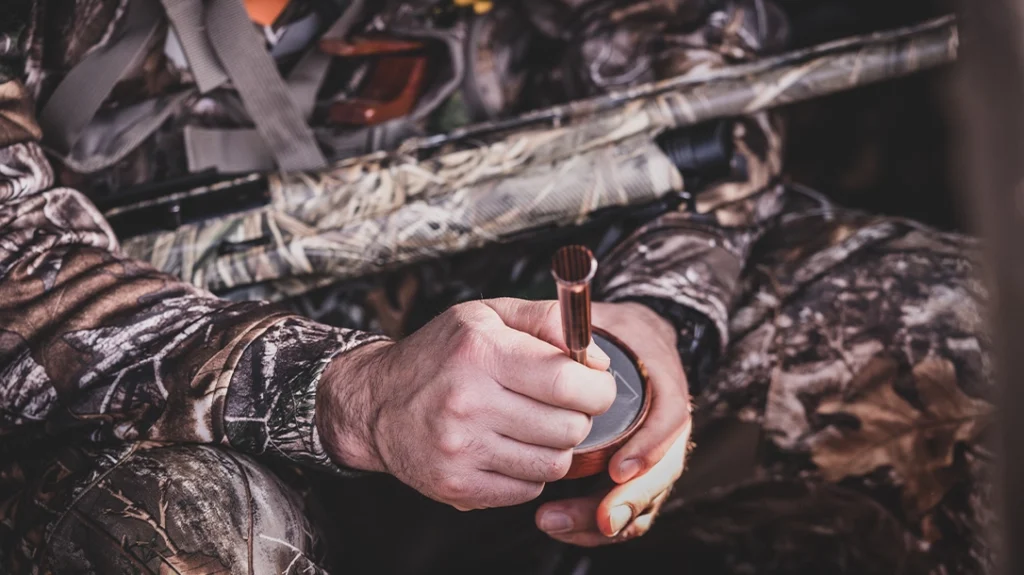
Companies like ESH Custom Calls produce pot calls and mouth calls that excel at these softer, natural tones they are perfect for coaxing a gobbler those final yards without overdoing it. Remember, once the bird sees the decoy, your job is mostly done. Excessive calling at this stage can actually spook a tom. Once he’s committed let the decoy do the work.
Concealment Is Everything
Even the best decoy setup won’t save you if a gobbler spots movement. Field edges typically offer better cover than open ground, but they still require careful positioning. Sit against a wide tree, brush pile, or natural backdrop that breaks up your outline. Shadow lines are your friend in these situations. If the sun is hitting the field edge, sliding a few yards back into the darker timber can make you nearly invisible.
Advertisement — Continue Reading Below
Camouflage gloves and a face mask also become critical when hunting open edges, as gobblers will often approach cautiously while scanning the area. The closer they get, the more their eyes will be working. This is where quality camo and a good pattern really shines. Sitka’s Optifade Cover pattern is a game changer in these conditions, and it is some of the most comfortable on the market.
Patience Pays Off
Perhaps the most important part of field edge hunting is patience. A gobbler that hangs up in a field often takes his time committing. He may strut, circle, and gobble repeatedly before finally closing the distance. Hunters who get impatient and shift positions too soon often blow the opportunity entirely, just sit still, relax, and enjoy the moment. If your decoy is visible and your calling has been realistic, there’s a good chance that bird will eventually break and walk your direction. And when he does, it usually happens fast.
Turning a Hang-Up into a Harvest
Field edge setups are one of the most reliable ways to turn a stubborn gobbler into a bird on the wall. By understanding how turkeys use open ground, and how cautious they can be when crossing it, you can position decoys to work with their instincts rather than against them. The next time a gobbler stalls on the far side of a field, resist the urge to push closer. Instead, adjust your setup so the decoy sits right where the timber meets the grass, give him a hen to focus on, and let curiosity take over.
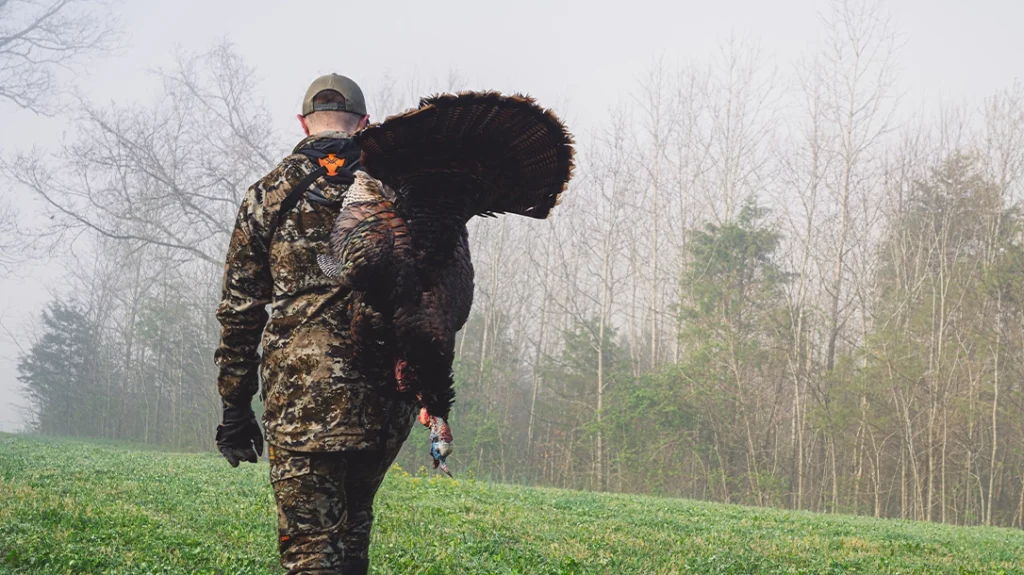
More often than not, that longbeard will eventually step out of the safety of the woods, looking for the hen he thinks is waiting just inside the field. And that’s when a well-planned field edge setup pays off.
Advertisement — Continue Reading Below
WHY OUR ARTICLES/REVIEWS DO NOT HAVE AFFILIATE LINKS
Affiliate links create a financial incentive for writers to promote certain products, which can lead to biased recommendations. This blurs the line between genuine advice and marketing, reducing trust in the content.

