

The very mention of some brands is enough to instill confidence and put you at ease. Thunderbeast is one of those names. If you have any experience in suppressors and especially if you’ve had any experience with TBAC you know that it is a name synonymous with quality and no b.s. performance. Every single TBAC suppressor that I’ve owned, shot, or reviewed has been a phenomenal performer against the competition even when the TBAC product was technically outclassed.
Precision shooting is where TBAC is most formidable, with their cans being widely used in this particular section of shooting. I’ve never actually seen a Thunderbeast on a gas gun in person. Only in pictures. But now with the release of this latest suppressor, the Spiro, you’re likely to see Thunderbeast suppressors on a myriad of gas guns.
Advertisement — Continue Reading Below
The word Spiro means “to breathe,” in Latin, and being a flow through suppressor, that’s exactly what it does. This is a new departure for Thunderbeast. Don’t let that fool you into thinking that they don’t know what they’re doing because nothing could be further from the truth. The Spiro has been under two years (at least) of development at this point and now it’s finally released.
Gas Gun Paradox
Here’s what we know about suppression that doesn’t change. When you put a suppressor on a gun it creates back pressure. It’s the nature of the beast. Pushing the gases backward into the barrel, action, and receiver. In the case of gas guns, also into the shooter’s face. This of course results in increased bolt speeds in a gas gun among other things like increase cyclic rates and affecting ejection patterns. This issue has been addressed many different ways over the past decade with some of the most notable being adjustable gas blocks which do work and come in many different flavors, and we even used adjustable bolt carriers. I’m not sure if those are utilized much anymore.
Of course the best way to address the issue is at the source which is the suppressor in this case. The Spiro addresses the back pressure issue while maintaining acceptable levels of noise attenuation. Typically, flow through designs have to give up something in order to push the gases through more efficiently and that’s typically sound performance.
Advertisement — Continue Reading Below
Meet The Spiro
The Spiro is a low back pressure design, specifically for gas guns. It’s made from Haynes 282, which is a nickel-chromium-cobalt-molybdenum, per TBAC’s literature. Say that ten times fast. In order to drive the significance of this home further, TBAC refers to this as a “go to war” suppressor due to its durability. That’s because Haynes 282 exceeds the strength and operation temperatures of Inconel 718, a very popular material for hard use suppressors. In fact it’s temperature handling capability is some 500 degrees higher.
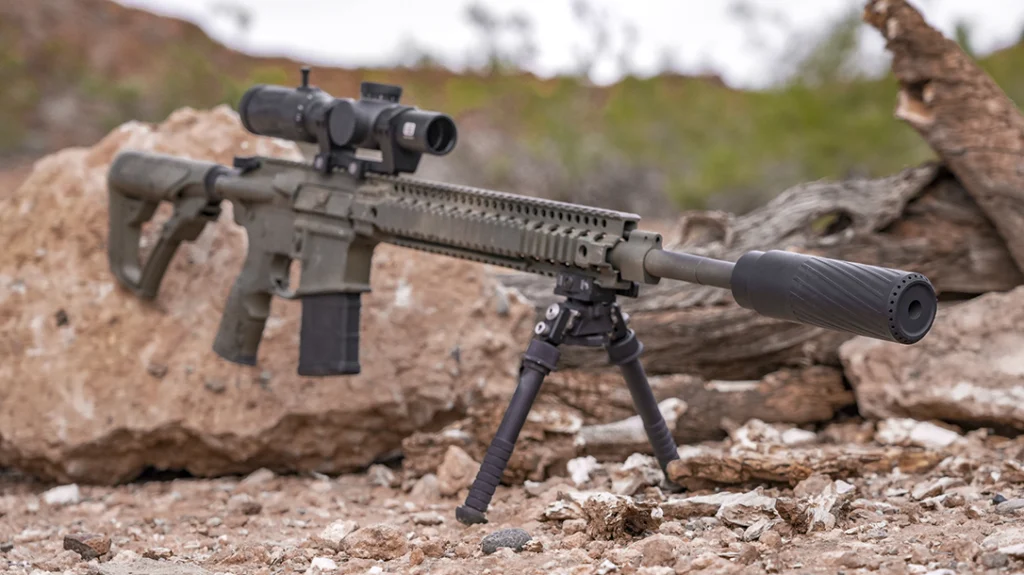
The Spiro is rated for over 20 cycles of the SOCOM SURG test which is an eight-magazine mag dump (full auto) on a weapon with a 10.5-inch barrel. Their other full auto cans are guaranteed for 10 cycles. So, durability is up by 200% with the SPIRO. Again, directly from TBAC, this suppressor was designed to be run on 8-inch and up 5.56 guns and be run “a lot.” If you have any doubts about durability—don’t.
Advertisement — Continue Reading Below
Measuring Back Pressure
The durability performance of the Spiro is impressive, but what’s equally if not more impressive is their dedication to the development, design, and testing of the Spiro. With the launch of this suppressor comes hard data on the suppressor’s impact on back pressure in the weapon system. This was achieved by designing a system to objectively measure and quantify these properties. Something we haven’t been able to do in the past.
Thunderbeast invented the TBAC Method of Measuring Back Pressure, which as of this writing is a white paper draft that may go under some modification before launch. That being the case, this paper clearly outlines definitions of back pressure as well as the objectives of the study. You can find a link here. I won’t rehash the study information as you can read it for yourself but some important points include direct physical measurements through the use of a pressure sensor on a modified barrel. The goal was to remove any datapoints that were subjective or not in direct relation to the actual flow of gas.
Data was acquired with a BK3052, a piezo sensor and PCB charge converter resulting in a pressure versus time measurement. TBAC clearly states all methods and testing method reasoning on their website, leaving nothing to be argued or discredited without deciphering the findings. It’s quite impressive. They even have an email address set up specifically to handle inquires about the dataset.
Advertisement — Continue Reading Below
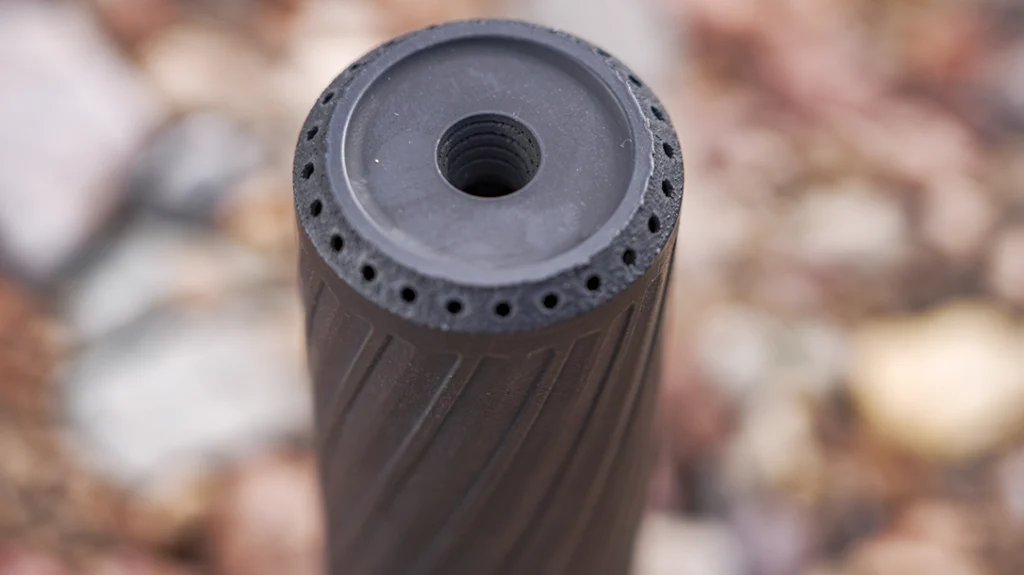
Data Collection
They didn’t just collect data on the Spiro but on four competitive flow-through/low back pressure suppressors. These products aren’t named. That said the information is available about the competitors and savvy shooters can likely figure out one or two of them. A data chart lists the suppressors, the SPIRO and four competitor. It lists back pressure and cyclic rate and provides a percentage increase in said measurements. In an interesting move, TBAC included info on the Dominus, which is a tradition style can with no low-backpressure qualities.
According to this data the Spiro resulted in a 50% increase in back pressure and 5% increase in cyclic rate while the closes competitor had a 48% increase in back pressure and 3% increase in cyclic rate. I know what you’re thinking “but the competitor performs better,” right? We maybe but don’t forget the main purpose of a suppressor — noise mitigation. And in this case the TBAC out performed all the competitor in noise reduction with 4 dBA less at the shooters ear. Four decibel is enough for you to discern with your ear. It rated 10 dBA less on the Mil Spec LEQ method of testing. The SPIRO’s overall performance is impressive and at just under 5.9 inches while several of the competitive suppressors were 6.5 inches and greater.
Advertisement — Continue Reading Below
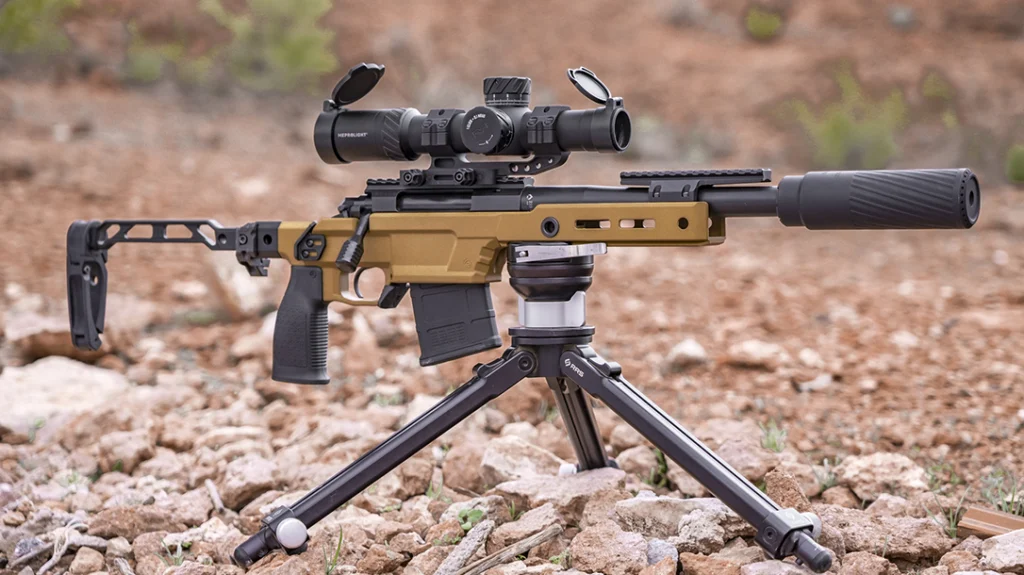
Shooting The Spiro
I put the Spiro on several different weapons including two AR’s, one an 18” SPR and the other a 16” Stag Arms, both lefty builds. They shot well with and they have no special gas systems. Cyclic speed wasn’t excessive and ejection patterns were good. Nothing concerning when looking at spent cases and after a few rounds and ejecting the magazine, the unfired rounds were not caked with carbon and other stuff. It was nice knowing wouldn’t have to make any changes to these systems to run them suppressed and I wasn’t getting a face full of gas.
So where does that leave us? Well, as the flood gates of suppressors open, due to their no longer being a tax and short approval times, buyers need to be aware of what they are getting. Education will be key. Performance data will be key as well. The urge to buy many and hope is tempting but one still need to go through the paper work and they are then registered on the NFA list. So, if you buy a suppressor that you end up not liking, you can’t just sell it or give it away. You’re stuck with it unless you can transfer it to someone willing to take it off of your hands.
Advertisement — Continue Reading Below
Wrapping It Up
With the launch of the Spiro we are getting not only a high quality offering from a respectable name in suppression but the technical data to back up its performance and justify its existence in the space. It’s not just a new suppressor to add to the list but a useful tool meant for a lifetime of use. As the suppression waters muddy, this clarity is greatly welcome and necessary. Maybe soon we’ll have an industry standard for all suppressor performance measures that will make us all better educated buyers.
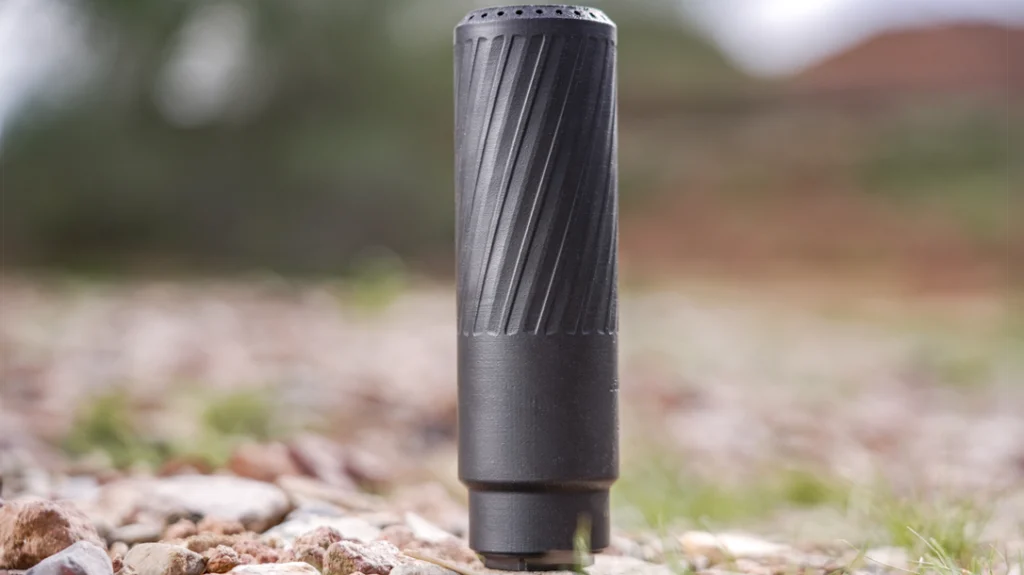
Specifications: Thunderbeast Spiro
- Caliber: .223/5.56mm, 22 Creedmoor
- Material: Haynes 282
- Length: 5.9 inches
- Weight: 15.5 oz
- Diameter: 1.8 in
- Mounts: Direct thread (1/2-28), HUB
- Finish: Black Cerakote
- MSRP: $995
WHY OUR ARTICLES/REVIEWS DO NOT HAVE AFFILIATE LINKS
Affiliate links create a financial incentive for writers to promote certain products, which can lead to biased recommendations. This blurs the line between genuine advice and marketing, reducing trust in the content.
Advertisement — Continue Reading Below

