

Some might say that a turkey gun is a contradiction of how the shotgun is typically used. Turkey hunters aim their shotgun at a relatively stationary target, while a shotgun is designed to point at a flying or fast-moving target. A shotgun designed to hunt deer with its short barrel and method of attaching an optic is a better representation of a turkey shotgun than a field shotgun.
When I started turkey hunting, copper plated lead pellets and a full choke was the prescription for killing your turkey. No one gave much thought to the choke they were shooting. As a matter of fact, I only owned one choke tube for that old Remington Express 870 I used to bag my first turkey. Fast forward 35 years and I’d feel naked if I left the house without a custom turkey choke screwed into my shotgun.
While copper plated pellets are still available, the majority of serious turkey hunters have switched over to TSS and custom choke tubes which have upped the ante for turkey hunting.
The choke is the last thing to touch your shot before it leaves your shotgun and I want, or better yet, need all the help I can get.
Advertisement — Continue Reading Below
Chokes and TSS
When looking for a choke to shoot TSS, most choke manufacturers recommend switching chokes.
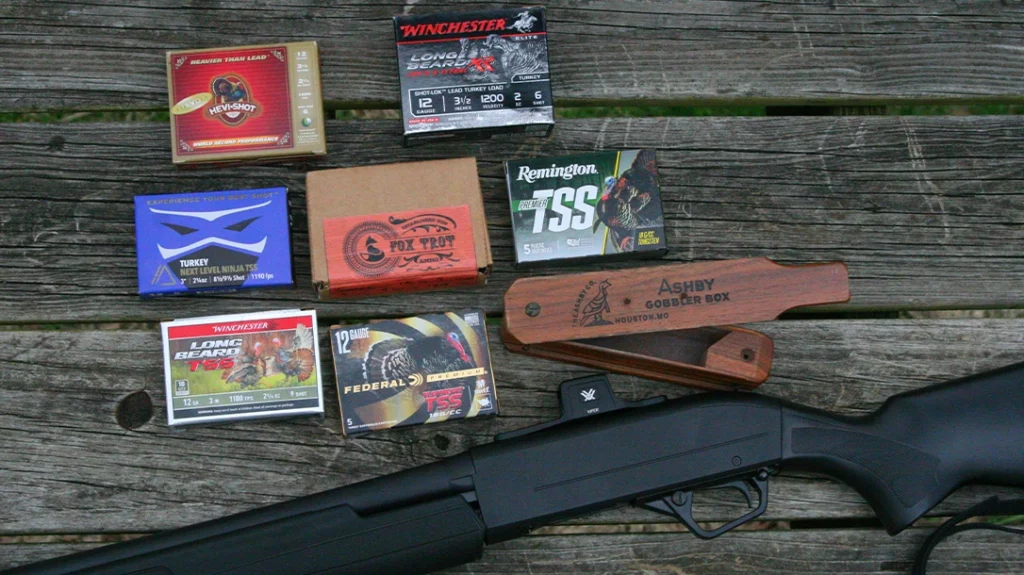
“A more open choke should be used with TSS,” Mike Ponder of Indian Creek Shooting Systems, said. “Anytime you are using a more open choke your shot produces less pressure, less recoil and you don’t blow holes in your pattern. Especially when you are shooting a large payload through a tight constriction tube.”
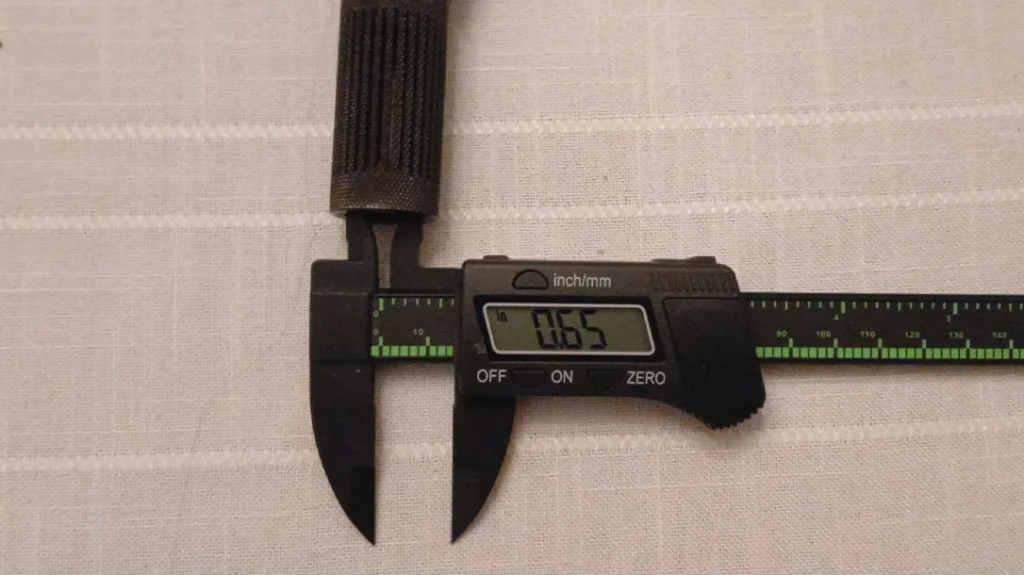
I would rather know the exact measurement of the choke dimension instead of going by the designation on the side of the tube. You can have two different shotguns that use the same choke but have different bore dimensions. The amount of constriction can’t be the same.
Advertisement — Continue Reading Below
“To determine what choke to shoot you have to know your bore dimension and then determine how much you want to restrict that down,” Ponder recommended. “The bore of a Mossberg 835 or 935 is .775 which is like a 10 gauge bore and you put a .660 choke in it, you will blow holes in your pattern. It’s just too much constriction. But you screw that same .660 choke into a Browning which has a .740 bore and you will get good pattern density.”
Patterning
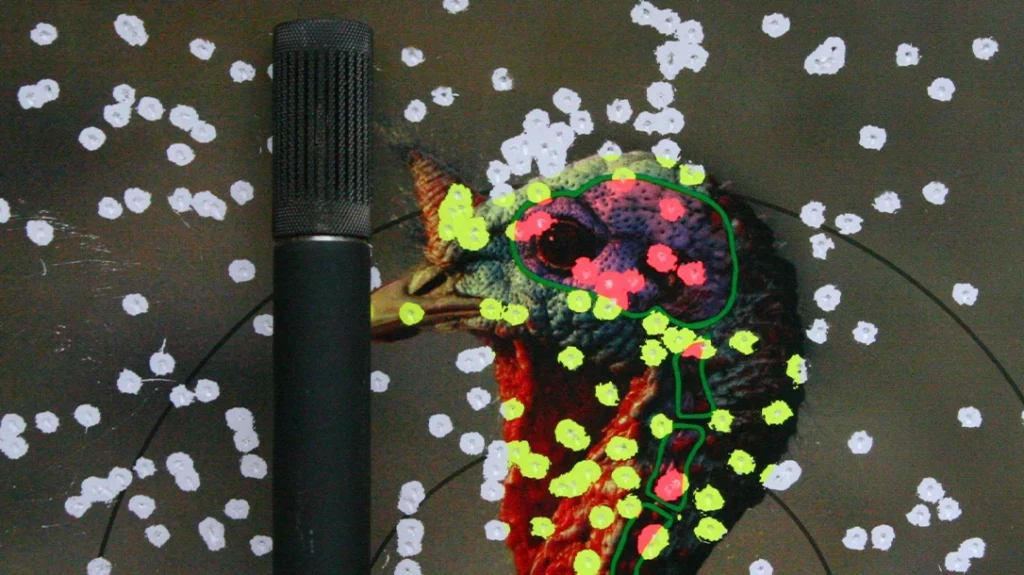
Ponder claims patterning is where the proof lies.
“I pattern at 40 yards from a bench, and I use a 4 ft by 4 ft piece of paper or cardboard,” he said. “I’m not worrying about where the center of the pattern is hitting. I’m not sighting the gun in…at least not yet. I’m shooting it so I can see where every pellet hits coming out of the gun. I find the center of the pattern, draw a 10 inch circle around it and then count how many pellets are in that circle.”
Ponder shoots many shell-choke tube-gun combinations to see what each is capable of doing. Most custom choke tube makers will verse you in what size choke tube you would need for your own application whether its turkey hunting with TSS or waterfowl or predator hunting.
Advertisement — Continue Reading Below
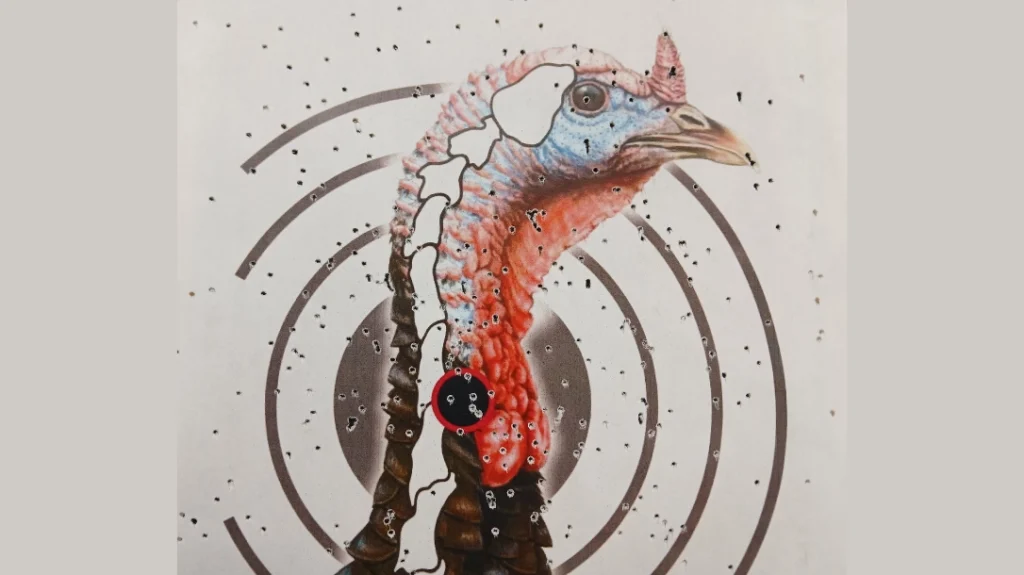
Ponder expects fifty percent of the pellets coming out of the shell to land inside a 10-inch circle at 40 yards with an optimal gun, choke tube and shell combination.
For example, Winchester #6 Longbeard XRs, which are copper plated lead, shooting a 12 gauge 1 ¾ oz, 3 inch loads, you should expect to see 200 pellets in that 10-inch circle. If you switch over to #9 TSS with the same payload, 350 to 400 pellets in that same 10-inch circle shouldn’t be a reach. The remaining pellets should be within a 24-inch circle. That pattern should be uniform and allow for a little margin of error, say if the turkey’s head is bobbing.
Once you get the pattern density you are looking for, your shotgun can then be sighted in by adjusting your red dot, scope or open sights to correlate with the center of the pattern. It’s time consuming and expensive but rewarding to know your turkey rig will deliver when you need it.
WHY OUR ARTICLES/REVIEWS DO NOT HAVE AFFILIATE LINKS
Affiliate links create a financial incentive for writers to promote certain products, which can lead to biased recommendations. This blurs the line between genuine advice and marketing, reducing trust in the content.
Advertisement — Continue Reading Below

