

For a long time, I operated with a tired method. Head out into the field, shoot content with a team, wrap the day, then wait until you get back to a hotel room to upload and post. It worked, but it always felt like a delay between the work and the result. As Starlink matured, that gap began to close. High-speed internet in remote locations was no longer theoretical. It was real. Then the next problem showed up almost immediately. Power.
Starlink does an excellent job of getting you connected where infrastructure does not exist. It uses a network of low Earth orbit satellites that communicate with a compact dish, relaying data between your location and ground stations tied into the broader internet. Because those satellites operate much closer to Earth than traditional systems, latency drops, and speeds increase to a point where real work can happen. Uploading content, running communication platforms, or managing a remote workflow suddenly becomes viable. That is a massive shift.
But connectivity without power is only half a solution.
Advertisement — Continue Reading Below
Purpose-Built Power
That gap is exactly where Star-Batt enters the conversation.
Star-Batt is a relatively new company founded in 2024 by a mechanical engineer and a former Marine Corps and law enforcement professional. Their focus was not to build another general-purpose battery. It was to solve a specific problem. How do you reliably power a Starlink Mini system in the field without building a complicated setup from scratch?
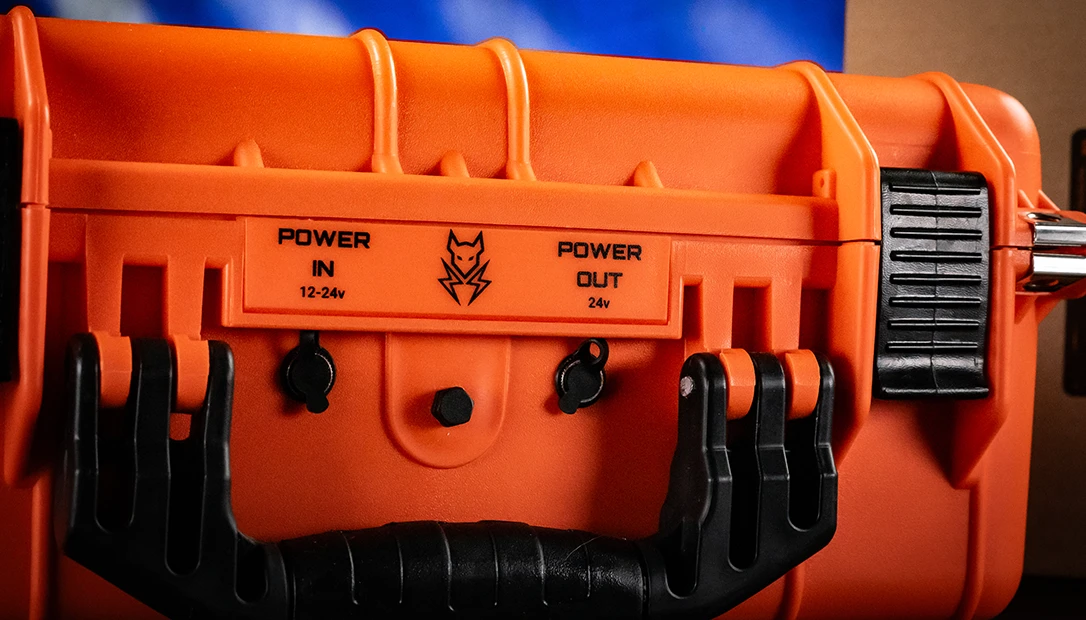
The answer they landed on is refreshingly simple. Build a system that is purpose-driven, self-contained, and durable enough to live outside of controlled environments. At its core, Star-Batt is a lithium-iron phosphate battery system with an integrated management system, packaged in a weather-resistant enclosure. It supports charging from wall power, vehicle input, or solar, and is designed to run Starlink Mini without the need for inverters or external components.
Advertisement — Continue Reading Below
The result is a system that can realistically deliver over 24 hours of runtime under typical use, with the ability to extend that indefinitely when paired with solar input.
The Star-Batt Mini Platform
The Star-Batt Mini is the unit most people will encounter first, and it is where the concept really comes together.
It is built around a 576-watt-hour LiFePO₄ battery, which is a significant factor in its performance. This chemistry is known for stability, safety, and longevity, offering roughly 2000 full charge cycles with the potential for much more under partial use. In practical terms, it is a battery you can rely on repeatedly without worrying about rapid degradation.
Advertisement — Continue Reading Below
One of the more important technical details is the native 24-volt output designed specifically for Starlink Mini. That matters more than it might seem. By delivering the correct voltage directly, the system avoids the inefficiencies that come with converting power through inverters. Less loss means more usable runtime.
The unit also includes USB-C and auxiliary outputs, allowing you to run additional devices alongside your Starlink setup. Charging is flexible. You can plug it into standard AC power, charge it from your vehicle, or feed it with solar input up to roughly 160 watts. The enclosure is rated IP65, meaning it is protected against dust and resistant to water, and it operates across a wide temperature range.
At around 27 pounds, it is not ultralight, but it is clearly built for durability rather than minimal weight.
Advertisement — Continue Reading Below
Where It Excels and Where It Doesn’t
The strength of the Star-Batt Mini is its simplicity. This is not a system that requires planning, wiring, or troubleshooting. You charge it, connect your Starlink Mini, power it on, and establish your connection through the app. That is the entire workflow.
For teams working in remote environments, that simplicity is a real advantage. There is no generator noise, no fuel, and no complicated setup. You can be online in minutes, whether you are in the backcountry, on a job site, or operating out of a vehicle.
Advertisement — Continue Reading Below
That same design focus does come with tradeoffs.
The most notable is transport. With a 576 watt-hour capacity, the Star-Batt Mini exceeds airline limits for lithium batteries. Most regulations cap unrestricted batteries at 100 watt-hours and allow up to 160 watt-hours with approval. Anything beyond that is prohibited on passenger aircraft. This unit exceeds those thresholds, so it cannot be carried on or checked for commercial flights.
If your work requires air travel, you may want to consider upgrading to the Star Batt Pro, which features a removable battery and is FAA/TSA-compliant for commercial flights.
Advertisement — Continue Reading Below
The other consideration is that Star-Batt is not trying to be everything. It is not a general-purpose power station competing with larger consumer battery brands. It is designed specifically to support Starlink Mini. That focus is what makes it effective, but it also defines its lane.
Field Use and Practical Impact
In practice, the difference this setup makes is immediate.
The ability to capture content and push it live from the field changes how a team operates. There is no delay, no backlog, and no dependency on returning to infrastructure. Communication improves, workflow tightens, and the entire process becomes more efficient.
For remote work, overlanding, or backcountry operations, it opens doors that simply were not available a few years ago. You are no longer disconnected unless you choose to be.
Final Thoughts
Starlink solved the connectivity problem. Star-Batt solved the power problem that followed.
The Star-Batt Mini is not the lightest option, and it is not built for air travel, but it delivers exactly what it sets out to do. It provides a reliable, simple, and purpose-built way to bring high-speed internet into places where it did not exist before.
For teams and individuals who need that capability, it is hard to overstate the value.
If this fits your workflow or environment, I recommend taking a closer look at what Star-Batt offers and how it can integrate into your setup.
WHY OUR ARTICLES/REVIEWS DO NOT HAVE AFFILIATE LINKS
Affiliate links create a financial incentive for writers to promote certain products, which can lead to biased recommendations. This blurs the line between genuine advice and marketing, reducing trust in the content.

