
It was Valentine’s Day, and Gold Canyon sits about ninety minutes across the valley from us. Sometimes the destination is secondary to the drive. Desert light stretches across the freeway. Conversation settles into an easy rhythm. There is nowhere else to be. A day like that does not always need a mission beyond motion, sunlight, and a reason to keep heading forward. We decided to go.
The Renaissance Festival was not the plan.
By the time we arrived, roughly three hours after opening, the initial surge had softened. A steady stream of cars was already heading out. We slipped into a parking space just yards from the main gate.
It felt lucky.
Advertisement — Continue Reading Below
It was not entirely luck. Before we ever stepped inside, the structure was already visible. Parking attendants directed movement without drama. Vehicles were staged instead of stacked. The approach to the gate narrowed in a way that seemed natural once you were in it. Inside the entrance, that same structure continued. Funnel lanes managed entry. Exit signs were visible without demanding attention. Staff moved easily through the crowd. First aid was clearly marked.
Large public gatherings function because someone planned them well.
Advertisement — Continue Reading Below
Orientation Before Immersion
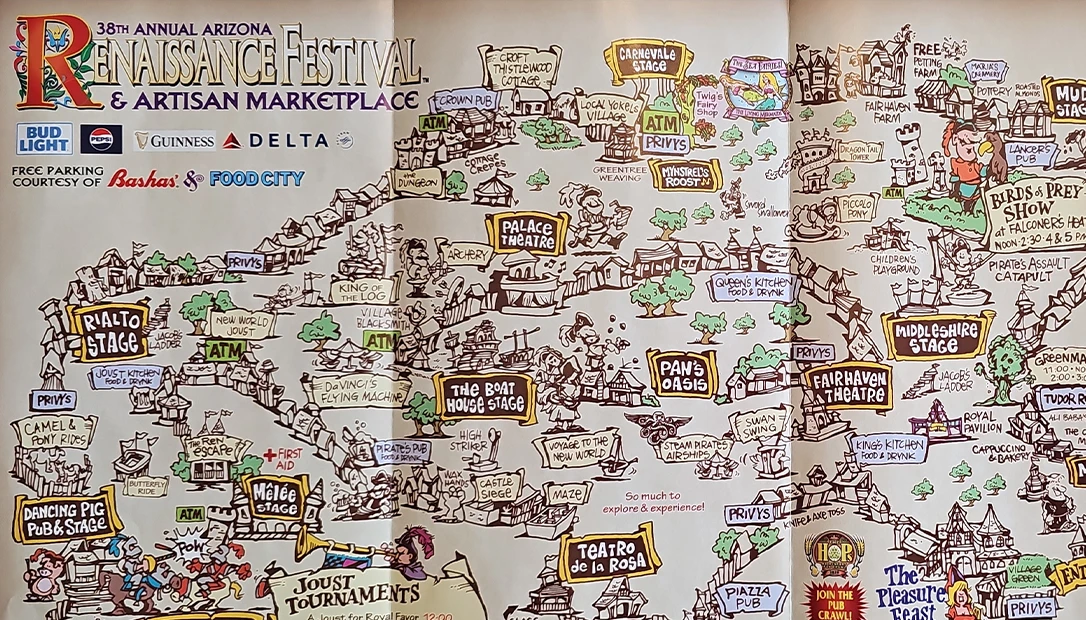
Near the gate stood the festival map. It was bright, stylized, and slightly exaggerated. Towers were drawn larger than life. Stages were clearly labeled. Practical necessities were marked with small icons for restrooms, ATMs, and medical services.
Most people glanced and moved on.
I paused.
Advertisement — Continue Reading Below
Where does the joust empty out?
Where are the shaded areas if the afternoon warms?
How far is the walk back to the car?
What would be the simplest route out if we decided to leave quickly?
This is not suspicion. It is orientation.
A printed map still does something a phone often does not. It forces a pause. It provides context. It shows scale. It reminds you that you are entering a whole environment, not just a string of attractions. The difference between seeing the map and using the map is attention. Practicing situational awareness starts with noticing the space around you.
Advertisement — Continue Reading Below
Large events have rhythms. Density rises and falls. Arrive after the first rush, and the experience changes before you ever cross the threshold. We paid admission, shared a chocolate-dipped frozen banana, and stepped through the gates.
Somewhere just beyond the entrance, I remembered the turkey leg.
Not urgently. Just a passing thought.
Advertisement — Continue Reading Below
We would get one later.
Infrastructure You Do Not Notice Until You Do
Before we reached the property, traffic began to compress. Cones narrowed lanes nearly half a mile from the highway exit. Patrol vehicles were positioned deliberately. Arizona DPS officers shaped the flow calmly and visibly.
When we left later that afternoon, we were not allowed to turn left toward Phoenix. Traffic was directed right for nearly a mile before a controlled U-turn brought vehicles back toward the highway. It felt inconvenient in the moment.
Advertisement — Continue Reading Below
It was also elegant.
Thousands of vehicles were being released into an active roadway system. The safest solution was not the shortest one. Safety at scale is deliberate. Most of the systems that keep a large event orderly are almost invisible when they work well. You notice them only in fragments: a barrier placed early enough to matter, a visible medical station, a broad lane that quietly becomes an exit path once the crowd shifts.
This is part of why awareness matters. Not because danger is always nearby, but because good systems deserve to be read. If you can see the structure, you can move with it instead of against it.
Meandering as Study
We did not rush. We wandered.
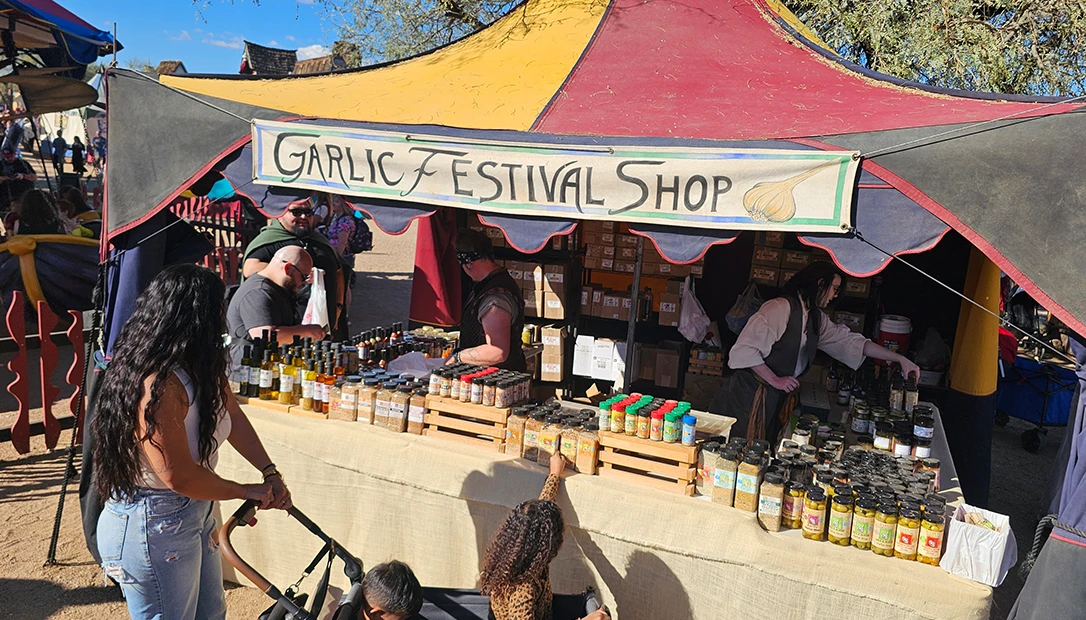
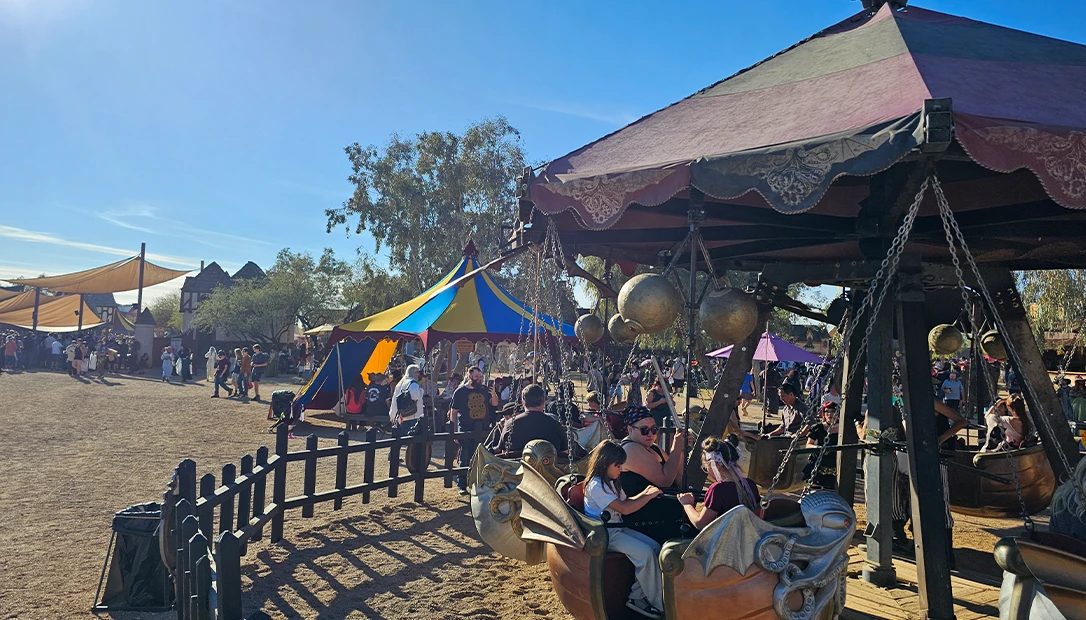
Through craft booths and food vendors. Past performers mid-monologue. Into pockets of music and then back into open space. The festival grounds were not chaotic. They were patterned.
Sound pulls people inward. Shade holds them longer. When a performance ends, a wave moves toward food. Alcohol amplifies enthusiasm. Children shift direction without warning. Parents divide attention between conversation and supervision.
At one booth, I was fully engaged in conversation. My focus narrowed naturally. Watching a performer gather a small crowd, I felt my attention soften into the scene.
It is worth noticing.
Engagement narrows our attention.
Enjoyment absorbs it.
Crowds diffuse it.
None of this is alarming. It is simply human behavior unfolding inside a structured environment. Joy lowers vigilance. Not because the space is unsafe, but because it feels safe. Recognizing that shift is part of the practice. Practicing situational awareness helps you remain attentive, even when you feel most relaxed.
Edges, Landmarks, and Meeting Points
Most people move through a large event by feel. They remember the turkey leg stand, the music stage, or the booth selling leather journals, and assume that will be enough to guide them back.
Sometimes it is.
Sometimes, every lane begins to look the same once the crowd thickens and the sun shifts.
A better habit is to anchor yourself to fixed points. Gates. Towers. First aid. Restrooms. A large stage. A fence line. A clearly marked intersection. Anything permanent enough to outlast distraction.
That habit matters even more when you are with other people. If someone gets separated, “I’m by the food” is nearly useless. “Meet at the front gate beside the map” is better. “Meet at first aid in ten minutes if phones fail” is better still.
This is not paranoia. It is a simple pre-decision.
The same mindset applies whether you are walking a festival, entering a fairground, attending a game, or navigating an unfamiliar downtown block. Landmarks reduce friction. Meeting points reduce confusion. Orientation reduces the small stressors that quietly drain attention and enjoyment.
When you know where you are in relation to a few fixed anchors, the environment stops feeling random. You do not have to clutch the map. You do not have to overthink every turn. You can relax more fully because you have already done the small work of understanding the space.
Energy Has Gravity
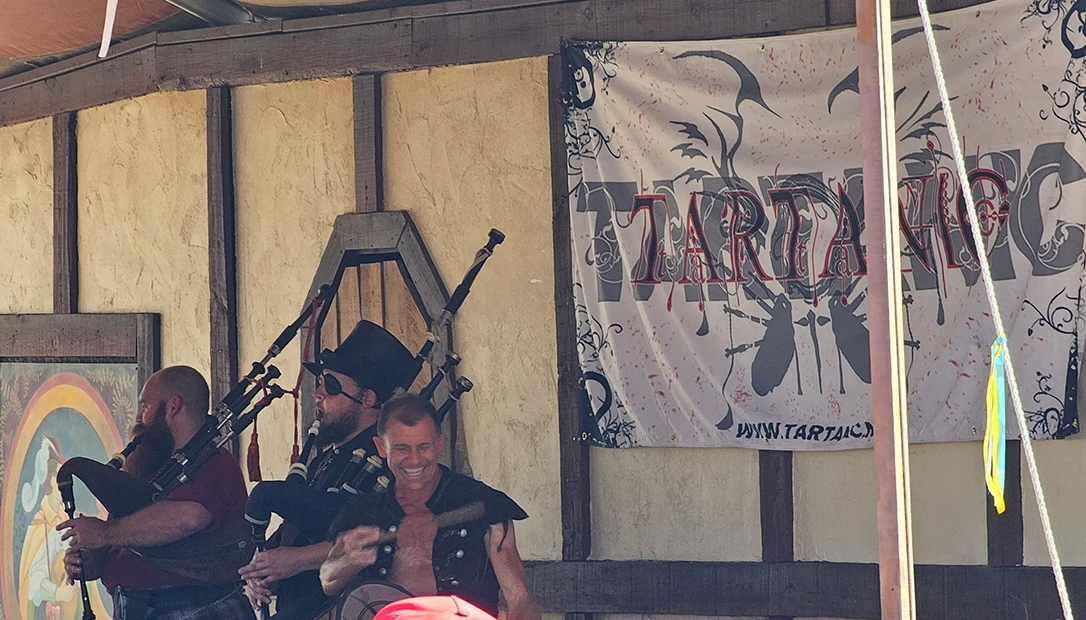
Live music creates gravity. People pause at the edge of a crowd, then drift inward without quite meaning to. Conversations stall. Foot traffic compresses. Density increases gradually, then increases all at once.
The festival breathes in waves. Performances end. Food lines swell. Shade fills. Energy rises and falls.
Reading those waves is not tactical. It is awareness in motion.
Somewhere between falconry and a bagpipe set, the thought of a turkey leg returned.
Later.
Heat, Timing, and Personal Baseline
By midafternoon, the Arizona sun had shifted. Shadows lengthened. Early arrivals filtered out. Energy softened.
Hydration mattered more than indulgence. Shade mattered more than schedule. The chocolate banana had been enough.
We passed another turkey vendor.
It could wait.
Awareness also includes knowing your own baselines. That may be the most overlooked part of moving well through crowded places. People think situational awareness is always about scanning outward. Often it begins inward. Practicing situational awareness means checking in with yourself as much as your surroundings.
Hydrate before you’re thirsty.
Eat before getting irritable.
Step into the shade before overheating.
Leave before you are exhausted.
Most confusion at large events does not happen inside the gates. It happens at the edges. Parking rows. Merging traffic. The release back onto normal roads. Proximity to the car changes fatigue calculations. Traffic direction changes departure flow. Systems shape experience long after the music fades.
We followed the DPS direction on exit without resistance. Flow replaced frustration.
Know Before You Go
Pause long enough to understand the layout.
Notice where people naturally gather and why.
Know at least one way out.
Pick a landmark and a meeting point.
Manage your energy before it manages you.
Observe how movement flows in and out of the space.
Pay attention to what pulls your focus.
Not because something is wrong.
Because something is happening.
Leaving Poultry Free
We never did get the turkey leg.
It was clearly marked. We walked past multiple vendors. Each time, something else captured our attention. Music. Conversation. Shade. Timing. The intention never disappeared. It simply yielded to the moment.
And maybe that is part of the lesson, too. Awareness does not make an experience rigid. It does not flatten the fun out of it. It actually creates more room for enjoyment because you are not spending the day slightly behind the environment. You are not reacting late. You are not wondering where the exit is, where the shade is, where your people are, or why everything suddenly feels harder than it did an hour ago.
You already took the measure of the place.
We left well-oriented, well-hydrated, and content.
Large public gatherings are not something to brace against. They are something to read. They have structure, rhythm, pressure points, and release valves. If you pay attention, they will tell you a great deal before you ever need to ask.
The next time you enter one, pause.
Take in the layout. Notice the flow. Understand the structure.
And take a moment to know where you stand.

