

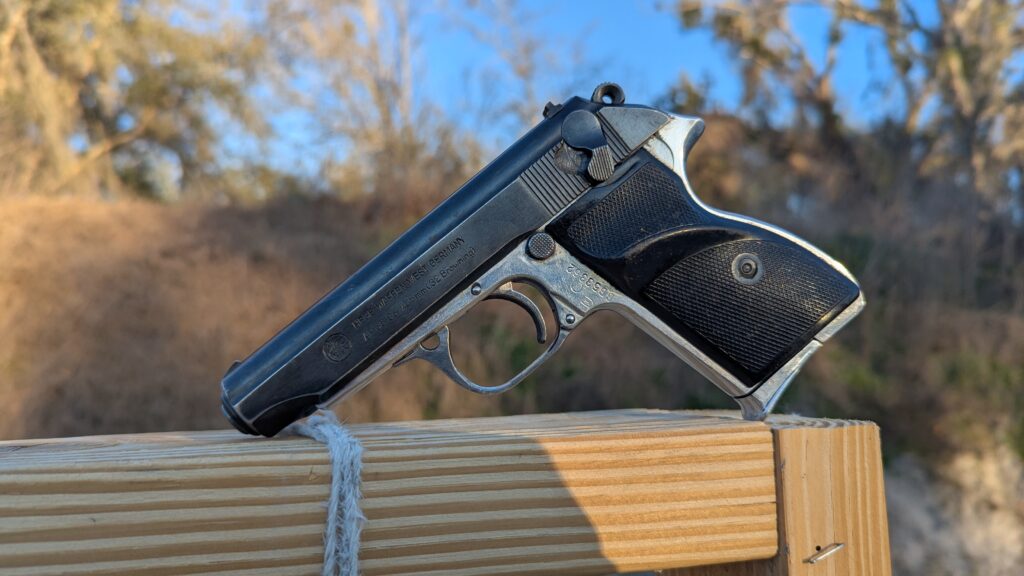
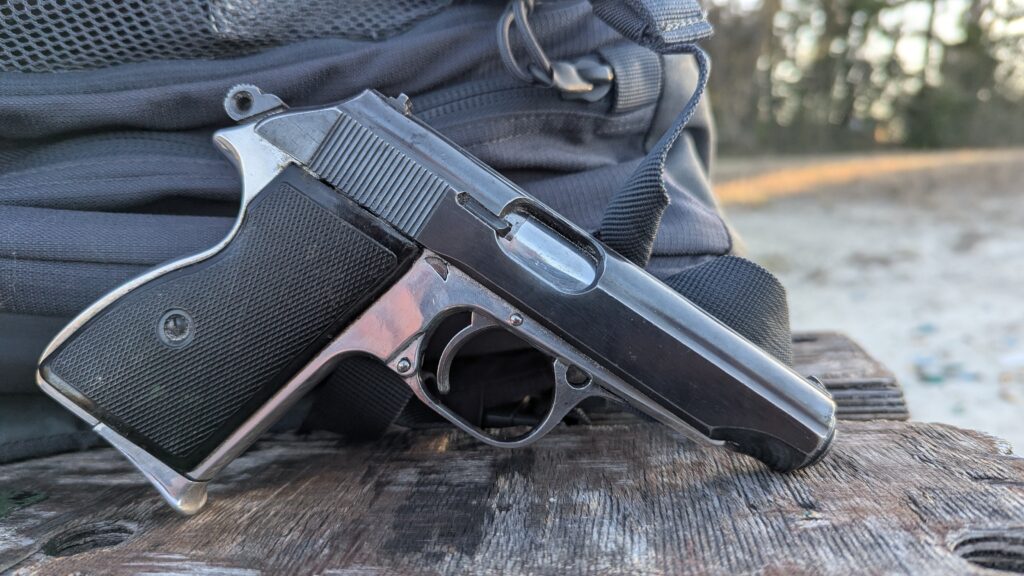
Is the Hungarian-made Hege Waffen AP66 a particularly good gun? No. Am I infatuated with it? Yes. Hungarians seem to make reliable, durable, but not very refined guns. Their Hi-Powers, for example, are decent, but they do not compare to a true Belgian Hi-Power. The AP66 is Hungary’s take on the Walther PP-style pistol.
Affordable and Robust: The AP66
While it is Hungarian-made, it passed through West Germany on its way to the United States and gained the West Germany rollmark. These FEG guns were imported en masse. Every importer got their hands on these guns: Century Arms, Mauser, KBI, and plenty more. They came in as 9mm Makarovs, .380 ACPs, and the undisputed best of the bunch, the .32 ACP.
Advertisement — Continue Reading Below
The AP66 is a .32 ACP variant, and it is honestly the best caliber for any Walther wanna-be. I hate shooting small, all-metal, blowback-operated .380s and 9mm Makarovs. They just beat my hand up. Call me a sissy; I do not care. The .32 ACP is the superior option for any gun using the Walther system.
That system is direct blowback, with the fixed barrel doubling as a recoil spring. This was one of the few times the Germans took the simple route when designing a gun. The Walther series spawned tons of clones and remained in production until only recently. Even now, the out-of-production date is only temporary while Walther retools.
Advertisement — Continue Reading Below
The AP66 retains that simplicity but is more than a Walther clone.
The AP66: Clonish
Sure, the AP66 uses the basic Walther layout. It is a blowback-operated gun with the recoil spring around the barrel. It is DA/SA, hammer-fired, and uses a single-stack magazine and an all-metal design. Internally, the gun has a few notable changes that are worth mentioning. First, the magazines are not interchangeable, and that makes me a little sad.
Second, the AP66 has a passive firing pin safety and a hammer drop safety. When the hammer sits in the down position, it is actually sitting above the firing pin. It does not touch the firing pin, making it quite safe. When I pull the trigger, the firing pin then aligns with the hammer. The Walther has a hammer drop safety and a passive hammer block.
Advertisement — Continue Reading Below
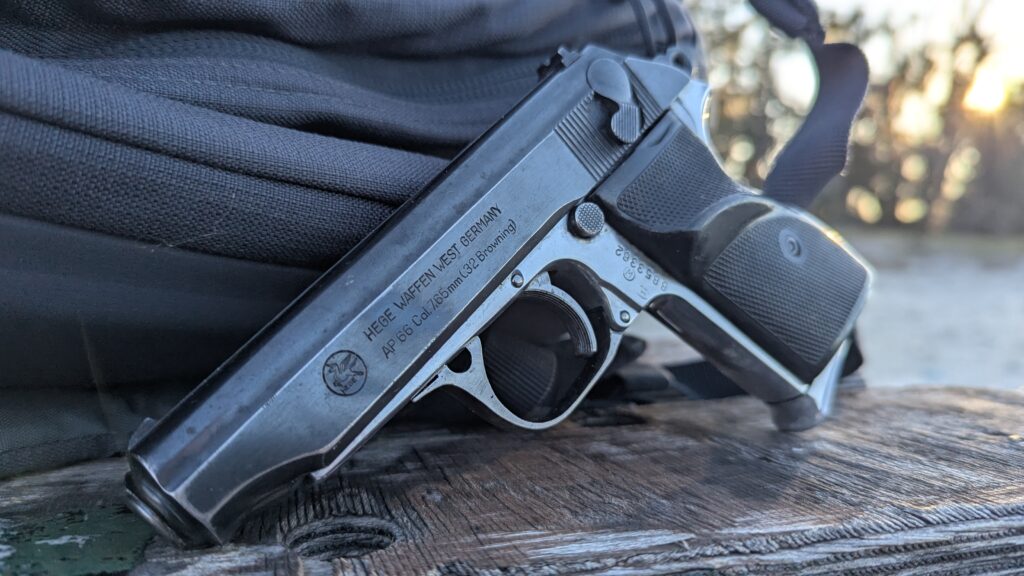
One big difference between the guns is how their triggers feel. The AP66 has one of the worst double-action trigger pulls I have ever experienced. It is the heaviest double-action trigger I have ever experienced. It beats my Lyman trigger gauge’s max setting. It is not just heavy and long, but heavy for every millimeter of movement.
The single-action is obviously much better, but not a good single-action by any means. It is mushy and far from crisp, but luckily, it is a fair bit lighter. Walther PP series pistols do not always have the best triggers by any means, but they are not anything close to as bad as the AP66.
Advertisement — Continue Reading Below
Rocking and Rolling with the AP66
The use of the .32 ACP creates a quaint, light-recoiling round with very little recoil. There is no bite, no hand-slapping recoil, just a mild oomph and not much more. Shooting the gun is pleasant, and it is quite comfortable and easy to control. Typically, after a magazine of .380 in a gun like this, I am sick of shooting it. That is not the case here.
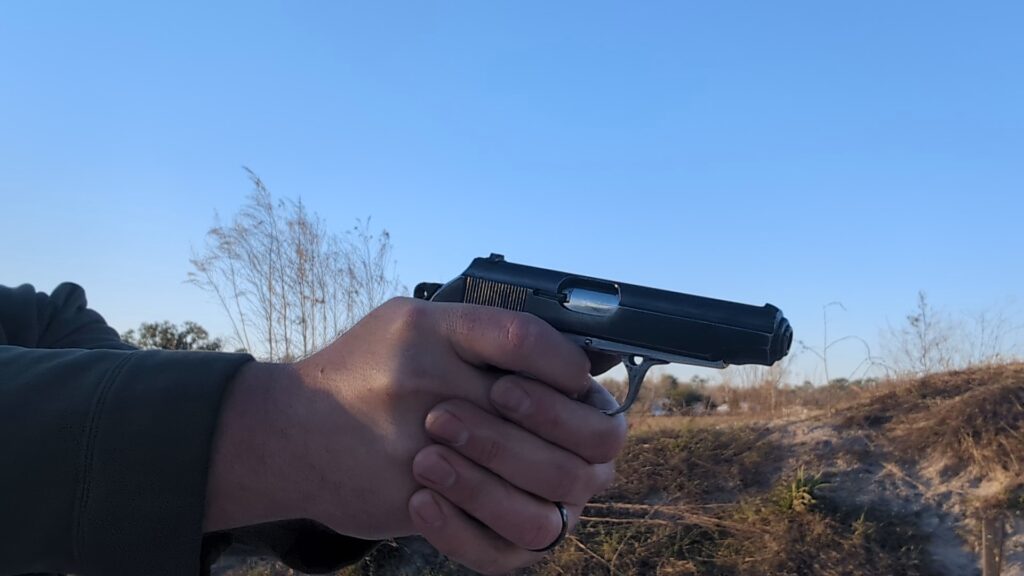
In terms of accuracy, the trigger and sights hamper it. That double-action trigger weight means it is harder to maintain a consistent grip on the gun as you work through the double-action. I can land a round in an 8-inch circle at 15 yards, but it is often off my point of aim. If I group the gun, you will have six rounds tight together, resulting from the single-action, with one double-action flyer.
Advertisement — Continue Reading Below
The sights are extremely small—just a set of nubs that are all black. Lining them up is not quick and does not feel intuitive. They are just plain difficult to use with any degree of accuracy and speed. Go slow, it is fine; trying to do it from a draw or transitioning between targets is tough.
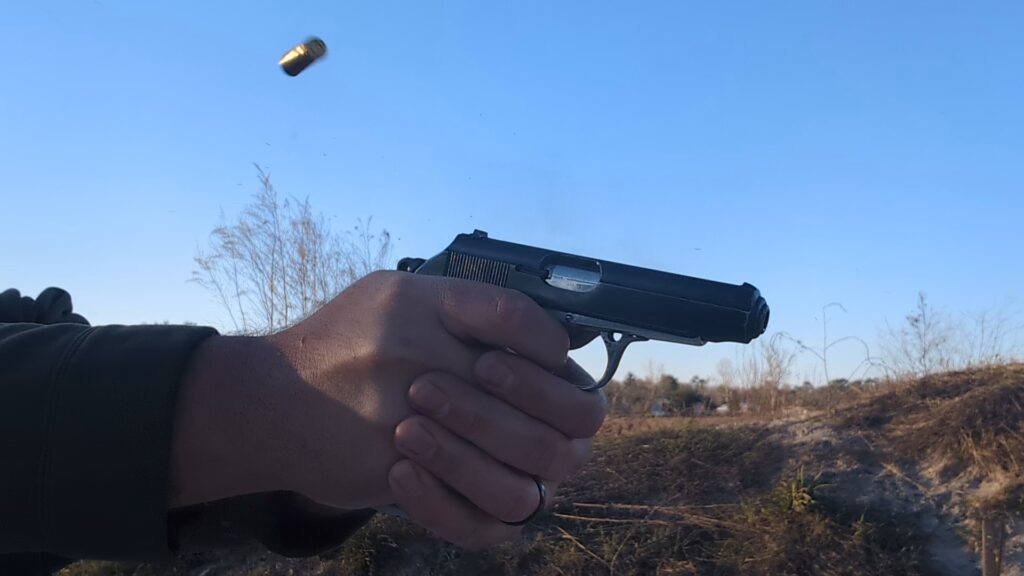
The ergonomics are mostly fine. The magazine release is easy to reach. The grip is good, but the target-style grips only allow for right-handed shooters to use the gun comfortably. Sadly, the magazine does not drop free; it just comes out a little and requires the user to pull it out of the gun. It is certainly Eastern European in that way.
Advertisement — Continue Reading Below
The Big Why
When these guns were still being actively imported, they were cheap. I saw some listings for $99 for blemished models, with the priciest options selling for around $200. At that price point, they are not a bad option for concealed carry. They are small, thin, and easy to conceal. They are safe to carry, and .32 ACP can get it done with a heavier FMJ round.
These days, it is a tougher sell. There are plenty of modern defensive guns at low prices, chambering more capable cartridges like 9mm. If you are a .32 ACP fanboy like me, then you will love the AP66. It is still cheap, enjoyable to shoot, and gives you some old-school appreciation for Walther-style guns without the Walther price point.
Advertisement — Continue Reading Below

