
Ever see a blade shape and hate it instantly, only to come back around and do a 360? I have. I saw this blade style when I first became aware of knives and the whole outdoors, EDC lifestyle. Let’s say I wasn’t into it. Then, in the late 90s, I read a Tactical Knives Magazine article on the KLOTZLI Wimpff Design and had to have it. This sparked my interest in sheepsfoot and wharncliffe-style blades.
Sheepsfoot and Wharncliffe blades feature straight edges that prioritize control, precision, and clean slicing, reducing the risk of accidental punctures. Users favor them for utility tasks, carving, and detailed work where tip control is essential.
Advertisement — Continue Reading Below
While Wharncliffe blades taper to a sharper point, both excel in push cuts and fine slicing. Compared to traditional blades, they trade versatility for accuracy and safety. This makes them ideal for everyday carry, rescue use, and deliberate craft cuts.
Join us on a journey as we explore these blade designs and their functionalities.
Sheepsfoot blades feature a flat edge with minimal belly, giving them a clean, linear cutting surface. Makers design them for utility, slicing, and precision tasks where control outweighs piercing ability.
Advertisement — Continue Reading Below
The spine curves downward to a blunt tip, reducing accidental punctures and enhancing safety. This design excels at push cuts, offering steady pressure and predictable results.
Sailors, medics, and rescue workers favor sheepsfoot blades for cutting rope, tape, or bandages without risk of stabbing. Woodworkers also value the edge for controlled shaping and trimming, where accuracy matters more than penetration.
Reiff Knives
Advertisement — Continue Reading Below
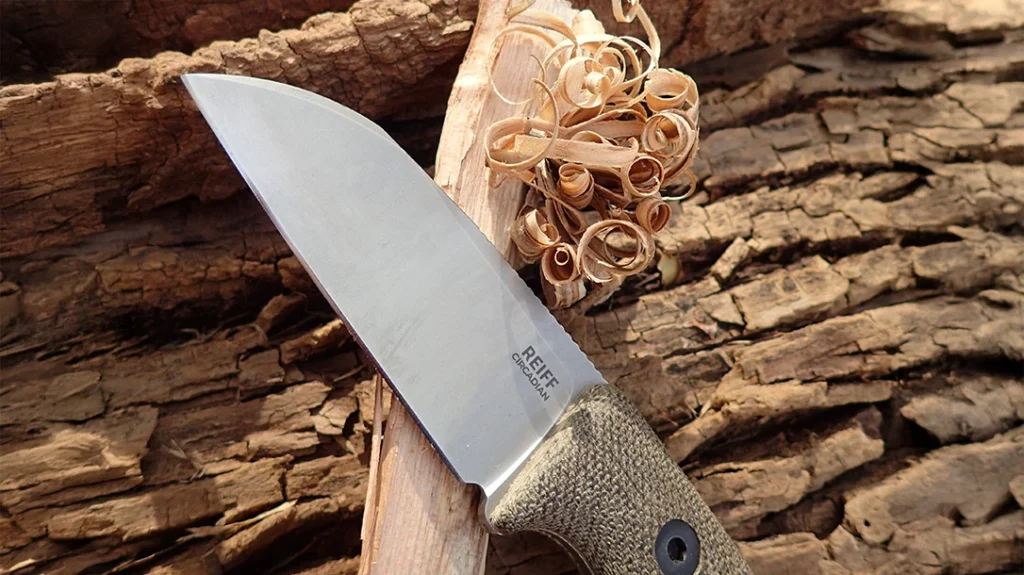
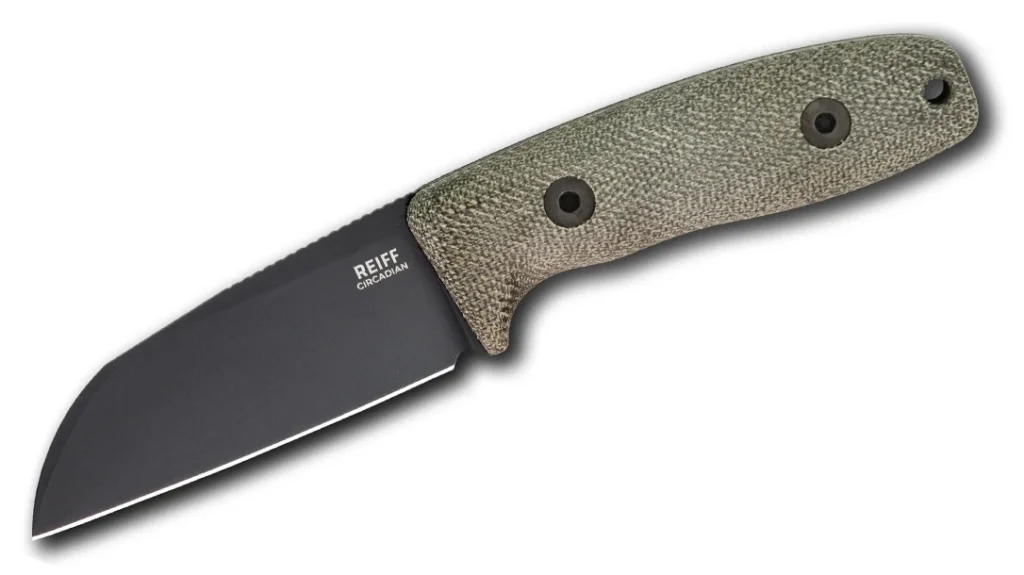
The Circadian Sheepsfoot EDC Fixed Blade measures 7.25 inches overall with a 3.28-inch CPM MagnaCut steel blade. It features black canvas micarta handle scales for grip and durability in wet or dry conditions.
The knife includes an ambidextrous universal Kydex sheath for secure carry and quick access. Designed for everyday use, it balances control, strength, and compact portability.
Advertisement — Continue Reading Below
MSRP: $285.00
Knives By Nuge
Advertisement — Continue Reading Below
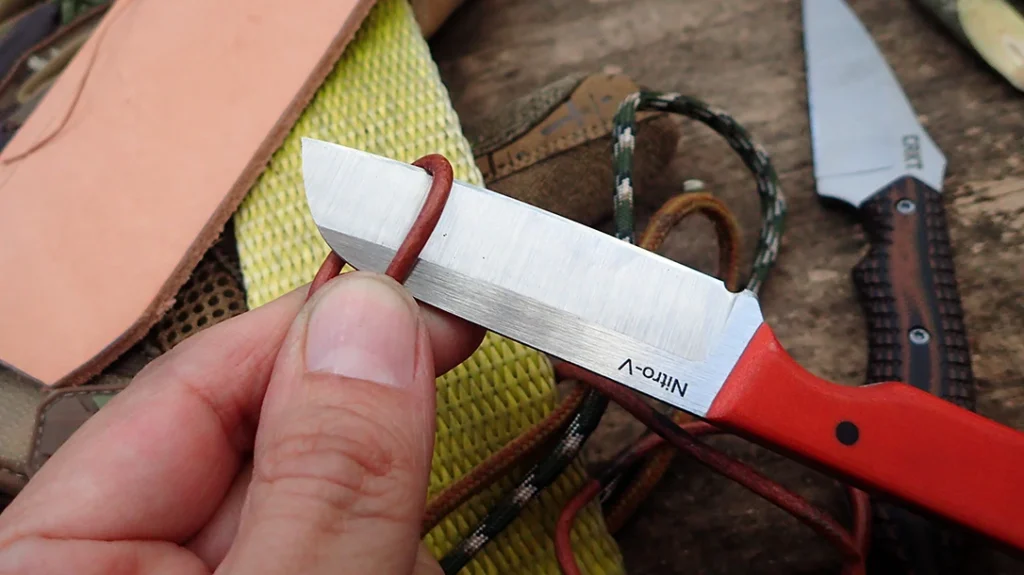
The Sheepsfoot Chickpea has an overall length of 6.25 inches and features a 2.75-inch Nitro-V stainless steel blade. Micarta or G10 scales, along with the lanyard tube, make up the handle.
The knife weighs 2.5 ounces with a necker sheath. The blade features a gentle curve and a satin finish. Always expect a wicked sharp 90-degree spine on a KBN. It’s perfect for scraping a ferro rod, tinder, or peeling carrots.
MSRP: $275.00
Advertisement — Continue Reading Below
The Wharncliffe
Wharncliffe blades use a straight edge paired with a spine that curves sharply toward the tip. This geometry drives the point downward, creating a fine, acute tip for accurate detail work. The straight edge delivers consistent contact along its length, making it ideal for controlled slicing.
Carvers and artisans leverage the thick spine for applying steady pressure, producing clean, deliberate cuts. The design handles thick or rigid materials with authority while maintaining tip precision for intricate tasks.
In modern use, Wharncliffe blades balance strength and finesse, serving equally well in woodworking, utility, and tactical roles.
Recommended Wharncliffe Knives
CRKT
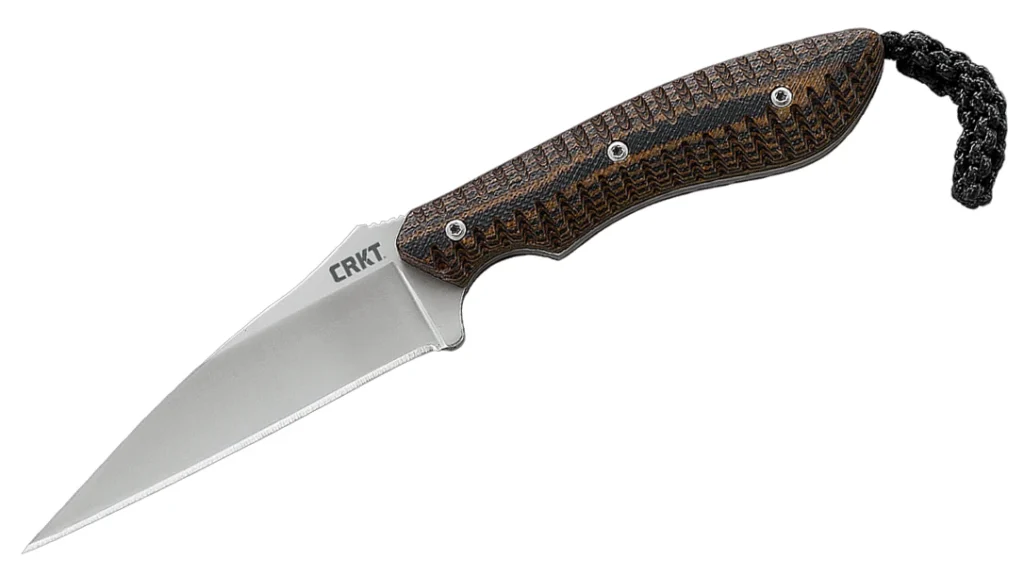
The CRKT S.P.E.W. measures 6.25 inches overall with a 3.02-inch blade made from 5Cr15MoV stainless steel. It features a tough G10 handle for secure grip in varied conditions. The knife comes with a thermoplastic sheath and multiple mounting options for versatile carry.
Designed by Alan Folts, it excels as a compact, everyday fixed blade for utility and precision tasks.
MSRP: $45.00
Bradford USA
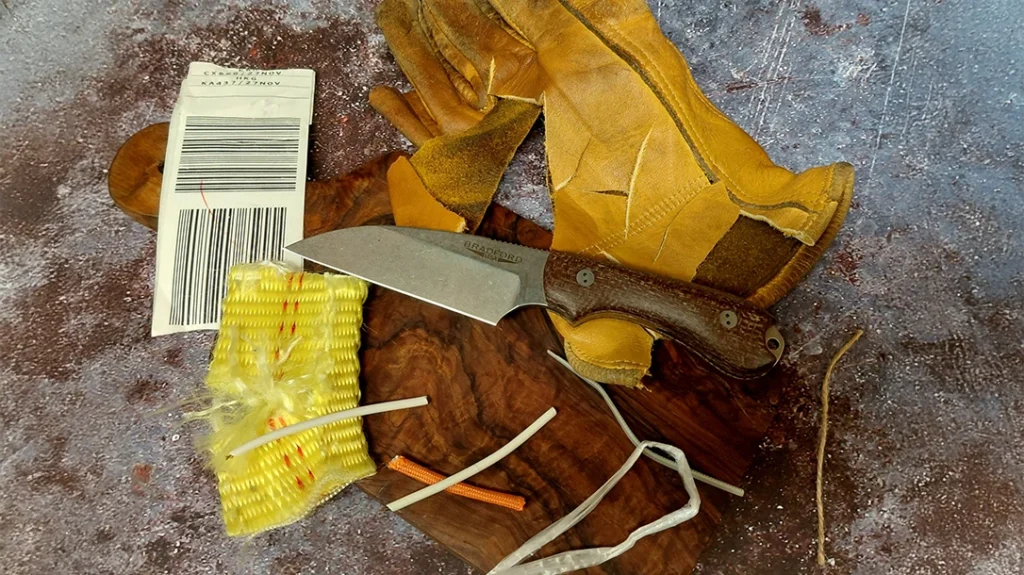
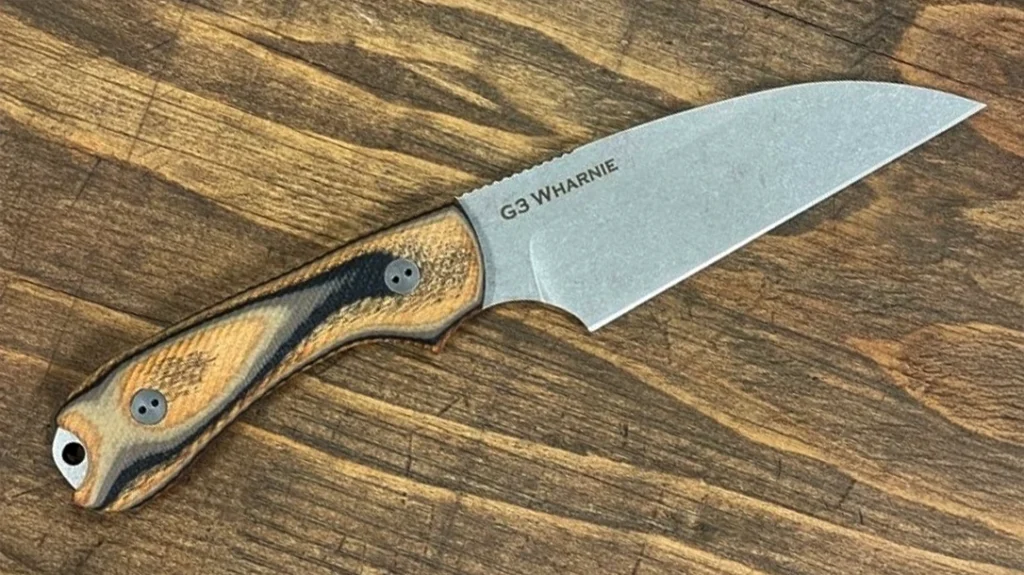
The Bradford USA G3 Wharnie knife measures 6.875 inches overall with a 3.625-inch Bohler M390 Wharncliffe blade. It features 3D contoured G-Wood or Micarta handle scales for a secure, ergonomic grip. The knife includes a taco-style Kydex sheath for reliable everyday carry and quick deployment.
Built for precision and durability, it suits utility, carving, and compact field tasks.
MSRP: $249.00
Belly Bladed Properties
Belly blades offer versatility, with a curved edge that adapts to a range of slicing angles and materials. The curvature enhances draw cuts, keeping continuous contact with the target and maximizing cutting efficiency. This design shines in field dressing, food preparation, and general outdoor use, where sweeping cuts save time and effort.
Users benefit from smooth, flowing motions that reduce fatigue during repetitive slicing. The belly also improves performance in skinning and carving, where long arcs of contact matter. However, the exact curvature can reduce pinpoint accuracy for fine detail work. The rounded edge may wander in tight cuts, producing less precise results.
For users who prioritize control over flow, the belly blade can feel less exacting. Still, its adaptability makes it a favorite for hunters, chefs, and adventurers who need one blade to handle many tasks.
Flat Blade Properties
Flat blades deliver enhanced control for straight, predictable cuts across the entire edge. Their geometry keeps the cutting path consistent, which makes them ideal for tasks that demand accuracy and repeatability.
Users sharpen them easily because the edge maintains uniform angles, reducing guesswork during maintenance. This simplicity appeals to field users who value quick touch-ups with minimal tools.
The profile excels at push cuts, trimming, and controlled slicing, where precision outweighs speed. Craftworkers, medics, and survivalists often favor flat blades for clean, deliberate cuts. However, flat edges perform less effectively in slicing tasks that require a rocking or rolling motion. They lack the natural curve that aids in food prep or skinning, limiting versatility in those contexts.
Sheepsfoot and Wharncliffe Blades In Use
Utility, kitchen duties, and woodcrafting are how I use knives the most. It’s no wonder that some companies make carving knives with sheepsfoot and Wharncliffe-style blades. They keep constant pressure towards the tip, where a curved blade doesn’t, without putting strain on your wrist. The energy dissipates at the curve of a belly on a clip point or an upswept blade.
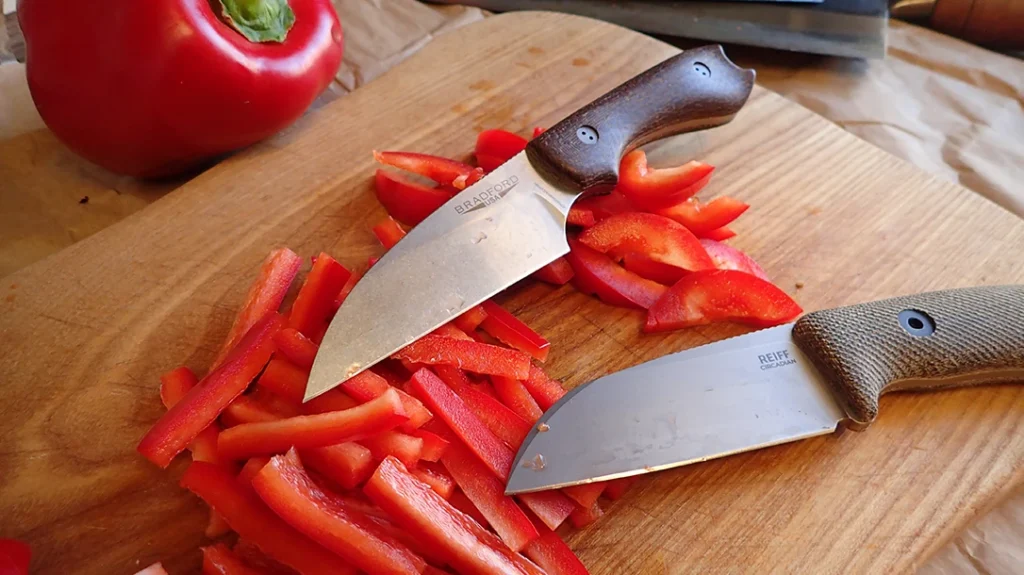
In the kitchen, I found myself using a point grip, since the knives were shorter than those typically used there. This grip resembles the pinch grip, but in this case, you place your index finger on the top of the blade (spine). It offers enhanced control for cutting delicate ingredients and is commonly used on smaller cutting boards. This technique works well for both longer and shorter knives.
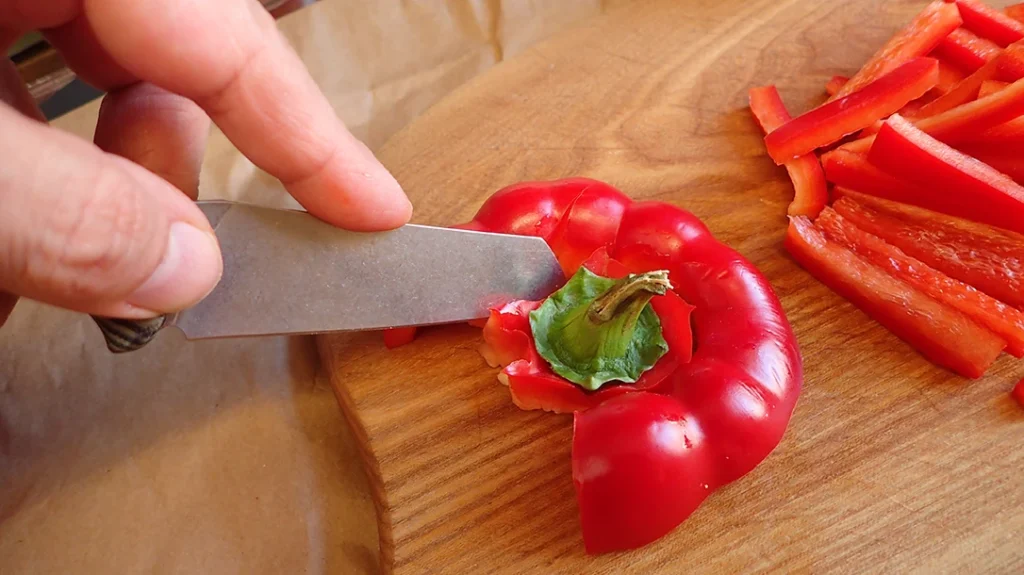
After cutting a pepper into a long, flat piece, I cut it into sections and stacked them. I used each knife in a pull-cutting technique—tip down on the cutting board, pulling back. Wharncliffe and sheepsfoot blades easily cut out the stem of a bell pepper. Intricate tasks like this are what keep this knife style thriving in the DIY and EDC realms.
I sliced a variety of materials typically used in a shop, house, garage, and for miscellaneous chores. I used the Reiff, Bradford, NBN, and CRKT on thick leather, tow strapping, a variety of cordage, and scraps. While some outperformed others, it’s the style of blade and tip that excelled over curved blades with a belly!
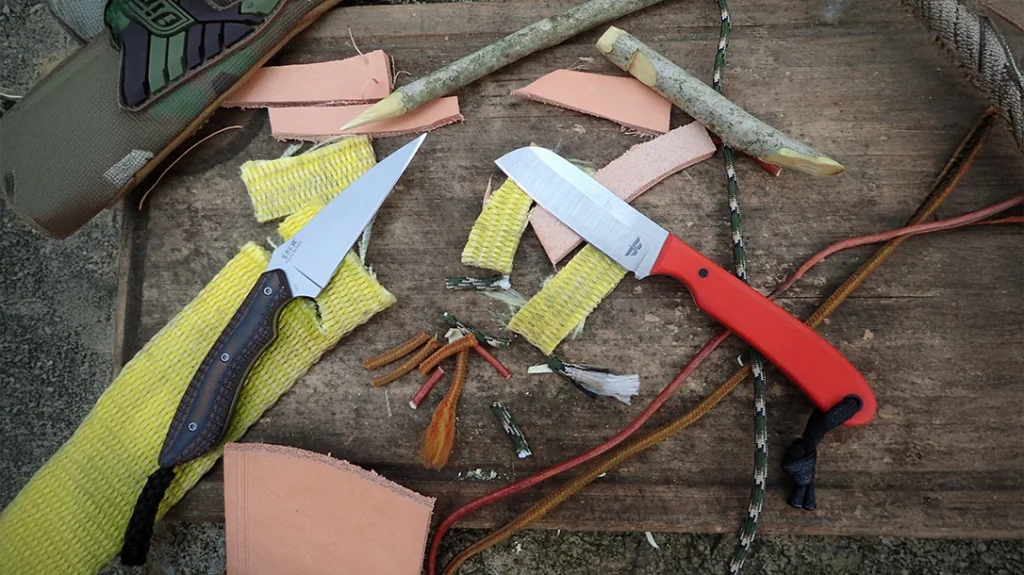
The NBN Sheepsfoot Chickpea and CRKT S.P.E.W. knives each crafted a tent stake and trap parts, demonstrating their suitability for the woods. The Reiff and Bradford are medium-sized fixed-blade knives, while the NBN and CRKT are smaller necker-style utility sidekicks!
Cutting to the Point
Straight-edged blades are ideal for precision cutting, whereas curved blades provide better control for slicing meat and skinning. When selecting a knife, consider your individual needs, including the tasks you’ll be performing and how comfortable the grip feels. The right blade style can enhance your efficiency and overall experience, making knife use enjoyable!