

Throughout winter, we hear the same old line repeated, or maybe even we say it ourseves, that we “just need to get through it.” Somewhere along the way, we collectively decided that winter is something to endure rather than experience. I catch myself buying into that mindset, but I’ve started to question it.
Our perception of winter often traces back to how we were raised in it. Maybe it was a season spent indoors, framed as dull and restless. Or perhaps it was associated with cabin fever, low energy, and waiting for something better to arrive. Many of us were taught, directly or indirectly, that winter equals stagnation.
Culturally, that belief is reinforced everywhere we look. Airlines sell “Winter Escapes.” Social feeds flood with tropical beaches. We’re nudged to stay inside, but keep consuming. Even seasonal depression has become a casual phrase we toss around without questioning whether we’re contributing to it by resisting the season itself.
But what if winter isn’t the problem? What if our relationship to it is?
It’s About Perspective
When we stop listening to all of these reasons for why we cannot go outside, we finally get to see what it’s like to step out into that cold, crisp air. You hear the crunch of your boots on the snow, feel and see your warm breath as it hits the piercing air, witness the silence of this season. As if someone turned off all of the chaos and noise.
Advertisement — Continue Reading Below
One beautiful thing about winter is that everything reveals itself, everything that you couldn’t see before while it was hidden behind leaves and blooming plants. You can stop on the trail and look into the woods, take in the fact that you can see miles through it, and experience the landscape in ways that you hadn’t before.
Other things become easier, such as tracking animals, studying wind patterns, and even researching the structures of trees. Trees are not just dormant in the winter, they continue to store nitrogen and carbohydrates, intaking all of that nutrition through its steady roots and stable foundation.
The cold demands to be felt. You feel that cool air in your lungs, your hands tingle, your entire body wakes up. Your breath becomes visible in front of you, each exhale a reminder that you are present. Summer can be filled with overstimulation. So many events to go to, so much work to be done while the weather is warm, and urgency to make the most of every warm day. Winter offers us a kind of presence in the way that summer cannot.
Cold Weather Activities
There are so many fun outdoor activities that you can do in the winter time. Ice fishing can teach you that while things may seem still on the surface, there is still so much happening beneath. Waiting for the fish without being able to see it creates a patience that becomes a part of the experience as you watch that reel with slow determination, hopeful for what is under the surface. Snow shoeing and winter hiking offers access to views and landscapes that are covered during the warmer seasons. Winter camping redesigns comfort in a whole new way, finding warmth takes a little more work and a little more mindfulness in planning and execution. You truly feel what it is like to be self reliant as you learn the importance of building that warmth and knowing you depend on it.
Advertisement — Continue Reading Below

The ease of seeing animal tracks allows for small game hunting, which sharpens awareness and has you practicing new or different hunting skills. We can see a moment so clearly. Like where the animal came from, where it went and what it may have been doing at the time. Tracking animals in the winter brings us back to tradition, back to a time where we practiced a slow, observant and intimate hunt. Nature becomes a true storyteller allowing us to be a part of the balance in the wilderness.
Health Benefits of Time Outside
We all know how much our mental and physical health benefits from exercise, but how much better would that exercise make you feel if it was outside instead of inside on a treadmill or in the gym? Research shows that spending time outdoors helps lower our cortisol levels to help us better manage stress.
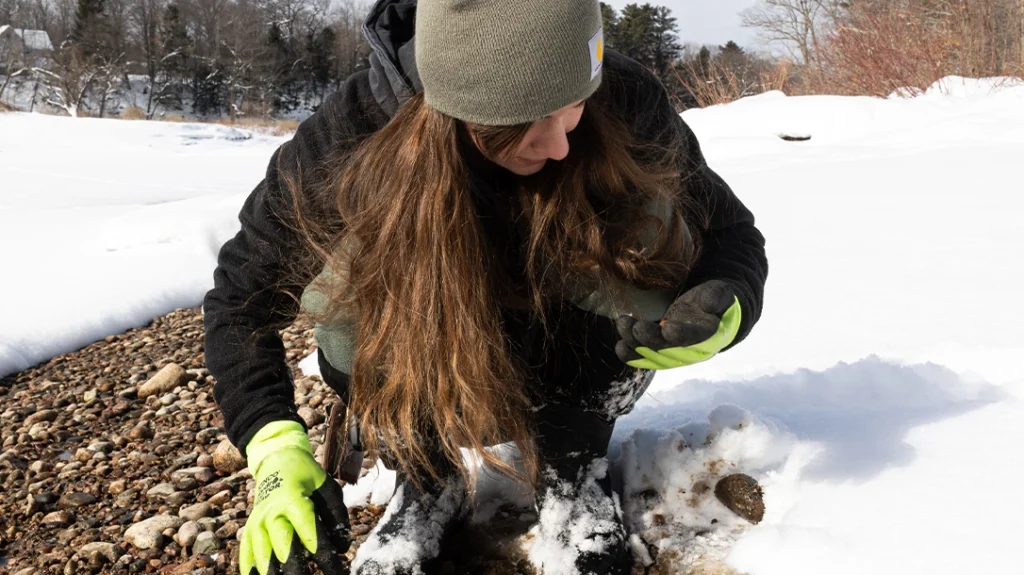
Daylight helps regulate our circadian rhythm, improving sleep quality and stabilizing our mood. Studies on Seasonal Affective Disorder often recommend light exposure and outdoor movement as part of treatment because natural light, even in winter, signals to the body that it is time to stay alert and engaged. If we choose to get outside in the winter instead of avoiding it, we are not just getting fresh air. We are supporting our nervous system, strengthening our stress response, and reminding our bodies that this season is not a threat. We sleep better, our mood improves and we fight that seasonal depression we’re all always talking about.
Advertisement — Continue Reading Below
Winter is not the absence of life, it is life in a new form. It is the foundation for the months to come. For us, and nature. The landscape isn’t empty or dead, it’s just offering a brand new perspective. It isn’t something to endure, but to mindfully experience.

