

The number one rule in saltwater fishing is any gathering of birds needs to be investigated. It doesn’t matter whether you’re surfcasting, working inshore rips, or running the canyon edge in 1,000 feet of water, tightly grouped birds almost always mean feeding fish are nearby. A compact pile of birds hovering low over the surface is rarely random. It’s usually a flashing neon sign that bait is being pushed up and predators are feeding below.
From the time I was a kid fishing with my uncle, birds were priority number one. “If you see birds, let me know,” was the constant as we cleared the harbor and pointed toward open water. Back then it meant calling out every gull or tern I saw, not ducks or crows, but true saltwater birds. Sometimes even a single bird dropping out of the sky was enough to locate fish on bait. I’ve caught blues, stripers, jacks, redfish, mahi, and even bluefin tuna under one lone diving bird.
More often, though, we were hunting tight bird piles of 10 to 30 birds or more flying low and packed closely over aggressively feeding fish. Get to that pile first and it’s often an immediate hookup.
That said, not all birds equal fish. Birds can work current seams and structure in ways that look promising but produce nothing. Over time, you learn the difference between casual feeding and true blitz behavior.
Advertisement — Continue Reading Below
Why Optics Matter
Because birds were always our primary focus, binoculars became essential gear early on. At first, they were cheap and barely serviceable. Everything looked slightly out of focus with distortion around the edges. But they helped us see farther than the naked eye.
Then, in the early ’90s, I looked through my first pair of image-stabilized Fujinons.
When the owner flipped the stabilization switch, it changed everything. The image locked in. Details became clear. Individual birds stood out at distance. It felt like trading a BB gun for a long-range precision rifle.
They were wildly expensive at the time. Today, stabilization technology has improved dramatically, and while it’s still an investment, it’s far more accessible.
If you’re serious about locating birds at distance, stabilized binoculars are a game changer.
Advertisement — Continue Reading Below
Reading the Birds: Species Breakdown
Understanding bird behavior is just as important as spotting them.
Inshore Species
The Common Tern: Small, fast, and incredibly efficient hunters. Terns can seem like they are fishing individually but typically they hunt in packs and when fish are located, a certain call is sent and the group quicky comes together and gather about 20-40 feet off the surface. Terns usually target smaller baitfish, so match your lure size accordingly. They won’t mistake your plug for food — but they will show you exactly where to cast.
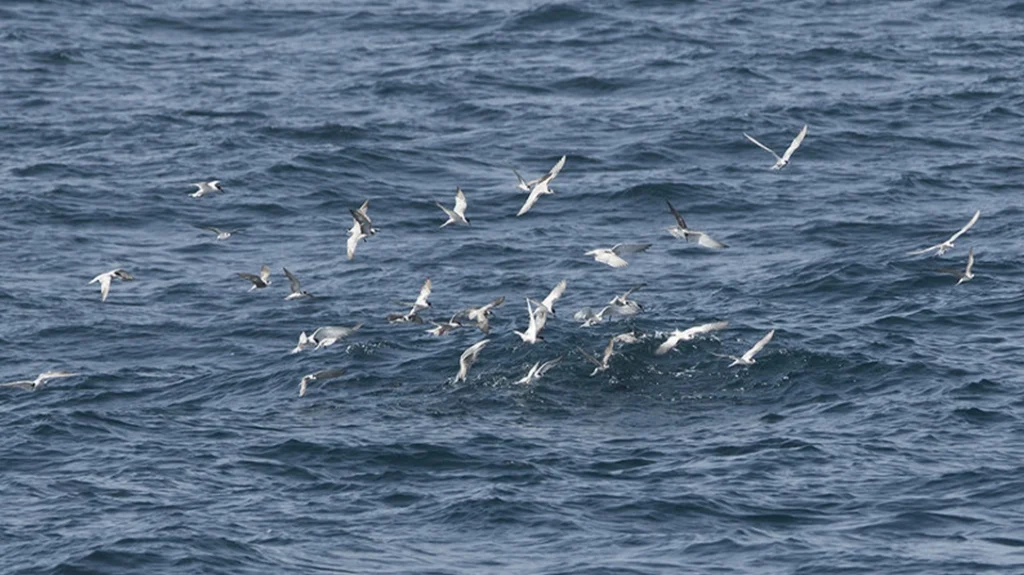
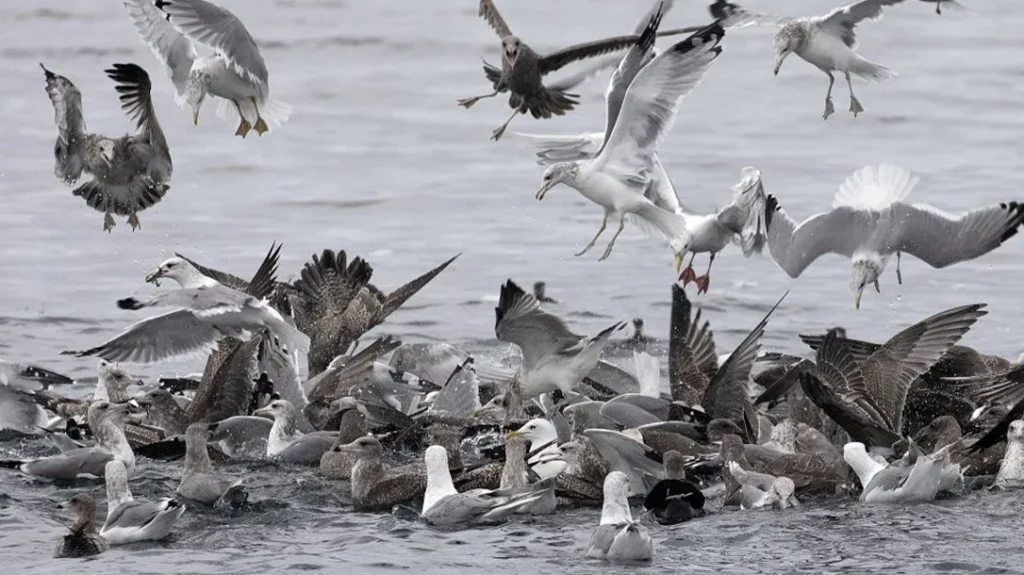
Herring Gulls: Larger and easy to identify by white bodies and gray wings with black tips. These birds feed on everything from sand eels to herring and menhaden. You’ll want to look for two things with Herring Gulls. One, groups of birds flying closely together on or near the water. Two, birds “falling out of the sky” from 60-90 feet and hitting the water hard. This what we see a lot when they are on herring and it’s great. Young gulls, however, will chase surface plugs. Be ready to reel fast if one locks onto your lure.
Great Black-Backed Gulls: Massive birds with black wings. Often lazy opportunists, but when grouped together they’re usually around substantial bait. Slow down, observe, and let them show you what’s happening.
Advertisement — Continue Reading Below
Osprey: Not typical blitz birds, but incredibly useful in estuaries. If an osprey dives, there’s bait there, even if you don’t see it. Where there’s bait, predators aren’t far behind.
Nearshore & Offshore
Storm Petrels (Tuna Chicks): Small birds that pick tiny scraps off the surface. Alone, they’re not always significant, but in tight groups offshore, they can signal tuna below. I once found 200 of them 50 miles offshore and hooked a 50-pound yellowfin on the first cast.
Shearwaters: My personal favorite. When grouped offshore, good things usually follow. If they’re sitting tightly on the water and dipping their heads down, bait is often too deep for them, which means it’s perfect for a sinking jig. Be careful fishing surface lures around them. They’re not the smartest birds.
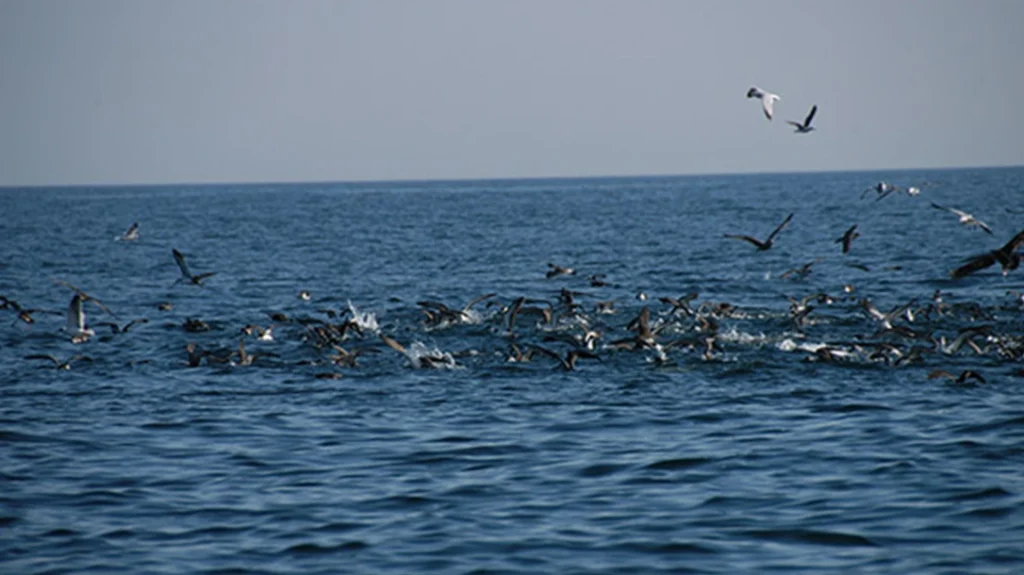
Gannets: Missile-like divers that plunge from high altitude. They’re usually on larger migrating bait like herring or menhaden. I don’t blind cast into gannets often, but I never ignore them. Watch the edges and monitor your sonar.
Advertisement — Continue Reading Below
Modern Optics: What to Look For
The two categories of binoculars offshore anglers should consider are image stabilized models and marine binoculars with an internal compass.
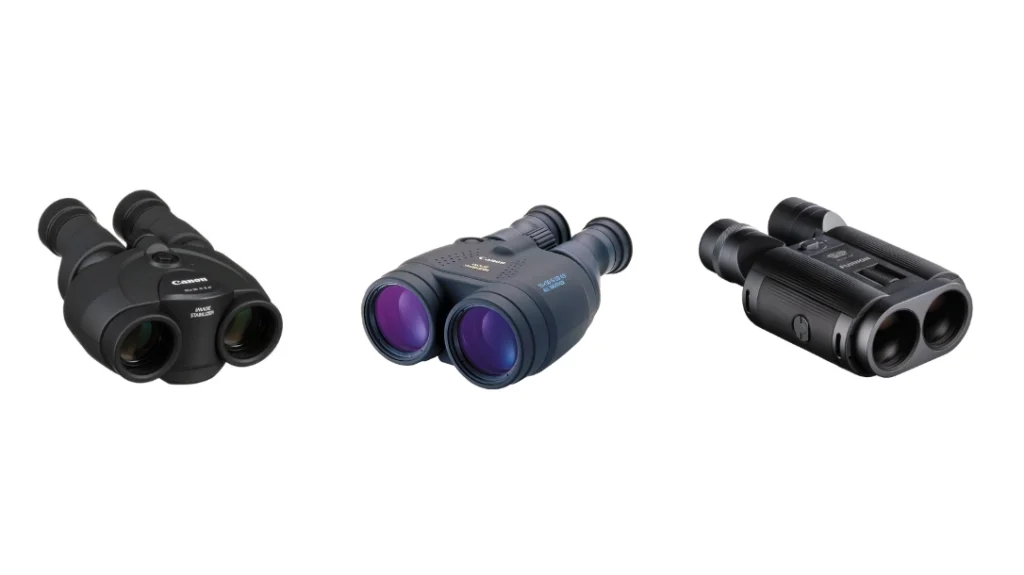
Image Stabilized
Fujinon remains a leader in stabilization technology. Their Techno-Stabi series (14×40, 16×40, 20×40) delivers exceptional clarity and stability. At the top end, the Stabiscope models offer gyro stabilization and premium coatings — built for serious long-distance viewing.
Canon’s IS All Weather models (10×42 and 15×50) provide excellent glass quality and reliable stabilization.
SIG Sauer’s ZULU6 line has quickly become popular with anglers. Their Scan and Target modes allow you to switch between broad scanning and fine stabilization. The PRO models improve on stabilization and glass quality even further, and their marine versions add bright orange bodies and floating straps.
Advertisement — Continue Reading Below
If you fish primarily inshore, 10x magnification is usually sufficient. Offshore anglers scanning miles of water may prefer 16x or higher.
Internal Compass Models
Compass-equipped marine binoculars allow you to give precise headings to birds, buoys, boats, or floating debris, which is invaluable when coordinating with a captain.
Electronics are helpful, but nothing replaces someone actively scanning with glass. I once spotted a floating log 130 miles offshore using Steiner Commanders. That log produced yellowfin, mahi, and a wahoo turning a slow trip into one we still talk about years later. Without binoculars, we would have passed it by. Brands worth considering include Steiner, Fujinon, Bushnell, and Nikon. There are premium and budget-friendly options, but any binoculars are better than none.
WHY OUR ARTICLES/REVIEWS DO NOT HAVE AFFILIATE LINKS
Affiliate links create a financial incentive for writers to promote certain products, which can lead to biased recommendations. This blurs the line between genuine advice and marketing, reducing trust in the content.
Advertisement — Continue Reading Below

