

Severe weather can occur at any time of year. Tornadoes, blizzards, and more can cause serious problems and jeopardize safety. Sometimes it seems like bad weather pops up out of nowhere, with little to no warning. Where can you turn for reliable weather information?
Weather Monitoring Options
Wireless Emergency Alerts (WEA)
These are warnings that are sent via text directly to your cell phone. They are sent out from various local and state agencies, as well as FEMA, the Department of Homeland Security, and the National Weather Service. Most commonly, these will be weather alerts and emergencies, such as a tornado warning.
Advertisement — Continue Reading Below
This system will also send out AMBER alerts as well as Presidential alerts. These alerts are location-specific and could be narrowed down to 1/10th of a mile. All phones within the designated area will receive the alert. If you’re traveling and you enter an area where there is an active alert, your phone will receive it.
National Oceanic and Atmospheric Administration (NOAA) Weather Radio
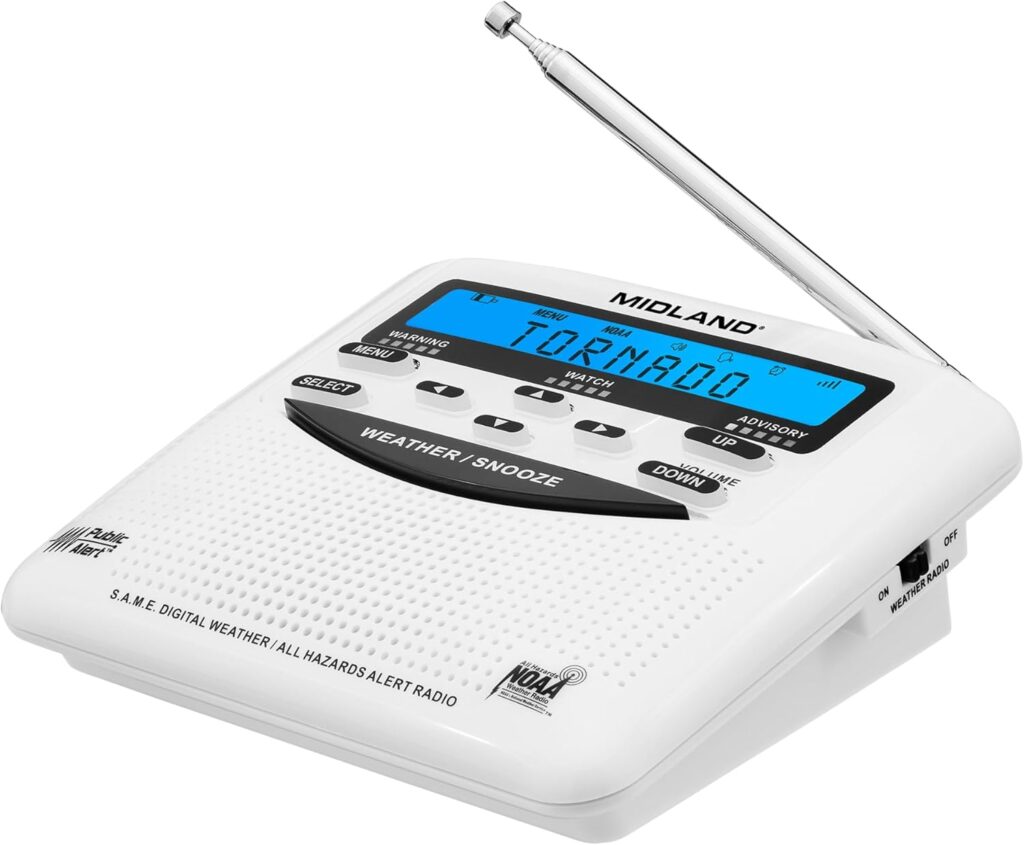
A weather radio will receive broadcasts from the National Weather Service. When the weather is calm, broadcasts sent out will include a general forecast and current conditions. When severe weather threatens, alerts will be sent, including various storm watches and warnings.
Advertisement — Continue Reading Below
If there’s an emergency, a warning tone will sound, followed by pertinent information. Newer weather radios are also capable of receiving Specific Area Message Encoding, or SAME, messages. This feature allows for more precision when it comes to the location radio related to the location of the hazard, reducing the possibility of false alarms.
Emergency Management Alerts (EMA)
Local emergency agencies, such as county-level emergency management teams, may send out alerts and warnings. These might range from evacuations to shelter-in-place warnings to water boil advisories. Notifications may be received by text message, email, or, in some cases, voicemail. This is typically a program that requires you to provide your phone number and/or email address. Contact your county’s emergency management department for information on where to sign up for your local EMA.
TV and Radio Broadcasts
If the conditions allow you to use a television or radio, you’ll be able to check out local news stations to get information. This can be an easy way to find out more about what’s happening, as most homes have a TV, radio, or both.
Advertisement — Continue Reading Below
One major downside, though, is that it might take a while for the broadcasters to mention your specific area. If you remember getting up on a snowy morning and sitting in front of the TV, watching the ticker on the screen to see if your school was closed, you know what I mean. Of course, if your power goes out and you lack a generator, you’re out of luck.

Always have multiple ways to receive weather warnings and other alerts. For most of us, the WEAs coming to our cell phones will be our first line of defense, so to speak. But don’t rely on them exclusively. Always have one or two backups.
Advertisement — Continue Reading Below

