

When a felonious male stranger attacks with deadly force—perhaps without weapons, but instead with pounding fists, stomping feet, or strangling hands—it’s easier for a woman than a man to prove that she had to shoot or stab him to lawfully defend herself. However, it’s different in the frequent instances when the male attacker is a past or present husband or boyfriend.
What Happens When Women Use Deadly Force?
Homicide detectives will tell you that in genuine murder cases, the spouse/significant other is often the first suspect considered. Ironically, those same homicide investigators know that in domestic homicides, men murder women far more often than women murder men. These considerations can blur the lines and interfere with homicide investigations…and prosecutions.
Let me start with a few of my own experiences as an expert witness for the defense.
Advertisement — Continue Reading Below
Case One: Florida v. Mary Hopkin
A sixtyish battered woman has to use a borrowed RG revolver to put three fatal .22 bullets into the 45-year-old batterer who is trying to kill her for the second time. She is tried for the homicide. Ace defense lawyer Mark Seiden won her acquittal.
Case Two: Tennessee v. Shawn Armstrong
Beaten and stomped by her much larger, violent estranged husband, the victim kills him with a single .38 Special round from the snub-nosed Colt her father gave her. She is charged with Manslaughter. Attorney John Colley wins her acquittal.
Case Three: New York v. Lydia Salce
In this case, the outlaw biker husband beats and stomps his wife and puts a Ka-Bar knife to her throat. So, she turns the tables and stabs him. The lead investigator tells her she’s being charged with attempted murder because he has stab wounds, and she only has bruises.
Advertisement — Continue Reading Below
In her first trial, the judge forbade expert testimony, and she was convicted. The court of appeals overturns her conviction. After I testified in her second trial with masterful public defender Andrew Blumenberg, she’s at last acquitted.
I’m proud of being a part of those acquittals, but am saddened by the following:
Cases Four through Two Hundred Four
Yes, you read those numbers correctly.
Advertisement — Continue Reading Below
I recently finished the eminently readable 2023 book The Furies: Women, Vengeance, and Justice by Elizabeth Flock.
She writes, “In her seminal 1989 book, Justifiable Homicide, women’s rights advocate Cynthia Gillespie argued that, as a result of its origins, self-defense law evolved based on masculine assumptions – that the fight is between people of ‘roughly equal size, strength and fighting ability’ and that it’s ‘never acceptable to kill an unarmed adversary.’
Advertisement — Continue Reading Below
“Both assumptions have made it difficult for women to win self-defense cases because women and men are often different sizes and strengths, and women are more likely to defend themselves with guns or knives, while men more often use hands and fists…”
She adds, “Gillespie also wrote that, of the two hundred cases she reviewed of women who killed men in self-defense, the outcomes were ‘depressingly similar’: the women were arrested, charged with murder, pled guilty to murder or manslaughter, and went to prison. (She did not review men’s cases.)”
One of the biggest factors here is something that has bothered me for years and was a factor in each of the three cases I began this article with. Fortunately, those three defendants had lawyers who knew how to handle it. However, I’ve met practicing attorneys who got through three years of law school and passed a bar exam without learning that the concept of “disparity of force” has long existed in our law.
Advertisement — Continue Reading Below
It means that if the ostensibly unarmed opponent has such a great physical advantage over you that if his violent attack on you is allowed to continue, you are likely to be killed or severely injured, that advantage is equivalent to a deadly weapon and authorizes the innocent defender to resort to a lethal weapon to stop the assault.
Disparity of Force
A defense attorney who is not educated on disparity of force themself cannot possibly educate a jury on the topic.
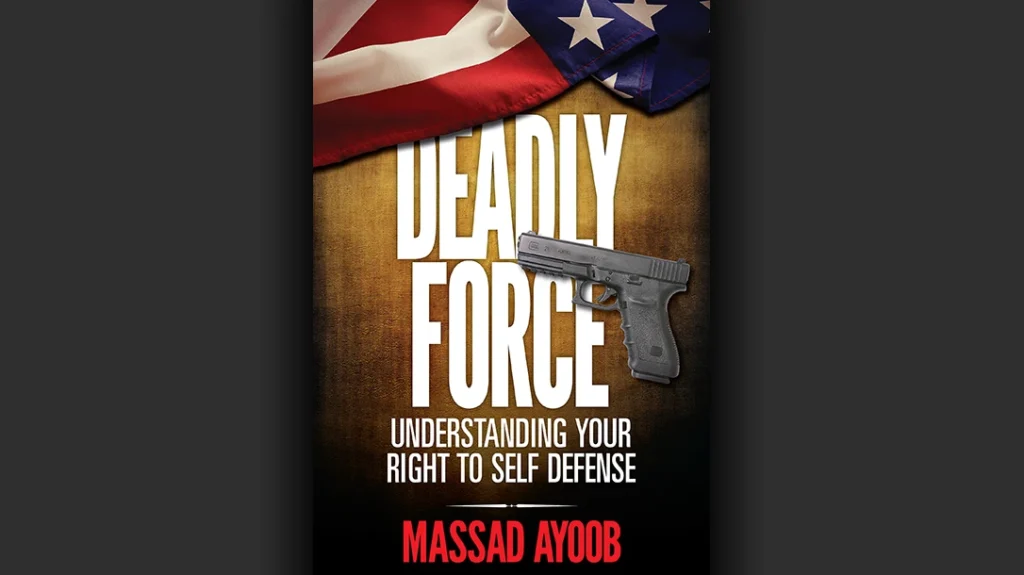
Read my book Deadly Force, or listen to the audio version. Or, go to a well-stocked legal library and read the classic authoritative text , Warren on Homicide. They will explain the legal principle of disparity of force, the way it needs to be explained to the triers of fact.
Advertisement — Continue Reading Below
The Burden of Proof
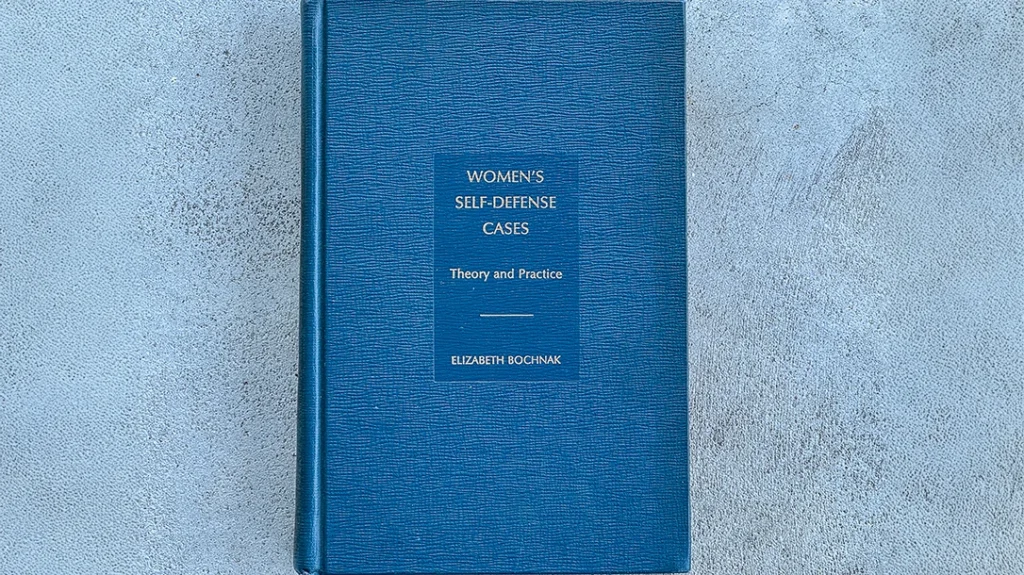
In “Women’s Self-Defense Cases: Theory and Practice” by law professor Elizabeth Bocknak (the Michie Company Law Publishers, Charlottesville, VA, 1981), on Page 74, we learn:
“The practical reversal of the burden of proof is more problematic when the defendant freely admits that she killed the deceased and asserts she was acting in self-defense. Despite the fact that the burden is on the prosecution to prove that she did not act in self-defense, jurors expect her to prove that she did. Frequently, jurors simply do not understand the law.
Advertisement — Continue Reading Below
“Even after receiving the judge’s instructions at the close of a case, many jurors still believe that self-defense shifts the burden to the defendant to prove her innocence. Other jurors may say they accept the abstract principle of justifiable homicide, but nevertheless will find it impossible to acquit, even if many believe that the defendant acted in self-defense. Many people simply cannot accept the idea that someone who has killed is not guilty of a crime.”
In a footnote on the same page, she adds, “Attitudinal surveys conducted by the National Jury Project have shown that 20-60% of persons eligible for jury service throughout the country believe that an indictment is tantamount to guilt. They expect defendants to prove their innocence despite the judge’s instructions to the contrary.
Advertisement — Continue Reading Below
“National studies confirm these findings: 37% of Americans believe that a criminal defendant should prove innocence (study conducted by Yankelovich, Skelly and White for the National Center for State Courts, 1978); 31% agree that ‘if the government brings someone to trial then that person is probably guilty of some crime’; and 52-57% agree that ‘defendants in criminal trials should be required to take the witness stand and prove their innocence’ (study conducted by the Stanley Fine Organization for the Washington Post poll, 1979).”
Case 205: Abusive Husband
On Pages 114-115, she says of a jury judging a woman who killed her abusive husband in self-defense:
“Two respondents favored conviction. Both believed Mrs. Olsen’s use of deadly force was unjustified. One of the two was deeply religious. He felt that Mrs. Olsen had acted instinctively, possibly in self-defense. But this did not outweigh his religious opposition to the use of deadly force. He defined reasonable force as ‘just enough to flee, not to kill.’
“The other respondent, favoring conviction, believed that the use of a weapon was immoral under any circumstances. She believed that Mrs. Olsen had not been in imminent danger since Mr. Olsen had ‘never killed her before.’” (The jury ultimately acquitted.)
Case 206: Why Did She Have a Gun?
And on Page 193, we find a white female juror discussing the black female defendant on trial:
“She was troubled by Mrs. Gardner’s ownership of the gun. The juror said, ‘Right away, it hit me. How come she had a gun at home? I don’t have one, why would she?’”
Closing Argument
The bottom line? When a woman must use deadly force to save her life, don’t assume that society—and the jury pool—will always see her as the fair maiden who righteously slew the dragon herself because she didn’t have a knight in shining armor to save her. It’s going to be up to the defense team to convincingly paint that righteous picture of what really happened.