In the outdoor classroom, I hold to the idea that less is more. I’d rather craft something with my own hands than rely on gear I brought along. Here are three knife and stick projects worth trying when you want to spend time in the dirt and walk away with something practical.
Make it, Don’t Take it: Simple Stick Projects with a Knife
Wooden Maul Projects
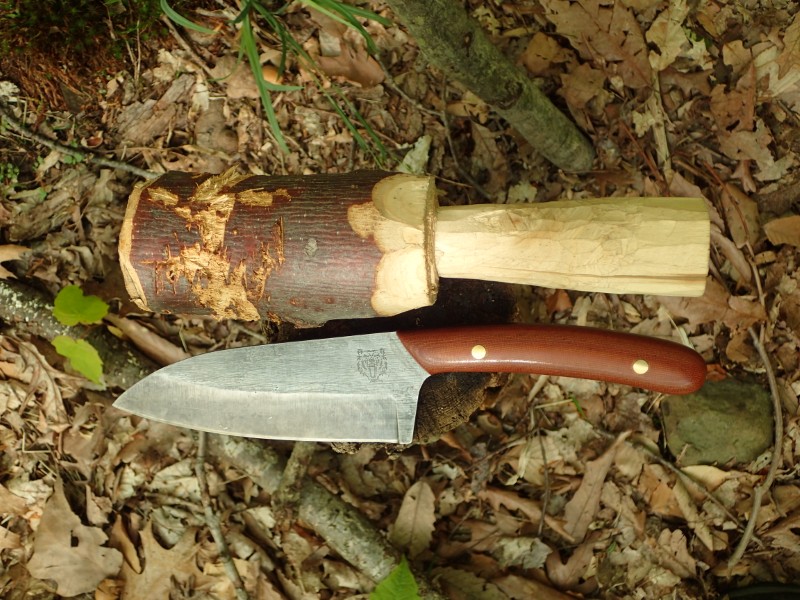
A maul is essentially a baton made with a purpose. It functions like a mallet but carries its own name in Bushcraft circles. This versatile camp tool is both easy to make and highly useful. Begin with a thick branch and use a saw to cut evenly around it—this becomes your stop cut. The thickness can vary, though wrist-to-upper-arm size is common.
Shape the maul with either a long handle and a small striking face. Or a short handle with a larger striking face. This creation is your knife and stick project.
Advertisement — Continue Reading Below
Once the saw cut is complete, flip the wood so the striking end rests firmly on a solid surface, leaving the handle upright. With a knife and a disposable baton, start carving out the handle in small sections. Work gradually, smoothing and shaping with your blade until the grip feels right in your hand.
The maul is more than just a striking tool—it’s a camp companion that helps you create other tools, making it a cornerstone project for anyone learning in the woods.
Advertisement — Continue Reading Below
Knife and Stick Grill
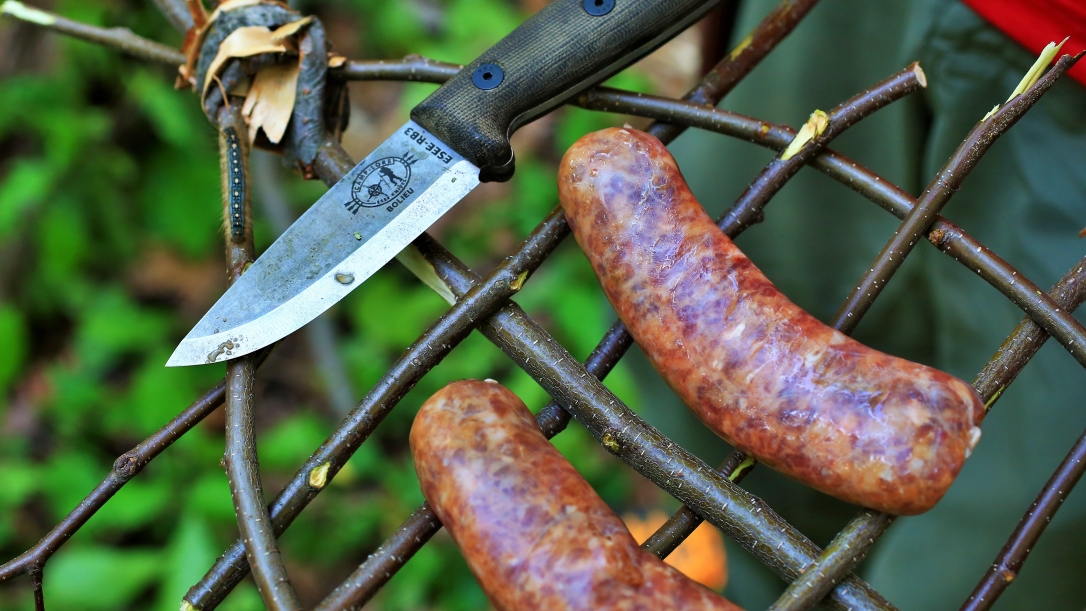
A grill fashioned from sticks is one of the most practical and enjoyable camp kitchen projects. Using greenwood from a freshly fallen tree or a stand of willow, alder, or witch-hazel, select a branch with a natural Y-shape. Thin, springy pieces are ideal, and if you find one with three forks like a trident, the job becomes easier.
These branches should be slim enough to tension cut with a sharp knife—bend the wood, place the blade at a 45-degree angle, and rock it firmly until the fibers give way.
Advertisement — Continue Reading Below
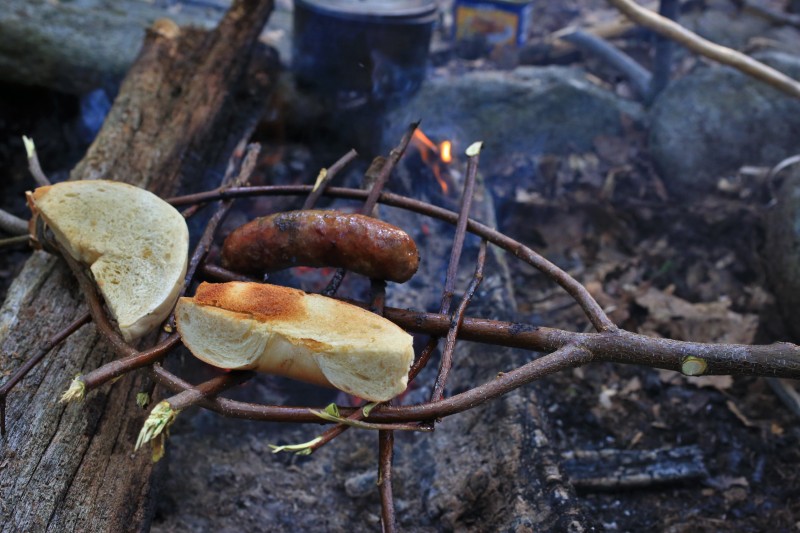
Trim off smaller shoots and leaves, then join two Y-shaped pieces together by entwining them into a hoop. Friction usually holds them, though you can use natural cordage for added security. If your branch lacks a center tine, wedge another stick across the middle. Next, insert thin green sticks or split pieces, weaving them alternately over and under the center support. All parts must be fresh greenwood to withstand heat. Your knife and stick grill project is done!
This grill works best over glowing coals rather than open flames, giving you a stable surface for cooking. One important caution: never use oleander, as it is toxic.
Advertisement — Continue Reading Below
Knife and Stick Wooden Spatula
Bringing a spatula to camp is convenient, but carving one yourself is more rewarding and saves space in your pack. Begin by sawing a piece of wood as wide as you want the spatula blade to be. Use a knife with a baton or maul to split the wood, aiming for a section that stays consistent in thickness. Keep the split pieces. You can repurpose them later. The flatter the blank, the less shaping you’ll need.
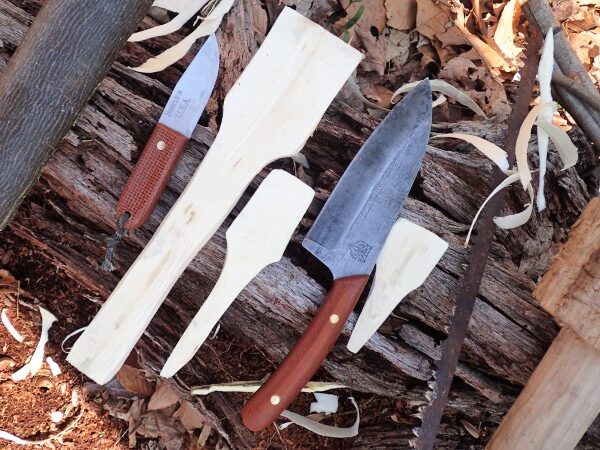
Rough shape with a heavy knife for this project. You can trace the outline of a spatula or use a kitchen spatula as a guide. Start thinning the front edge—the part that slides under food—by placing the blank on a sturdy log and chopping with short, controlled strokes.
Advertisement — Continue Reading Below
Once the flat part is formed, carve the handle with thumb-assisted sweeping cuts in a chest-lever grip. Round the corners for comfort or keep them flat, depending on preference. The goal is a thin blade that can lift food like eggs and a handle that feels natural in the hand.
Turn smaller split pieces into mini spatulas or scrapers for cleaning pans. Even the leftover chips and slivers can be dried and used as fire-starting material. This way, every part of the project is put to use, making the spatula both practical and efficient.
Summary: Knife and Stick Projects
These knife and stick projects highlight just how much can be done with simple tools and a bit of creativity. They’re only the beginning of what’s possible when it comes to improving camp cooking and comfort. Each build is fun, straightforward, and easy to share with others. Try them out, and you’ll discover how rewarding it is to craft useful gear projects right in the woods!
Advertisement — Continue Reading Below