
When I get asked by students or people at trade shows, “What’s your go-to knife?” I always answer without hesitation, “The Swiss Army Knife!” As an owner and real-world user of nearly 20 Swiss Army Knives, mine have been around. I’ve taken them to the highest peaks of the USA, the Peruvian Rainforest, the South Pacific, and the jungles of Southeast Asia. Let’s take a look at the history of this iconic multi-tool.
The Author’s First Swiss Army Knife
The first SAK I owned was a Wenger Traveler. The Wenger Traveler from the late 1990s was a compact 85mm pocket knife built for everyday use. It carried a sturdy main blade for cutting tasks. A can opener was included in that model to handle rations and tins. The bottle opener doubled as a flat screwdriver, useful for quick field repairs.
An awl, which is always a prized tool, came with the Traveler. I used it to pierce leather and wood when needed. The corkscrew reflected both military and civilian utility. A small nail file gave me a versatile mix of practical tools. A keyring attachment made the knife easy to carry other additions for convenience.
Advertisement — Continue Reading Below
However, the best tool on any SAK is the scissors. No matter what size or model of SAK, everyone loves the scissors. They’re nail and coupon clippers with many uses.
From Rifles to Cutlery
The Swiss Army Knife’s story stretches back far beyond the Alps, with roots in antiquity. As early as 200 AD, Roman travelers carried a compact iron-and-silver multitool that combined a knife, spoon, fork, spike, and pick. It was an ingenious design that proved soldiers and wanderers alike have always needed versatile gear. Centuries later, the Swiss Army faced similar demands.
Advertisement — Continue Reading Below
In 1860, the military offered the Vetterli rifle along with a cumbersome kit containing screwdrivers, cleaning rods, and utility tools. These implements kept the rifle functional but were awkward to carry. This was a reminder that soldiers required practical yet tactical solutions as much as firepower.
By the year 1890, the adoption of the Schmidt–Rubin rifle created a new opportunity. The military needed a compact tool for rifle maintenance and daily utility. The answer was the Model 1890. A rugged multitool featuring a carbon-steel blade, a flathead screwdriver, an awl, and a can opener. All housed in black oak scales. German manufacturer Wester & Co. produced 15,000 of these knives in 1891, ensuring every soldier had one at hand.
Swiss Influence
Yet the knife’s identity was not entirely Swiss until Karl Elsener, a cutler from Ibach, stepped in. Elsener, who had founded his workshop in 1884, believed Switzerland should not depend on foreign suppliers. Especially for such a vital tool.
Advertisement — Continue Reading Below
By 1891, he began producing the soldier’s knife domestically, laying the foundation for Victorinox. His persistence kept production in Switzerland during lean years, and in 1897, he introduced the Officer’s Knife. This upgrade expands the design with a second blade and a corkscrew. This innovation broadened the knife’s appeal beyond the military, transforming it into a symbol of Swiss craftsmanship and adaptability.
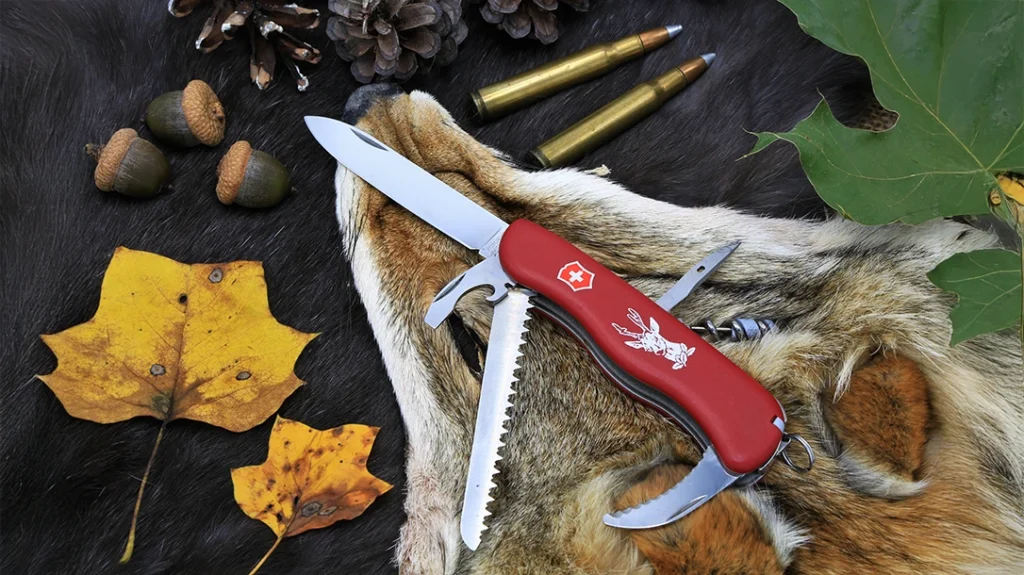
From the Roman multitool to the Vetterli rifle’s kit, through the Model 1890 and Karl Elsener’s vision, the Swiss Army Knife (SAK) emerged as more than a soldier’s accessory—it became a global icon of preparedness, precision, and independence.
Advertisement — Continue Reading Below
Victorinox Swiss Army Knife
Karl Elsener’s company name reflects both family and innovation. In 1909, after his mother, Victoria, passed away, Elsener honored her by renaming his cutlery workshop in her memory. Years later, when stainless steel was introduced in 1921, he combined her name with “inox”—the French abbreviation for acier inoxydable, meaning stainless steel.
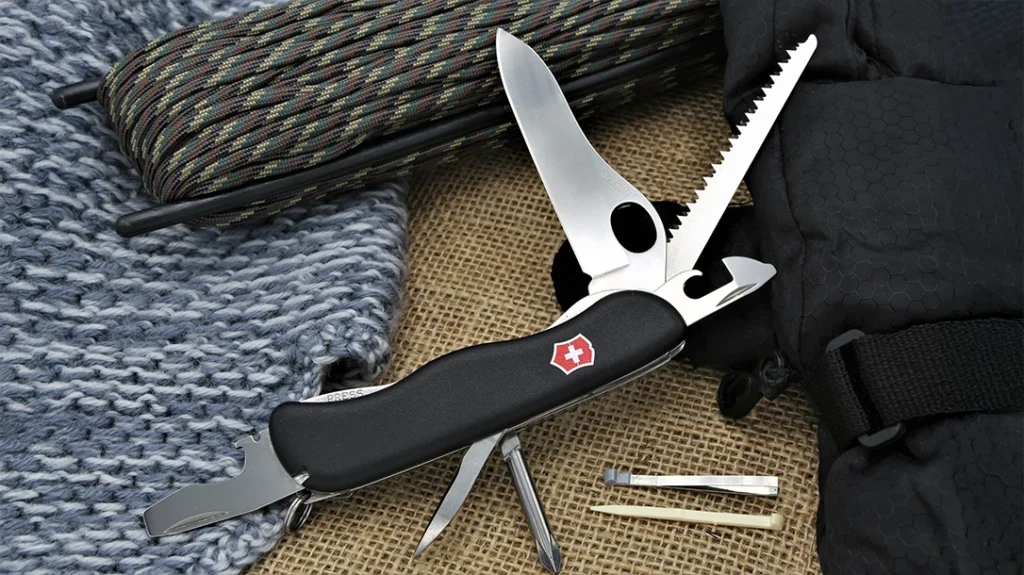
The fusion created Victorinox, a brand that symbolized Swiss tradition and modern progress. This name carried forward Elsener’s vision: a knife rooted in heritage yet built with cutting-edge materials, embodying durability, precision, and adaptability for soldiers and civilians alike.
Advertisement — Continue Reading Below
Secret Agents, Spies, and War Hero Tools
After seeing the usefulness of the SAK, Germany expanded its military presence in Europe in 1976. The German Army Knife, or GAK, was introduced in the 1970s when the Bundeswehr contracted Victorinox for a standardized field knife.
Built on a 108mm frame, it offered a sturdier grip than the civilian 91mm models. Its olive‑green nylon scales distinguished it from the iconic red Swiss Army Knives, blending durability with camouflage. The toolset was pared down to essentials: a main blade, an awl, and a corkscrew.
Advertisement — Continue Reading Below
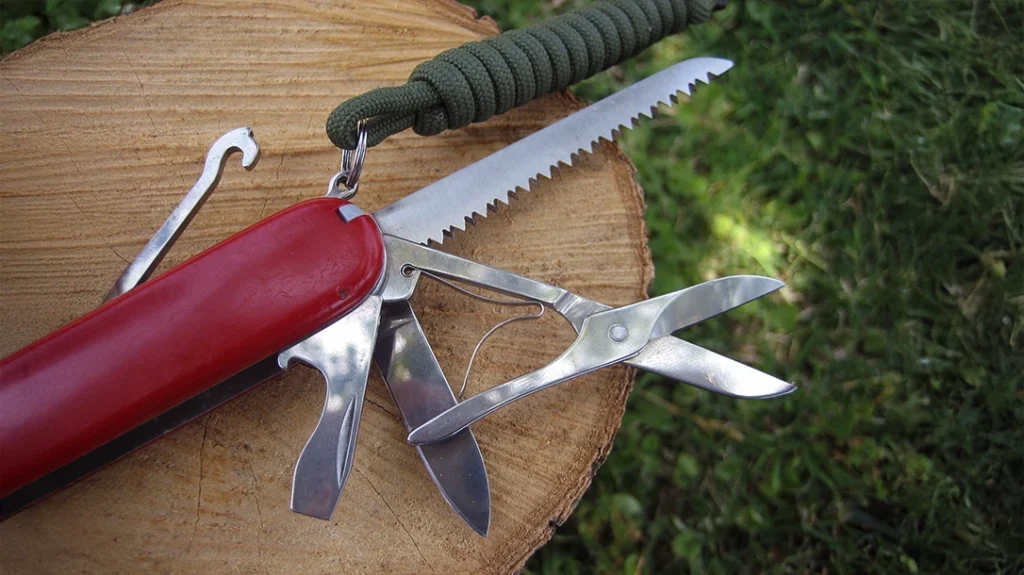
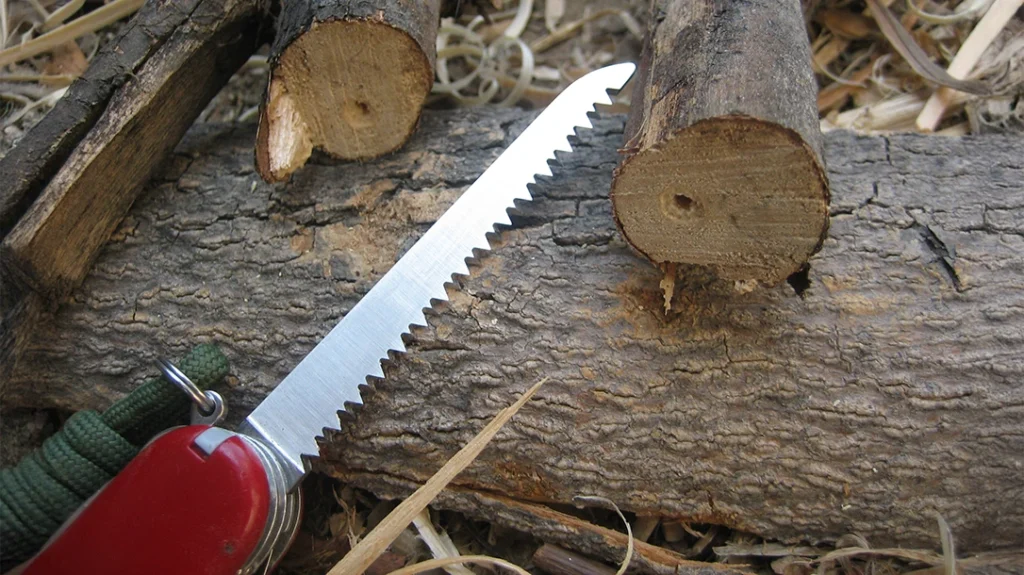
Its standout feature was the unique multi‑purpose saw, which combined a wood saw, bottle opener, flathead screwdriver, and file in one compact tool.
Tactical Origins of the SAK
After 9/11, Victorinox faced a crisis. Swiss Army Knives had been a staple of duty‑free airport shops, but new security rules banned them from flights. Sales collapsed almost overnight, pushing the company toward bankruptcy. In 2005, Victorinox acquired rival Wenger, consolidating the two historic brands under one banner.
The path out of hardship came through military contracts, echoing Victorinox’s tactical origins. Germany wanted to modernize its unchanged 1970s GAK. Victorinox replied with a 111mm redesign featuring olive scales, a liner‑locking main blade, a large wood saw, and the usual Swiss Army Knife tools.
This updated knife was tested and adopted by militaries in Austria, Saudi Arabia, Thailand, and the United States. For civilians, the same design appeared as the Trekker, keeping tactical roots alive in everyday carry.
To the Point
The Swiss Army Knife has impacted the cutlery world for centuries, not only in everyday carry but in world history. From the peaks of the Himalayas to spying missions over Soviet territory and onboard the International Space Station, the iconic red tool has found a place in survival gear, among adventurers, travelers, and, of course, knife enthusiasts.
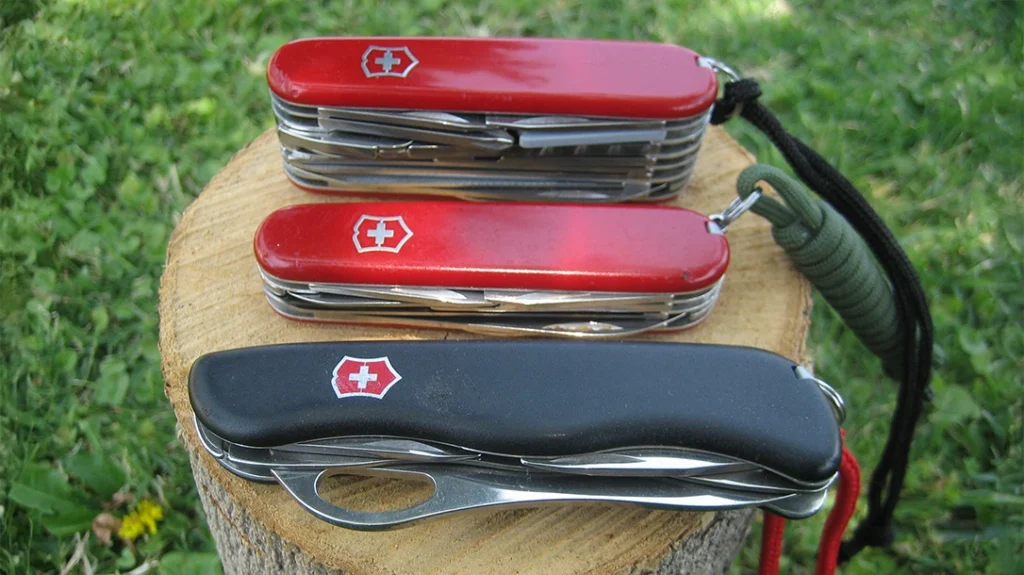
Victorinox’s catalog today comprises about 100 Swiss Army Knife models, balancing everyday carry classics, tactical military designs, and collectible editions.
WHY OUR ARTICLES/REVIEWS DO NOT HAVE AFFILIATE LINKS
Affiliate links create a financial incentive for writers to promote certain products, which can lead to biased recommendations. This blurs the line between genuine advice and marketing, reducing trust in the content.

