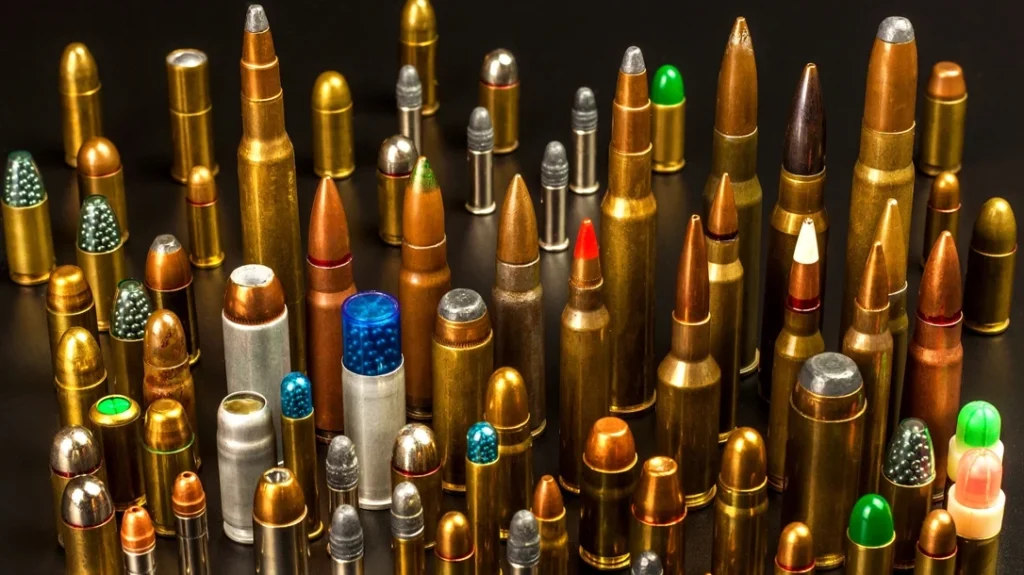

In the firearm world, ammunition is an essential topic to understand. However, many new shooters may find that the various bullet brands, types, and even sizes can make it a bit confusing to navigate. To help break it down, let’s cover ten of the most popular calibers and everything you should know about them.
Bullet Sizes, Calibers, and Types—A Guide
.22 LR
One of the most common and well-loved calibers within the firearm community is the .22 Long Rifle. This bullet size can pierce wood or thin sheet metal. It is best used in activities such as hunting small game, target shooting, and recreational plinking.
Advertisement — Continue Reading Below
Depending on factors such as barrel length, weight, and ammunition type, a .22 LR’s standard velocity can range between 1070 and 1135 feet per second (fps). This makes it a quiet yet quick round.
Most standard .22 LR bullets typically weigh 30 grains, but some high velocity rounds can weigh up to 40 grains. Due to its weight, this cartridge produces minimal recoil, making it great for beginners and all shooters alike. Additionally, one key benefit of this bullet size is its low cost, ranging from $0.05 to over $0.25 per round.
5.7x28mm FN
Advertisement — Continue Reading Below
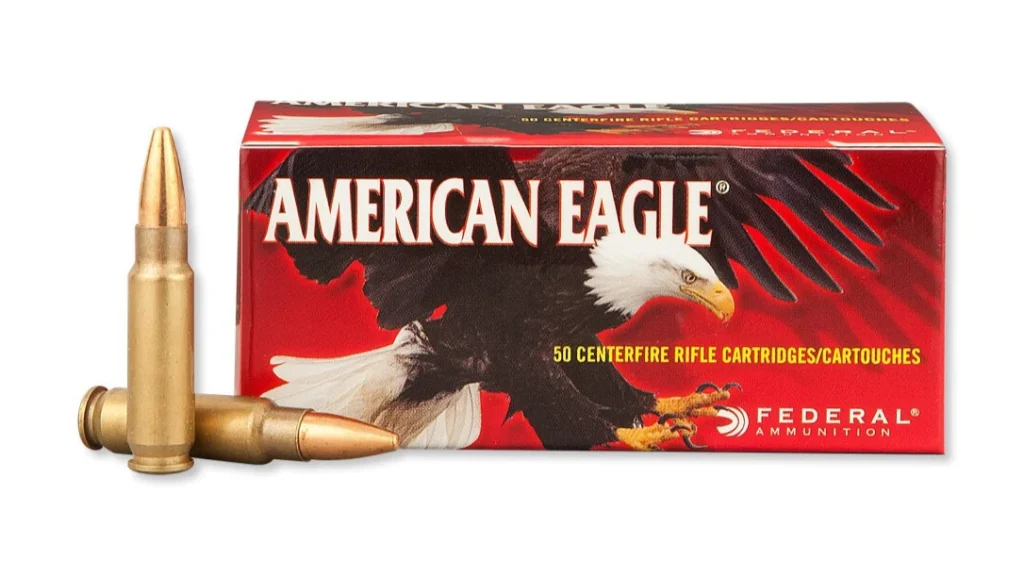
The 5.7x28mm FN is a small-caliber round that was developed by FN Herstal in the late 1980s and early 1990s to replace the 9mm Luger cartridge. Today, it is known as a high-velocity round that ranges from 1,700 to over 2,000+ fps. It is widely used for civilian self-defense and target shooting.
Based on its small, pointed design, this cartridge can easily penetrate soft armor and create large wound cavities without overpenetration. This round weighs about 93 grains, which results in minimal recoil, providing shooters with faster follow-up shots and less muzzle rise. The 5.7x28mm FN typically ranges from $0.40 to over $1.00 per round.
.223 Remington
Advertisement — Continue Reading Below
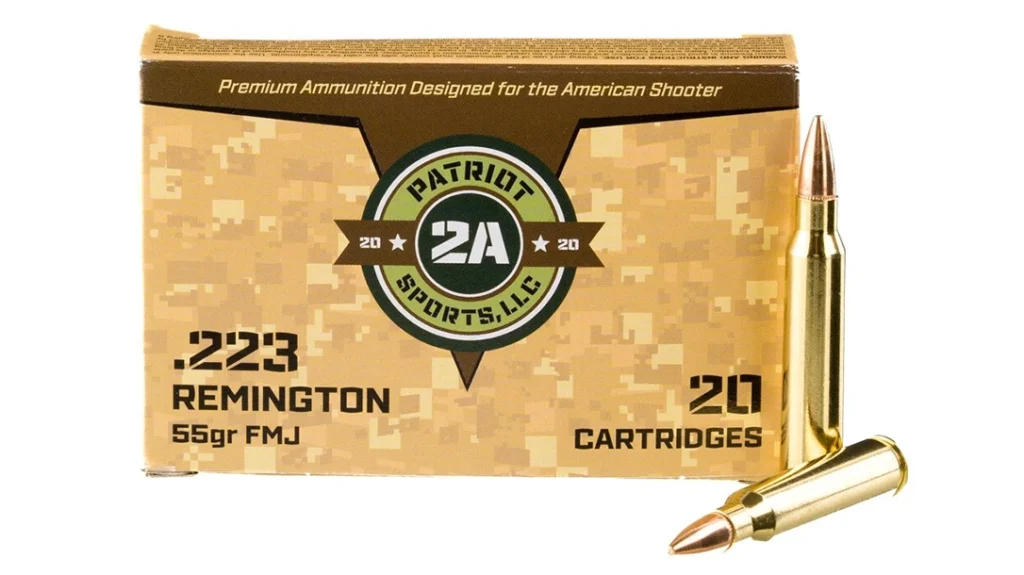
The .223 Remington is a round commonly used in both semi-automatic and manual-action rifles for law enforcement, self-defense, varmint hunting, and target/sport shooting. Depending on the bullet design, .223 Remington can be designed either to fragment upon impact or to provide deep penetration.
Standard .223 Remington bullets weigh 55 grains, while lightweight bullets weigh as little as 35 grains. In contrast, heavier rounds that are designed for long-range shooting can weigh up to 77 grains.
Determined by factors such as bullet weight and length, the .233 Remington has a muzzle velocity that ranges from 2,500 to over 3,500 feet per second. This results in mild, manageable recoil. It can cost $0.39 to over $1.50 per round.
Advertisement — Continue Reading Below
.380 Automatic Colt Pistol
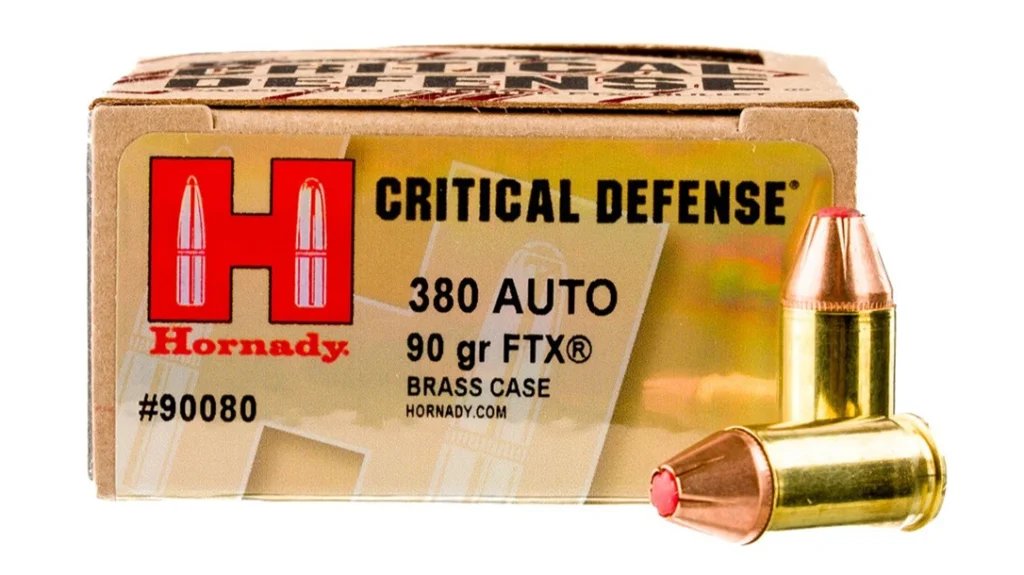
The .380 ACP, also known as the 9x17mm, is a rimless, compact pistol cartridge. It was developed by John Browning in 1908 for close-range self-defense. Depending on the type of firearm, this ammunition has a standard muzzle velocity of around 900 to 1000 fps. However, it is crucial to understand that factors such as ammunition type, weight, and manufacture play a fundamental role in determining muzzle velocity.
This ammunition weighs between 80 and 102 grains and produces light recoil, which is great for new shooters. Regarding the FBI’s 12 to 18 inches of penetration in 10% ballistic gel test, the .380 ACP varies depending on the type of bullet used. It typically ranges from 9 to over 25 inches.
Advertisement — Continue Reading Below
For reference, full-metal-jacket rounds often lead to overpenetration. However, defense rounds such as hollow-point expand well upon impact but do not provide good penetration. The .380 ACP typically ranges from $0.20 to over $1.00 per round.
9mm Luger
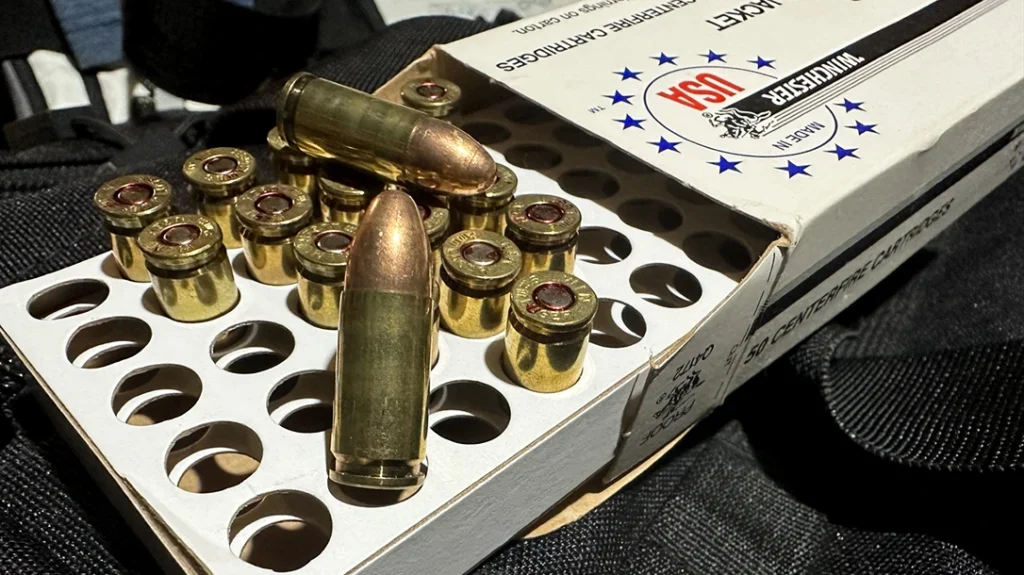
In the firearm community, one of the most popular ammunition types is the 9mm Luger. It is known for its use in the military, law enforcement, self-defense, and sport shooting. Depending on the bullet’s weight and other factors such as barrel length and manufacturer, this ammunition for standard or specialty rounds has a muzzle velocity ranging from 900 to 1,500 feet per second.
Advertisement — Continue Reading Below
This round typically weighs 115 to 147 grains. The lightweight bullets are commonly used for training, and the heavier bullets are commonly used for defensive shooting.
In terms of penetration, a 9mm Luger meets the FBI’s 12 – 18-inch guidelines. It provides significant deep-tissue penetration, which is essential for self-defense rounds. This ammunition is considered beginner-friendly, but it has a noticeable yet manageable recoil (kickback).
Furthermore, the price point of the 9mm Luger varies depending on the type of ammunition used. Target ammo can cost anywhere between $0.20 to $0.30 per round, while self-defense rounds cost $0.50 to $1.00 per round.
.38 Special
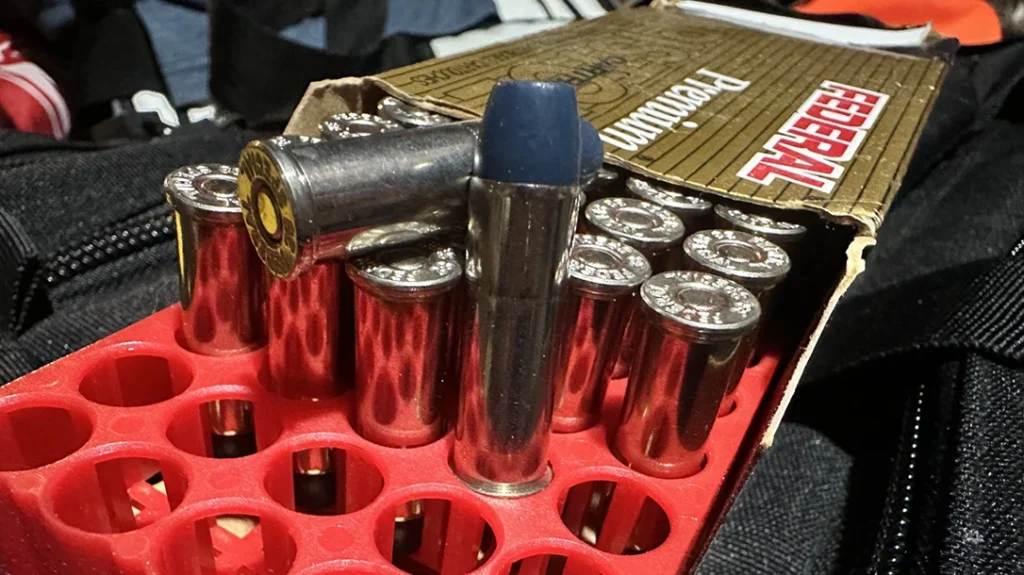
If you are looking for a bullet that offers accuracy and mild recoil, the .38 Special is a popular caliber to consider. Developed by Smith & Wesson in 1898 to replace the .38 Long Colt, this ammunition became popular amongst military and law enforcement. Today, the .38 Special is commonly used for target shooting, self-defense, and hunting small game.
Depending on the bullets’ weight and barrel length, standard .38 Special round muzzle velocity can range from 700 to 1,000 fps. However, overpressure ammunition can vary between 900 and 1,200 fps. Additionally, this ammunition typically weighs 110 to 158 grains.
Regarding bullet entry, the .38 Special commonly meets the FBI’s 12 to 18 inches of penetration in ballistic gel guidelines. However, this can vary depending on bullet design. Heavier +P hollow point bullets tend to penetrate deeper, often reaching 15 to 18 inches. In contrast, lighter hollow point rounds can under-penetrate, resulting in expansion failure upon impact. This ammunition’s price point can fall between $0.35 to over $0.60 per round.
.357 Magnum
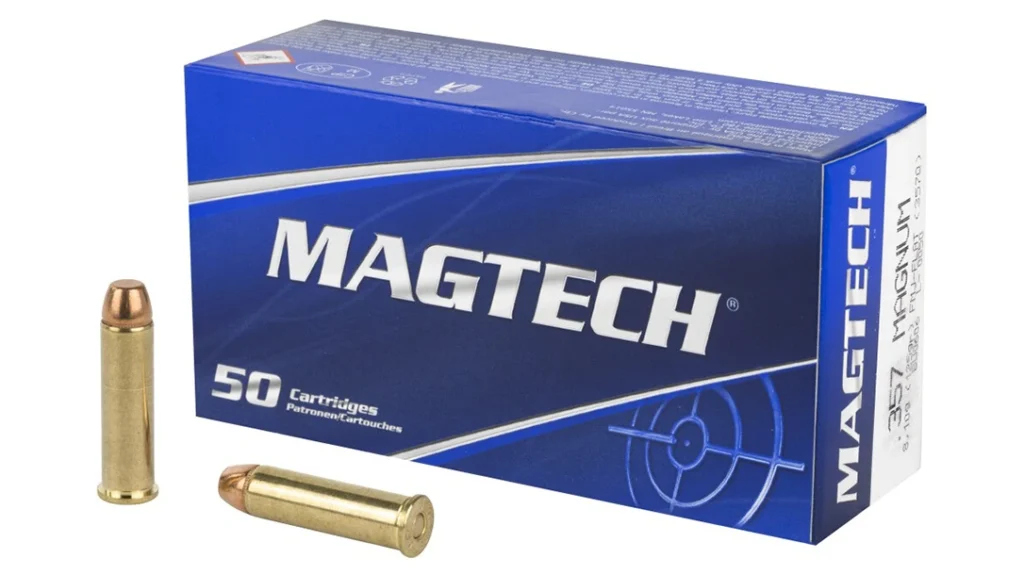
The .357 Magnum is a high-velocity cartridge designed for hunting medium game and self-defense. It is known for its deep penetration and sharp recoil. In handguns, this round’s muzzle velocity can vary from 1,200 to over 1,800 fps. However, ammunition designed for rifles can reach upwards of 2,200 fps.
In terms of bullet weight, defensive .357 Magnum rounds can weigh 125 grains, while rounds meant for hunting can weigh up to 158 grains. Because this cartridge is niche and requires more materials to engineer, the .357 Magnum can cost an individual $0.40 to $1.00 per round.
.40 S&W
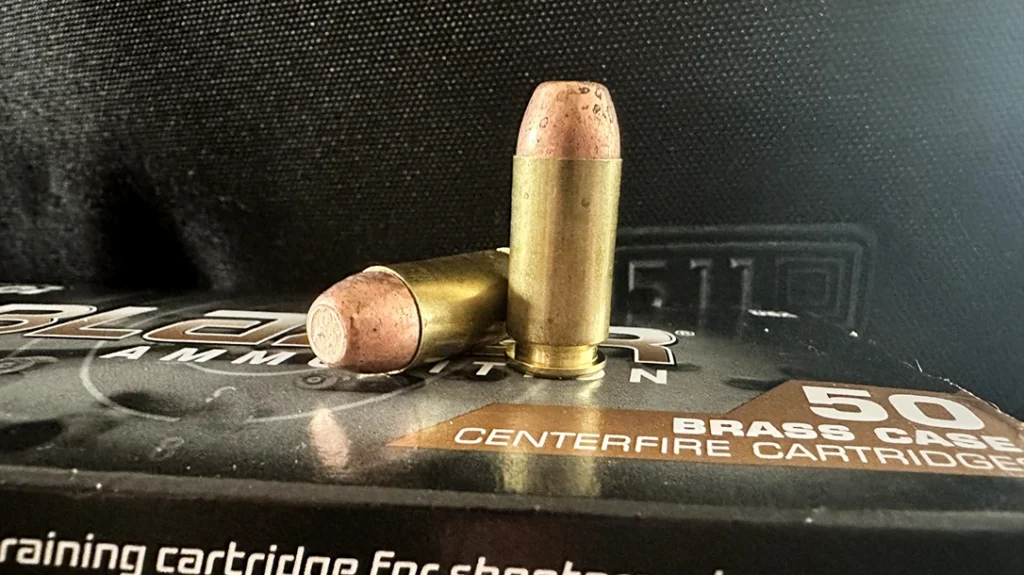
The .40 S&W cartridge was designed for law enforcement in 1990. It was intended to offer more terminal effectiveness than the 9mm Luger and less recoil than the .45ACP. Influenced by ammunition type, bullet weight, and barrel length, this high-velocity ammunition ranges from 850 to 1,330 feet per second and typically weighs 105 to 200 grains.
Due to its larger diameter and greater weight, the .40 S&W offers solid penetration. This makes it a cartridge that is excellent to use for self-defense. Additionally, this cartridge is known for producing snappy recoil, making it best suited for intermediate and experienced shooters. Lastly, the cost of the .40 S&W can range from $0.26 to over $1.50 per round.
10mm Auto
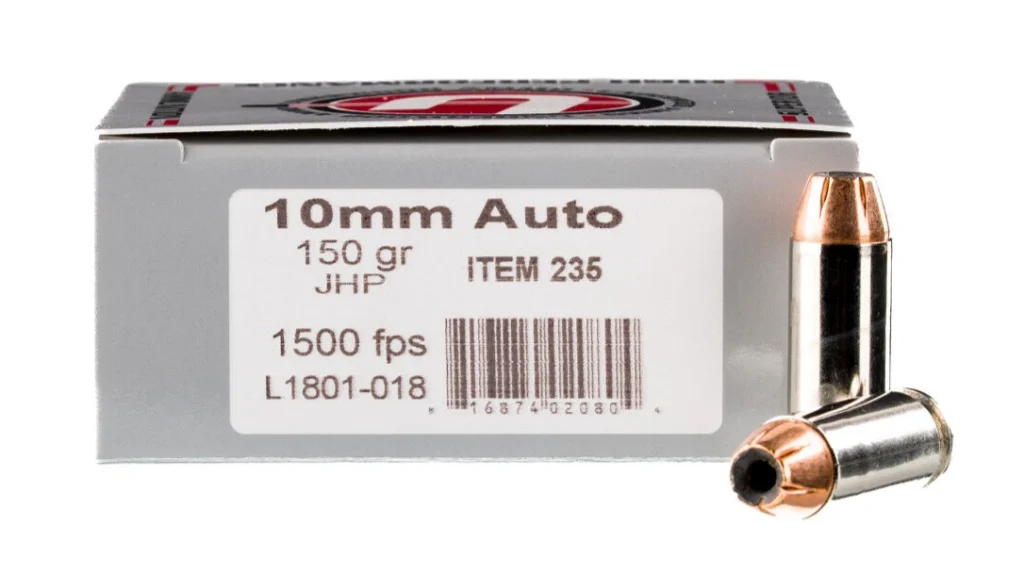
The 10mm Auto is a semi-automatic pistol round designed to offer deep tissue penetration. It is ideal for hunting medium game, defending against predators, and personal protection. The most popular bullet weight is 180 grains, but this cartridge’s weight ranges from 155 to 200 grains.
Depending on factors such as bullet weight and barrel length, 10mm Auto velocity ranges from 1,200 to 1,400 fps. This cartridge is known for heavy recoil, which can negatively affect follow-up shots, making it better suited for experienced shooters. In terms of affordability, practice FMJ ammunition typically averages between $0.40 to $0.70 per round, while defense ammunition costs $1.00 or more per round.
.45 ACP
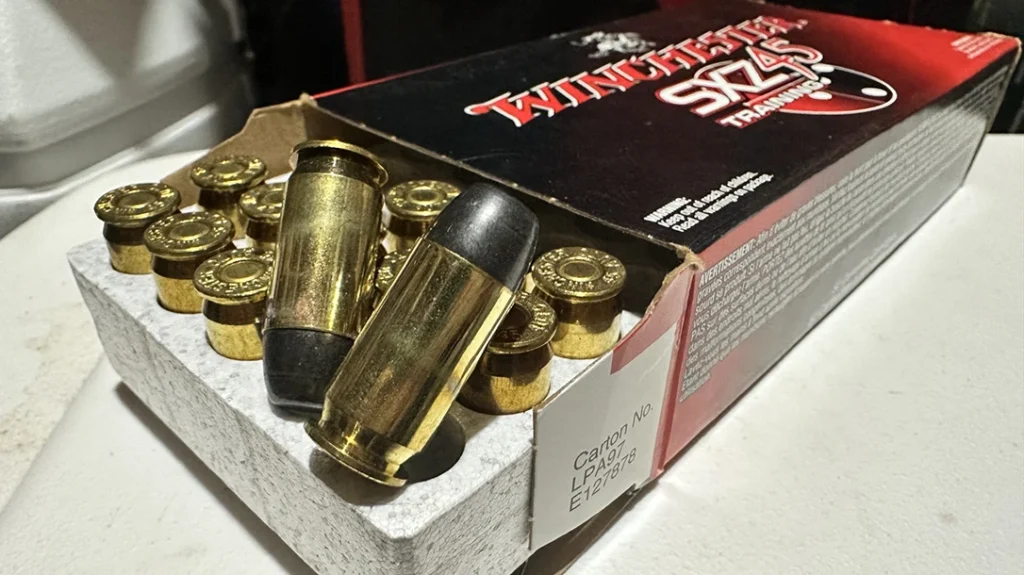
The .45 ACP, also known as .45 Auto, is a cartridge that offers significant penetration, making it ideal for self-defense and military use. This ammunition is known for its heaviness, with commercial loads ranging from 180 to 230 grains, while the military prioritizes 230-grain bullets. For standard .45 ACP, the muzzle velocity ranges from 835 to 950 feet per second.
Compared to the 9mm, this round is known to have a heavy, slow, and smooth recoil, making it suitable for any skill level to use. In terms of affordability, FMJ target ammunition price point can range from $0.38 to $0.45 per round. However, specialty defense projectiles average $0.50 to $1.00 per round.
Understanding Bullet Sizes, Calibers, and Types
Overall, ammunition plays a fundamental role in the firearm world, giving firearms a purpose and providing shooters with the opportunity to enjoy shooting. For many new shooters, the various types, brands, and sizes of ammunition can make the topic slightly complicated to understand.
However, once you break down their purpose, muzzle velocity, weight, penetration capabilities, recoil, and price point, you can start to understand each cartridge’s primary function and find the one best suited to you and your needs.
To find the best prices on these and other calibers, please visit our Ammo Finder.