

Arriving in the woods with Ricky LaPorte felt so serene. I had waited months to feel the sun, hear the birds, and listen to the creeks flow. After a tough winter the forest was beginning to wake up again. Ricky and I talked on the way there about the outdoors and everything it meant to us. I learned that he grew up fishing, hunting, and learning how to sustain himself outdoors from as early as he can remember. He owns a restaurant in the Adirondack hamlet Old Forge called Nest, prioritizing local ingredients and even using the plants that he forages himself in his recipes. But his relationship with wild food extends past the kitchen.
The outdoors are a part of every day life for Ricky, and you can almost always find him and his family experiencing nature. While many may associate spring and summer with flowers and potentially a lot of rain, foragers like Ricky know that it is a great season for wild food.
A Note on Responsible Foraging
The locations visited for this article were private property that we had access to, if harvesting on public land be sure to learn regulations and ethical harvesting practices. Foraging should never come at the expense of the resource and we only take what the land can spare.
The Arrival of Ramp Season
If you’re familiar with the Upstate NY and the Adirondack area you may have seen farmers markets advertising wild leeks or ramps, referred to by both names. In the northeast they are a long awaited spring food that gives us not only delicious flavor, but the first signs of spring.
Advertisement — Continue Reading Below
This was my first time trying a ramp and I was pleasantly surprised at how delicious it was. The garlic and onion aroma was unmistakable and it tasted just like a mixture of the two with a bit of a more sweet taste. As members of the onion family the similar taste does make sense. They stand out once you have seen them with their broad green leaves and they grow out of the ground almost like long grass. You can see how they grow in patches though, and not tight together the way that grass grows. They emerge before the canopy of the forest fully develops which is why spring is the season you forage for them.
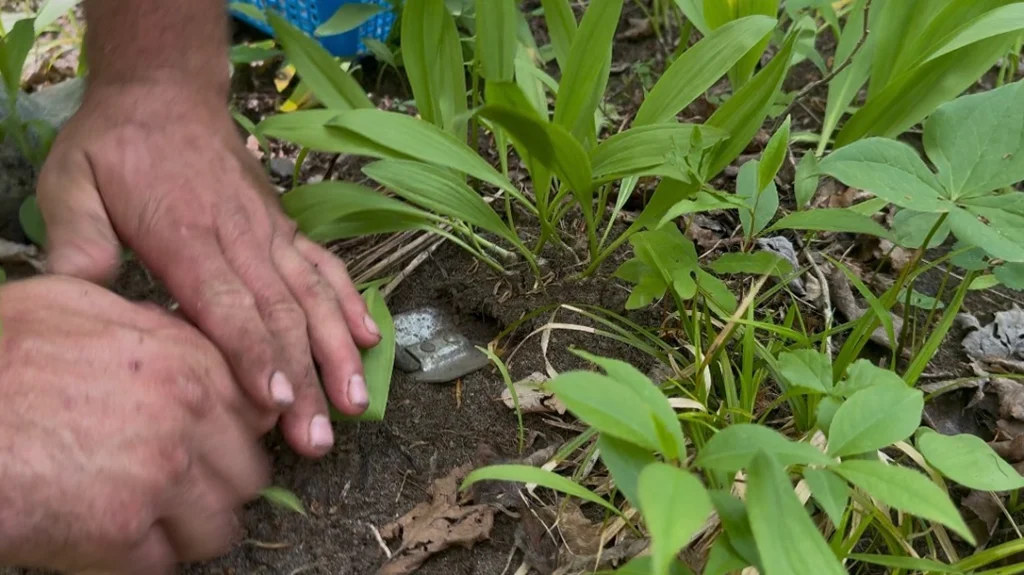
Ricky told stories about his upbringing as we walked along and how he watched his father prefer the simplest preparation of them: sprinkle them with salt and eat them fresh. It truly shows how wild food and a connection to the land become part of family traditions passed down through generations.
How People Use Ramps
Ricky shared that his favorite ways to prepare ramps is by pickling them, and the smaller the ramp the better for pickling. He also incorporates them into the dishes he serves at The Nest, with the most recent being pan seared crab cakes with sesame baby kale slaw, pickled ramps, and ginger aioli. Some other popular ways to eat ramps are chopped up into recipes that would usually call for onion or garlic, added to soups and stews, made into pesto and grilled alongside meats.
Harvesting With Respect
Ricky focuses on ethical harvesting. This means harvesting from multiple patches rather than clearing one area. He takes a small amount from each patch and leaves enough for the plants rebound. The specific areas he targeted that he knew the plants likeliness of surviving were low were bulbs that were already partially exposed through the soil, and plants struggling to grow through rocky areas and less likely to mature successfully. There are some regions where overharvesting has become a real problem for wild leeks and although foraging is an amazing practice, we always want to be respecting the land when doing so. Setting the plants up for future generations and avoiding a patch needing years to recover from.
Advertisement — Continue Reading Below
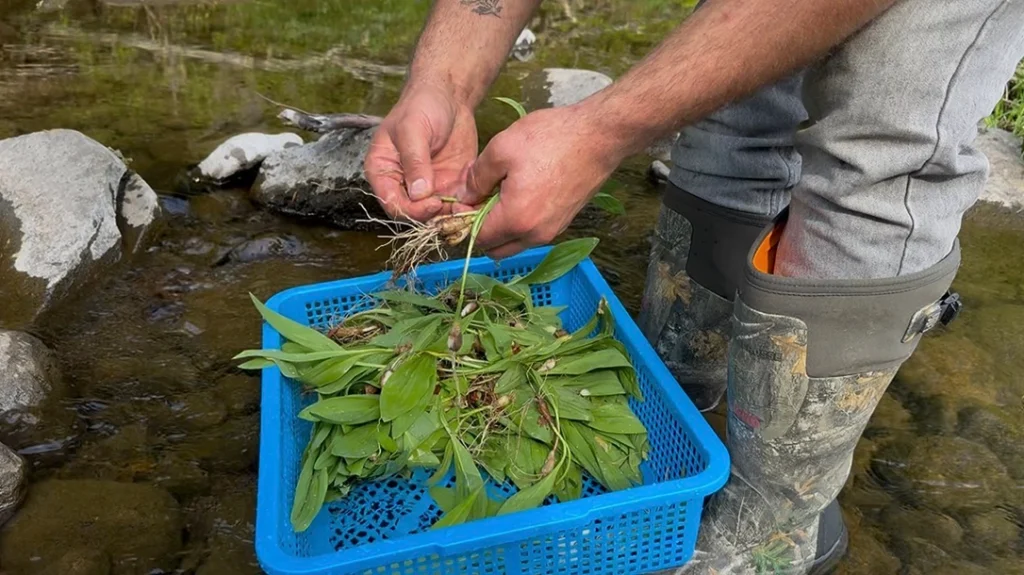
As we washed the ramps in the river afterward Ricky explained to me that he preferred it this way, even if it was more difficult than taking them home and rinsing them in the sink. He feels as though he has more connection to the land and the harvest. As I sat with him rinsing the ramps I couldn’t help but feel it too.
Harvesting and cleaning your food by hand really allows you to stop and consider the process that our food goes through to wind up in our hand in the grocery store. He talked about how trout season correlates to ramp and fiddlehead season and when he eats all three together, he knows that his meal came from the land and feels accomplished in that fact.
The Search for Fiddleheads
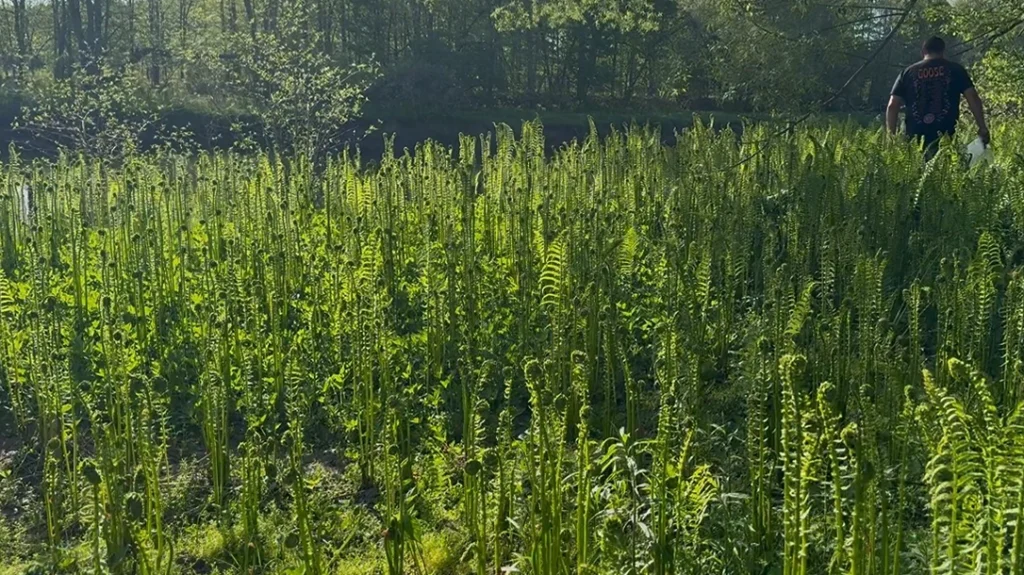
It took us a little more time to find the fiddleheads but we finally came upon a very large patch. It felt like a little forest of ferns, now growing up taller as the season has passed. Unfortunately the recent warm spouts we had gotten made them grow up just a little too high for harvesting, but still low enough for us to spot and for me to learn more about. Fiddleheads are the young shoot of an ostrich fern before it has unfurled into life.
Advertisement — Continue Reading Below
This really showed me how small the window is for spring foraging and how close you need to be paying attention to timing and weather shifts. Before I was taught more about fiddleheads I was under the impression that I had already seen them in the wild. I quickly learned that most young ferns are mistaken for fiddleheads as they also start out curled. The way that you can tell you have spotted the correct one is by their stalk.
Fiddleheads have a unique u-shaped stalk similar to celery. Ricky describes them as tasting similar to asparagus and broccoli, almost like a mixture of them both. Fiddleheads also have a thin, brown, papery coating that can be compared to the outer layers of an onion. As it grows this paper flakes off and the leafs begin to show. Thick and robust fiddleheads generally indicate a prime stage and when they begin to unfurl the quality declines rapidly.
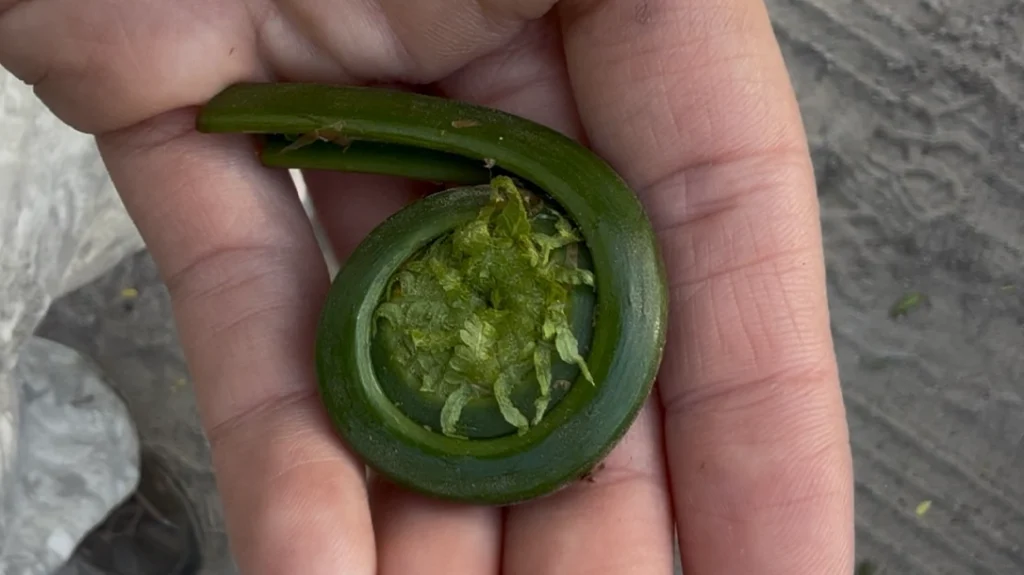
Some ferns are not edible and can even cause illness, proper identification should occur before harvesting or consuming wild plants.
Popular Ways to Cook Fiddleheads
There are plenty of ways to cook fiddleheads. Methods include sauteed with butter and garlic, roasted, pickled, added to pasta dishes, mixed into vegetable medleys, and served alongside meats. They are known for being rich in vitamins A and C, high in fiber, iron and potassium.
Advertisement — Continue Reading Below
The Growing Interest in Local Food
This day was about far more than finding ramps and fiddleheads. Foraging requires patience, observation, and respect; qualities that are increasingly valuable in a fast-paced world. As I walked away from the woods, one lesson stayed with me. It wasn’t how much we had harvested, but how much we had left behind. Stewardship is what ensures these seasonal treasures will remain for future generations to discover and enjoy.
WHY OUR ARTICLES/REVIEWS DO NOT HAVE AFFILIATE LINKS
Affiliate links create a financial incentive for writers to promote certain products, which can lead to biased recommendations. This blurs the line between genuine advice and marketing, reducing trust in the content.

