

Tackle storage has come a long way from the metal boxes anglers carried in the late 1800s. Early tackle boxes were sturdy, but rust was a constant problem until Plano revolutionized the industry in 1952. The first tackle box on the market was made of sturdy rigid plastic. After that, a lighter plastic design quickly became popular, and over the decades manufacturers introduced countless variations featuring cantilever trays, fold-out compartments, and sliding storage systems. Then, in the 1990s, soft-side tackle bags changed the game once again by offering anglers a lighter, more customizable way to organize and carry gear.
Today, both rigid plastic tackle boxes and soft-side tackle bags remain popular. Each design has its own strengths and weaknesses depending on how and where you fish. Some anglers prioritize durability and water resistance, while others care more about flexibility, storage space, and portability. Choosing the right setup often comes down to personal preference and fishing style.
So which option truly makes the most sense for all-around fishing? Let’s break down the pros and cons of both.
The Great Tackle Box Debate
Plastic tackle boxes are more rigid and can handle a good amount of abuse. Often tackle boxes are thrown or tossed into trucks, garages and on docks and boats. Having something that is solid and can handle the abuse is a good idea.
Another thing to consider is the water resistance abilities of a closed plastic tackle box. The closed latched lid of a plastic tackle box will keep out much more rain or water splashing than most soft sided designs. Not that getting tackle wet is a huge deal, but if you have other gear in there that may be as water friendly or of your tackle does not dry quickly, then you can have damage and rust forming.
Advertisement — Continue Reading Below
Most plastic designs will keep most of your gear dry. While we are talking about the benefits of the plastic options, I want to mention the three biggest drawbacks backs. The divider trays in the tackle box are the biggest limiter. With the pre-sized trays, you are limited to only holding baits that fit in those spots. The weight of the rigid boxes is an issue when they are full and become cumbersome. Once you load up all your tackle these can weigh so much that they become tough to carry around. Lastly, the last drawback in my opinion is that you are unable to fit larger items such as fishing line spools, pliers or large number of bags of soft plastics. Some allow for this gear but overall, this is limited.
Soft-Side or Rugged Durability?
The soft-sided option became popular in the mid to late 1990’s. Most tackle bags resemble a small duffle bag style with a center zipper and pouches on all sides for more gear along with a shoulder strap. Other styles resemble a backpack or a large soft cooler style with a zippered top flap for easy access to the entire bag.
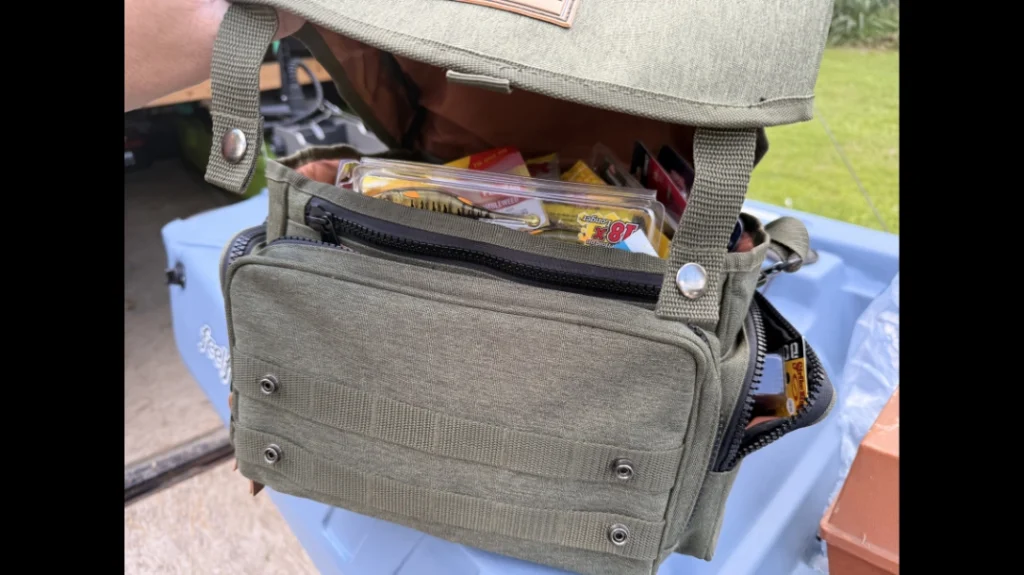
The biggest benefit for me in this style is the customization of storage. You can use tackle trays inside these bags with still having room for full retail bags of soft plastics and spools of fishing line. The side pouches allow for pliers, grips, gloves and other tools and gear. These bags are lighter weight and easier to carry with the shoulder strap. Overall, this is my favorite style but there are some drawbacks as well. The soft structure means that there is little protection for your gear if stepped on, crushed under other gear, or tossed around roughly. Water is more likely to seep into a soft bag than a rigid plastic design and it usually takes longer to dry out when wet since the fabric can absorb water.
Advertisement — Continue Reading Below
Boxes or Bags
Overall, both designs have pros and cons. But my go-to is always the soft bags. I am known to throw retail packaged baits by the handful into my bag for each trip so I can make sure I have the baits I need. I also like being able to bring spools of line in the side pockets in case I need it and my pliers and tools clip right on the bag with a clip and tether. I can use tackle trays in my bag or just throw it all in bags. Whichever fits my specific trip and needs for the day.
WHY OUR ARTICLES/REVIEWS DO NOT HAVE AFFILIATE LINKS
Affiliate links create a financial incentive for writers to promote certain products, which can lead to biased recommendations. This blurs the line between genuine advice and marketing, reducing trust in the content.

