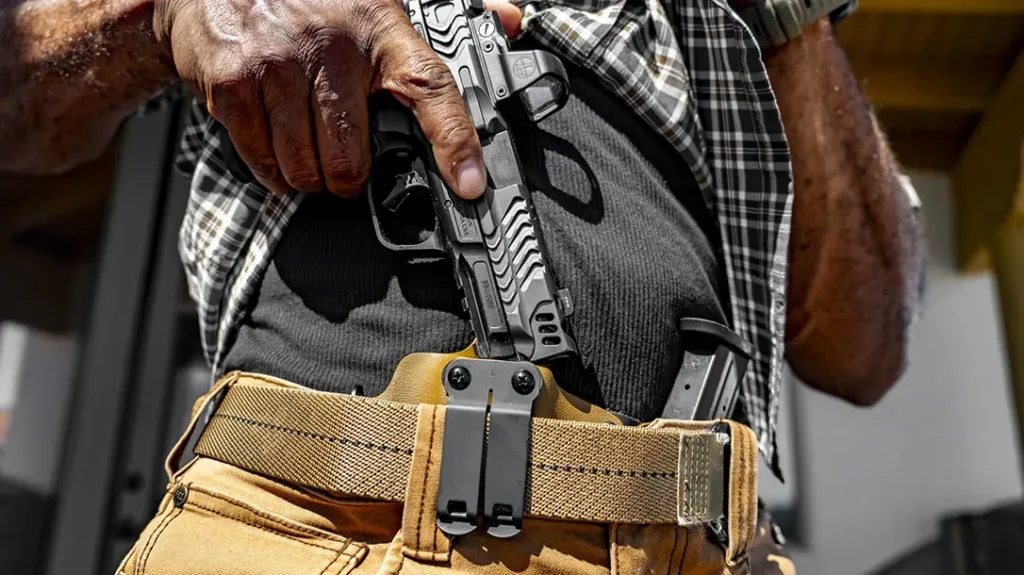

When carrying concealed, a holster plays an essential role in keeping your firearm safe, secure, and easily accessible. This means that choosing a holster made from durable and comfortable materials should be the top priority. To determine the right holster for your needs, let’s explore the benefits and drawbacks of Kydex, nylon, and leather holsters.
The Pros & Cons of the Different Holster Materials
Kydex
Kydex holsters are made from a thermoplastic acrylic-polyvinyl chloride composite and are designed to be heat-molded and customized to the shape and model of a firearm. They are rigid and durable, allowing for a secure fit once a firearm is fully seated.
However, their stiff, inflexible plastic can cause discomfort, especially with IWB carry or in seated positions. Many people also find Kydex to be loud and attention-grabbing, often producing a “click” when drawing or holstering their pistol.
Advertisement — Continue Reading Below
Furthermore, due to the constant friction of drawing and reholstering, it is important to note that Kydex holsters can cause minor scratches to a handgun. This makes regular maintenance a priority. Compared to other holster materials, Kydex is considered low-maintenance, typically requiring only a damp cloth to remove dust, dirt, and other debris to help minimize cosmetic damage.
Leather
Holsters made of leather are rigid, typically offering strong retention through friction and a molded fit, especially with materials like cowhide or steerhide. However, since leather is an organic material, it can deform and soften over time. This results in the holster creasing or folding into the trigger guard.
Advertisement — Continue Reading Below
While this type of material can be long-lasting, it does absorb sweat and humidity. So, it requires cleaners and oils to protect your firearm and prevent the material from cracking or drying out.
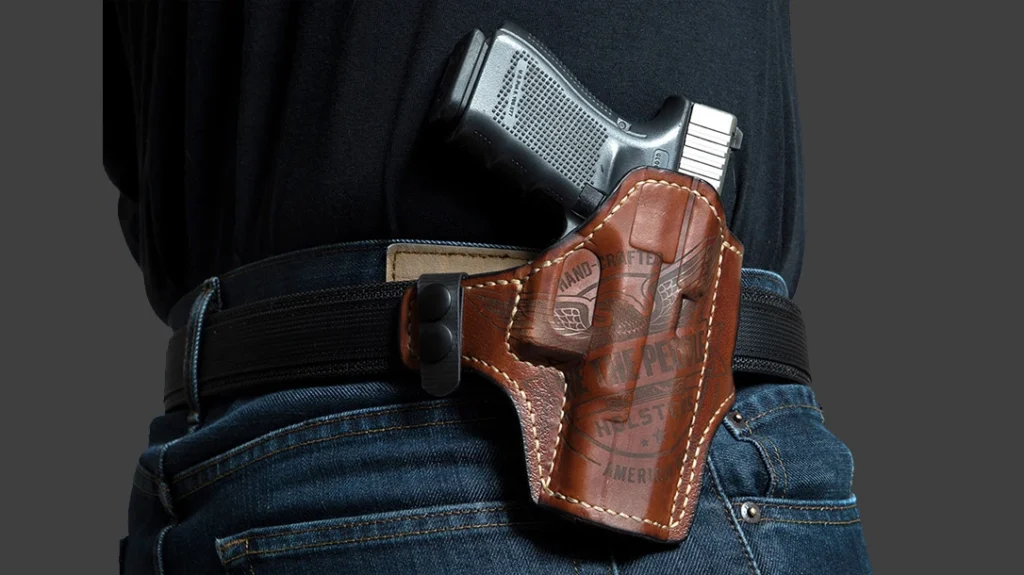
One major advantage of leather holsters is that they are flexible, easily conforming to a user’s body and providing a comfortable fit, especially when carrying IWB. However, brand new leather holsters may be a bit stiff and can take a while to break in.
Advertisement — Continue Reading Below
Lastly, this traditional holster material is known for being quiet. It produces minimal noise when drawing or reholstering, which many users find to be incredibly beneficial.
Nylon
Of the three materials, nylon holsters are the most budget-friendly, typically ranging from $10 to $50. They are made from synthetic polymers and are often designed to be lightweight and water-resistant. These holsters are also versatile, often designed to fit a wide range of handgun models.
Compared to Kydex and leather, nylon’s soft structure does not provide the best retention. Likewise, the fabric can easily become deformed. Because of this, it can cause the material to manipulate the trigger and increase the risk of negligent discharge.
Advertisement — Continue Reading Below
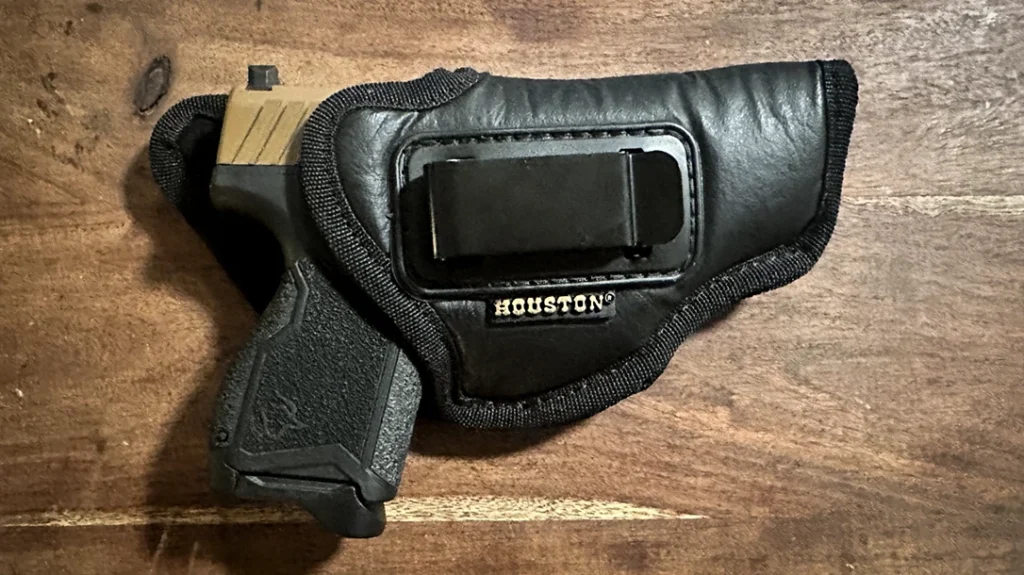
However, many nylon holsters offer adjustable straps, thumb breaks, or steel clips. But it is important to note that these features may limit reaction time when drawing. Additionally, due to nylons’ flexible shape, it can not only cause the material to wear out quickly but also make reholstering a challenge.
Finding the Right Holster For You
Overall, Kydex, leather, and nylon are three common holster materials, each offering its own set of advantages and disadvantages. While personal preference plays a fundamental role in determining the right holster for you, it is essential to choose one that is durable, properly covers the trigger guard, and does not shift during movement.
Advertisement — Continue Reading Below
A holster is not just a piece of gear. It is an item designed to prioritize safety and security while giving you the confidence to handle any challenge that comes your way.