

Back in the mid-1980s in my home state of Ohio, it was not unusual to find a hunter carrying a crossbow for deer hunting. Ohio was one of the first states to allow licensed archers to carry a crossbow without restriction. Fast forward to today, nearly every state allows crossbows for hunting, some with restrictions, but many states also allow its use during the state’s archery season.
Crossbow opponents early on sounded an alarm crying the deer herd would be decimated. They also believed its use would cause more hunting accidents and poaching would increase. However, none of these predictions came to fruition though crossbow usage has steadily increased over the years.
Crossbows: From Controversy to Acceptance
The crossbow has undergone one of the most significant shifts in perception in modern hunting history. When states first began expanding crossbow opportunities in the 1970s and 1980s, many traditional archers opposed the move, arguing that crossbows would provide an unfair advantage, increase harvest rates, and threaten deer populations.
Critics also warned that broader crossbow use would lead to more hunting accidents and poaching. As more states gradually legalized crossbows for hunters with disabilities, and later for all archers during archery seasons, those concerns were closely scrutinized. Decades of harvest data and wildlife management research failed to support many of the dire predictions. Instead, crossbows became an important tool for recruiting new hunters, retaining aging sportsmen and women, and allowing those with physical limitations to continue participating in the outdoors.
Advances in technology have improved accuracy, safety, and reliability, while state wildlife agencies have successfully managed deer populations despite increased crossbow participation. Today, nearly every state allows crossbows in some form, and what was once one of hunting’s most divisive topics has become a widely accepted part of modern archery hunting.
Advertisement — Continue Reading Below
The Modern Crossbow
Crossbows have come a long way since the early models of my youth. The first crossbows were heavy, not very fast and had very rudimentary sights.
Today’s crossbows are fast, with speeds on some models topping 500 feet per second. Most are equipped with some sort of optic. They are lightweight. Many models weigh under 6.5 lbs. and are extremely accurate at ranges that would compete with rimfire rifles. Though I certainly do not condone shooting at game at long range, the bow is capable.
All cross bows have the commonality of stock, string, trigger mech and, of course, the prod or limbs.
The stocks on crossbows are hardly recognizable from early models. Today’s stocks are adjustable in length of pull and many have adjustable cheek pieces for a custom fit.
The trigger mechanisms are much more advanced than early model crossbows with many crossbows having triggers rivaling rifle triggers. A far cry from the crossbows I grew up with, which required nearly two fingers to get the trigger to break over.
Advertisement — Continue Reading Below
The sighting systems on today’s crossbows are set up for a scope or red dot, and many crossbows are available in a package that includes a very serviceable optic.
Three Types of Crossbows
Recurve
The recurve is much like the first crossbow I had back in the early 80s and is still very popular today, but don’t let the lack of technology fool you into thinking these aren’t ‘real’ hunting bows. Some of the Excalibur line of bows launch a bolt (arrow) at over 400 feet per second which is very formidable as a hunting crossbow.
Compound
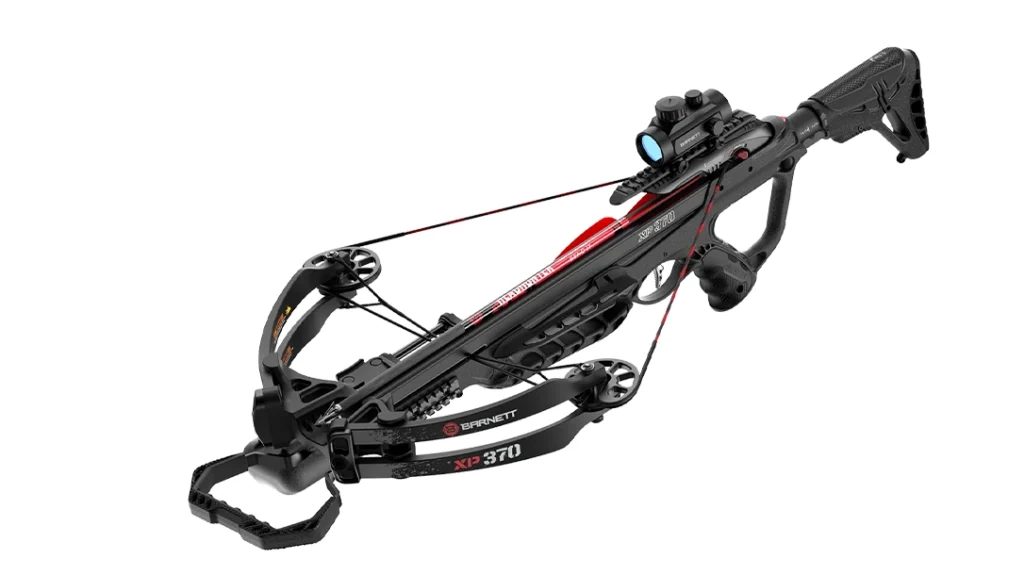
A compound crossbow is probably the most common crossbow being produced. The prods use the technology of high-performance cams to launch bolts. These cammed crossbows revolutionized crossbows with blistering speeds and extreme accuracy.
Advertisement — Continue Reading Below
Reverse Draw
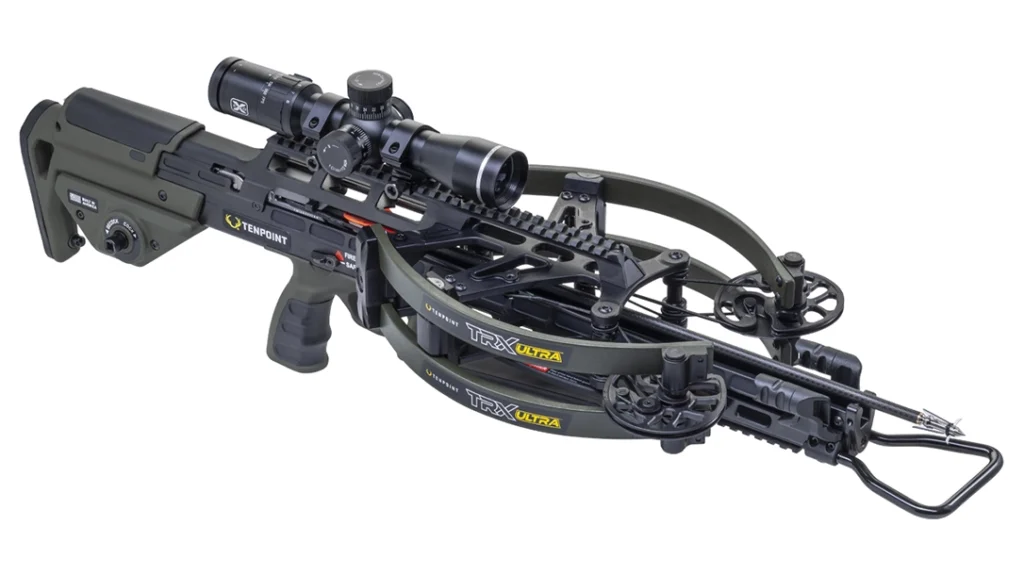
The latest trend in crossbows is the reverse draw crossbow. The limbs on these crossbows are pointed backwards in contrast to the tradition crossbow. This aids tremendously in balance and weight transfer of the crossbow, making the crossbow easier to handle. Many reverse draw cross bows do not exceed nine inches in width and are steadier when shooting. The reverse draw is also in many cases faster due to the longer power stroke of the bow design. The 500 feet per second barrier has been surpassed with the reverse draw type crossbow.
Cocking The Crossbow
There are several methods to cock a crossbow.
Manual
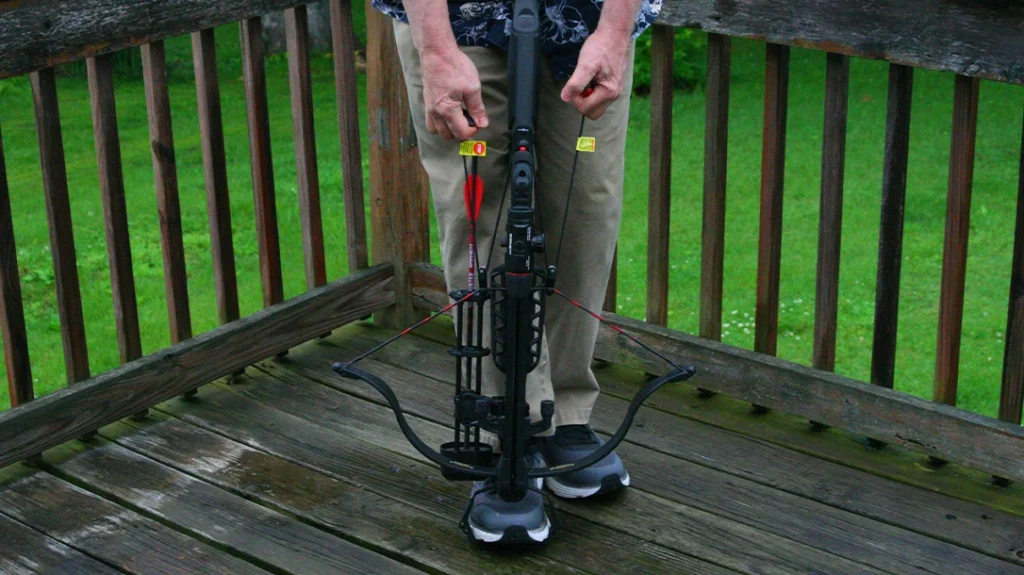
Using manual cocking, the shooter grasps the string while stepping in the stirrup (the large loop on the front of the crossbow). While applying steady and constant pressure on the string rearward until the string is captured by the trigger mechanism. This is how most of the early models operated. This method is reserved for recurve models.
String Sleds
As crossbows became faster, the pull weight of the bow increased and the amount of effort to cock a crossbow also increased. String sleds provide additional leverage when cocking the crossbow, as well as keeping your fingers out of harm’s way to prevent pinching.
Advertisement — Continue Reading Below
Crank
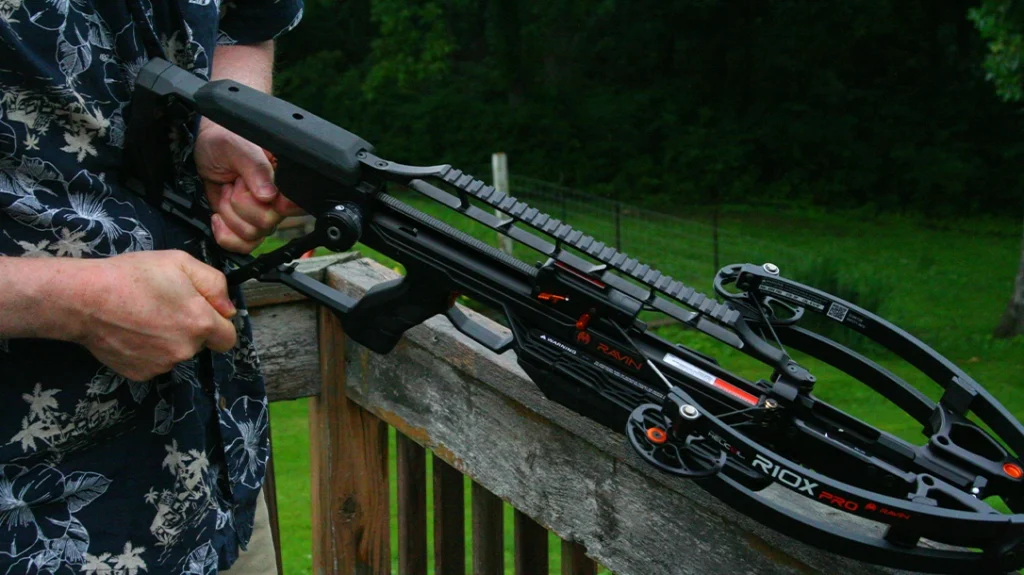
The crank models are often built into the crossbow and are cocked by an attached built-in sled. This sled is attached to the crank mechanism by a strap and works similarly to a pulley. By cranking the handle, the sled attached to the string is drawn to the rear. The modern crossbow requires minimal cranking power to cock the crossbow. Many of these models also allow the crossbow to be safely decocked in the same manner.
If you want to spend more times in the woods and take advantage of the generous archery season but have reservations about shooting a vertical bow, perhaps it is time to look at the modern crossbow. Several manufactures offer ready to hunt packages complete with sights, arrow and quiver. What more could a hunter need?
WHY OUR ARTICLES/REVIEWS DO NOT HAVE AFFILIATE LINKS
Affiliate links create a financial incentive for writers to promote certain products, which can lead to biased recommendations. This blurs the line between genuine advice and marketing, reducing trust in the content.
Advertisement — Continue Reading Below

