

I have a saying that I have tried to incorporate into my own personal and home defense plans. It goes something like this: “The goal is not to shoot the threat; the goal is to stop the threat and not be shot yourself.” Additionally, any use of deadly force will involve an element of luck (or bad luck). So, the best way to survive a gun fight is not to be in one. However, life happens when we are busy making other plans. Items like concealed body armor quietly stack the deck in our favor.
Pros and Cons of Concealed Body Armor
My own personal plans revolve around:
- Avoidance (never being targeted in the first place)
- Escape (when it is safe to leave a potentially dangerous situation)
- Defense (only when there are no other safe choices)
Thus, I spend more time thinking and planning to avoid or escape than I do on defense. However, defense will sometimes be necessary. If it is, your tools and training will often be the difference between life and death. This article will primarily focus on one tool we can use if we ever need to legally defend a life: concealed body armor.
Advertisement — Continue Reading Below
Body Armor (A Very Brief Primer)
Currently, body armor, including concealed body armor, is legal in all 50 states of the United States (U.S.). Laws vary, and many states have additional laws regarding the use of body armor when a person is committing other crimes. As with any law or regulation governing civilian self-defense, make sure you fully understand the laws affecting its use.
For example, though still legal, New York and Connecticut have more restrictive laws governing the purchase and transfer of such defensive devices. Generally, civilian body armor can be categorized in two ways.
First, by type: concealed (lighter, softer armor often intended to be worn beneath an upper layer of clothing) and open (generally harder plates worn over clothing). This roughly translates to the difference between openly carrying a firearm (everyone can see that you are armed) and concealed carry (hopefully concealing that fact).
Advertisement — Continue Reading Below
Second, is by the level of protection the armor provides.
Protective Levels
Armor can be categorized by the types of bullets it can stop. Generally, civilian armor is divided into Type I, IIA, II, IIIA, III, and IV.
Advertisement — Continue Reading Below
Type I is rare today but is designed to stop smaller caliber rounds from .22 LR to .380 Auto. Level II can stop most handgun calibers, including 9mm, .357 Magnum, .45 ACP, and some hotter defensive rounds. (Note IIA is a lesser version that may not stop more modern, faster defensive rounds.) Type IIIA is designed to stop almost all modern handgun rounds, including defensive rounds up to and including .44 Magnum.
Type III will stop most common smaller defensive rifle rounds, such as the 5.56 NATO from the AR-15 and the 7.62×39 mm from the AK-47. Finally, Type IV is rated to stop most higher caliber and higher velocity armor piercing rounds fired from rifles such as the .30.06 and 7.62X51mm.
Most civilian armor sold for concealment today will be Type IIA, Type II, or IIIA. Type III and IV are typically heavier, less flexible plates intended for wearing openly.
Advertisement — Continue Reading Below
A Word on Open Wearing of Body Armor and Home Defense
Though the focus of this article is concealable body armor for everyday carry, my personal plans lean more toward home defense.
My home defense plans center around making it:
- unlikely my home will be targeted (a well-marked security system, lights, and video cameras)
- harder to easily and quietly gain entry
This second factor is central to my plans to arm (obtain weapons) and defend (put on body armor). Thus, I have body armor incorporated into my home defense plans.
Advertisement — Continue Reading Below
Adding Body Armor to Everyday Carry
There are many options on the market for adding armor to your everyday carry. But part of that decision must be an evaluation of risk. Being prepared is on a continuum.
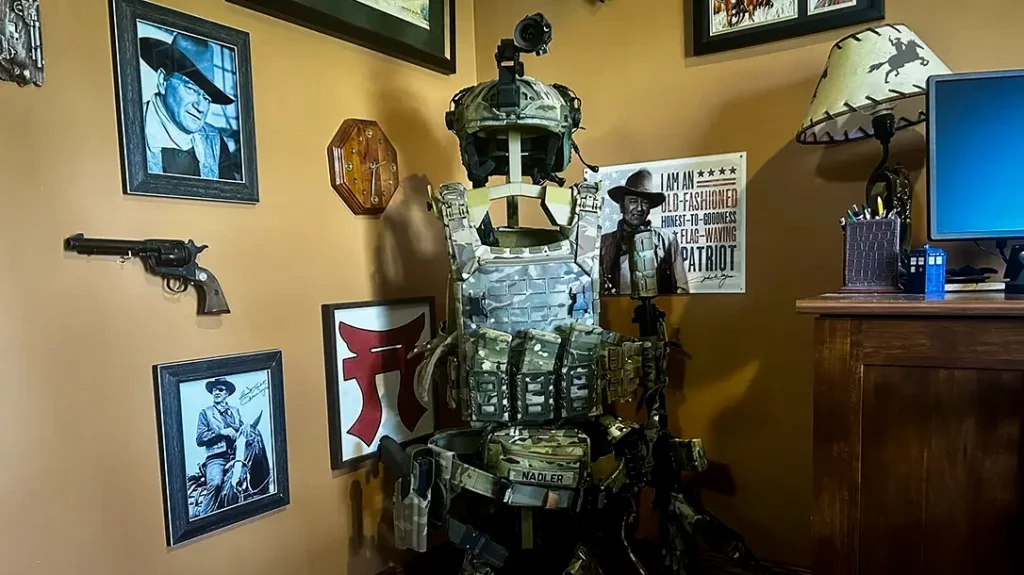
On one end is having no skills or tools to defend oneself. On the other is wearing full level IV plates, ballistic helmet, night vision, rifle, and over 100 rounds of ammunition with the skills needed for just about any situation.
Advertisement — Continue Reading Below
Considering this continuum, you are prepared for most situations if you carry a concealed handgun with 12 rounds of ammunition. However, you are ready for more situations if you have a handgun with 17 rounds and two additional magazines of 34 more rounds. Additionally, if you are wearing armor, you are more prepared than if you don’t.
The real question is preparation, weight, and discomfort balanced against risk. We all, consciously or unconsciously, make these preparedness choices every day. Personally, I only wear body armor when teaching advanced firearms classes, such as home defense. I would also consider wearing armor if going into a higher-risk situation. However, that means I have failed at avoiding such situations in the first place.
Traditional Soft Armored Vest
For the purposes of this review, I will be looking at SafeGuard Clothing. They provide traditional vests offering solid torso protection using large soft Level II armor. They also make a version in IIIA, but it adds stiffness and weight.
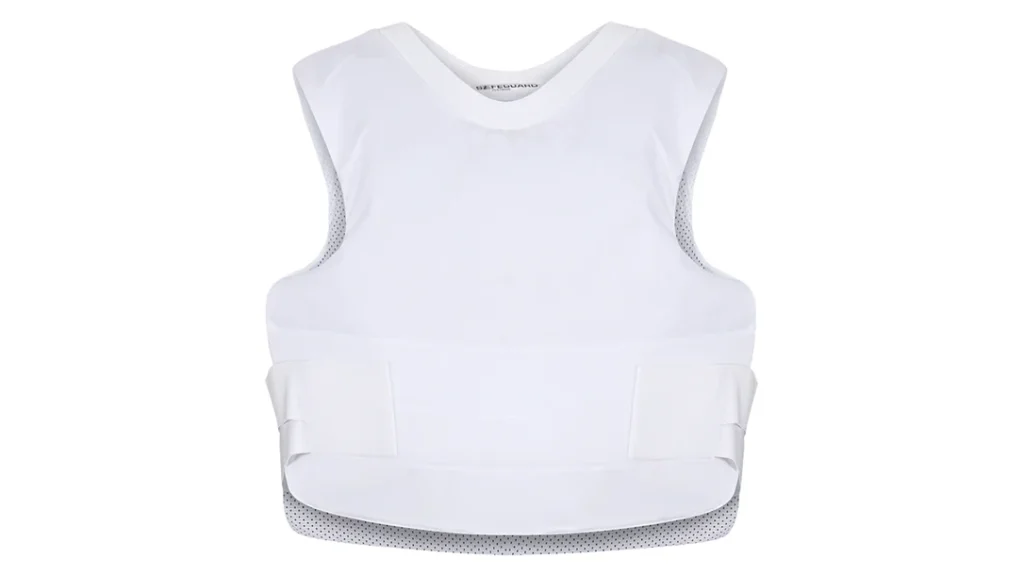
My vest (an XL) weighs approximately 5 pounds. I find it most comfortable to wear this over an undershirt and then covered with an overshirt and a jacket. I generally find it works best with a slightly oversized outer shirt and jacket, and offers the most area protected. However, it is hard to conceal unless you are dressing towards that goal.
Concealed Armored Jacket
I am specifically looking at a jacket designed by BodyGuard. This has a more traditional vest built into a jacket. The advantages include easier on and off as well as built-in concealed firearms compartments.
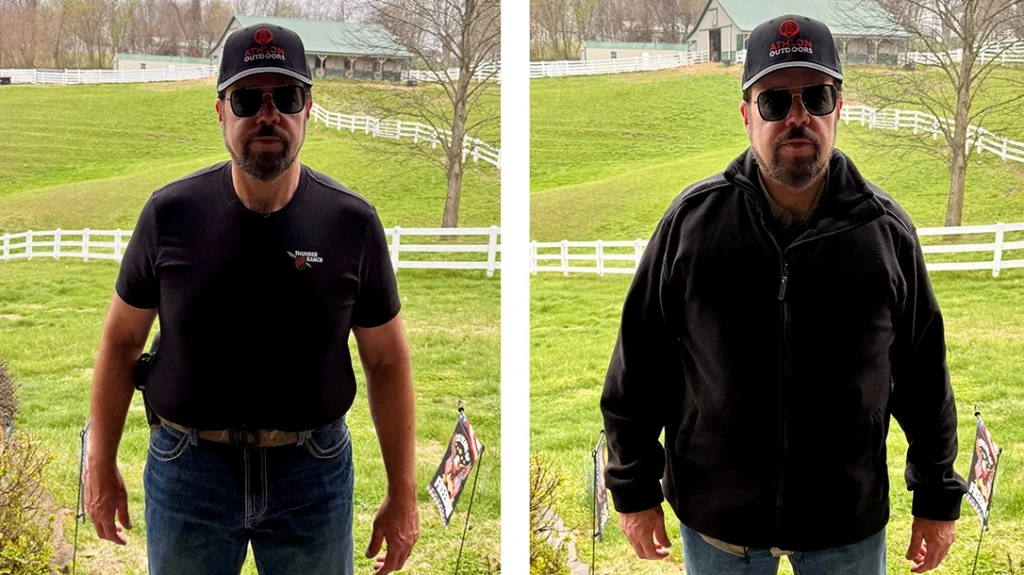
The downside is that full front protection requires the jacket to be worn fully closed. Mine (an XL) weighs about 6 pounds and provides Level IIA protection. More recent versions of these products are offering level IIIA protection. There is less thought (planning your daily dress around concealed armor) in throwing on a jacket compared to a traditional vest.
However, like a vest, it is somewhat dependent on the weather. In either case, if wearing layers of clothing and/or a jacket is inappropriate to the weather, these options are more likely to attract notice.
Fully Concealed Armored Undershirt
Premier Body Armor Everyday Armored T-Shirt offers an option for almost all clothing choices. Their product is a tight-fitting under shirt with front, back, and potentially side panels offering level IIIA protection. This still requires the decision to dress to include armor (unlike the jackets). However, it can be concealed in most temperatures and clothing styles.
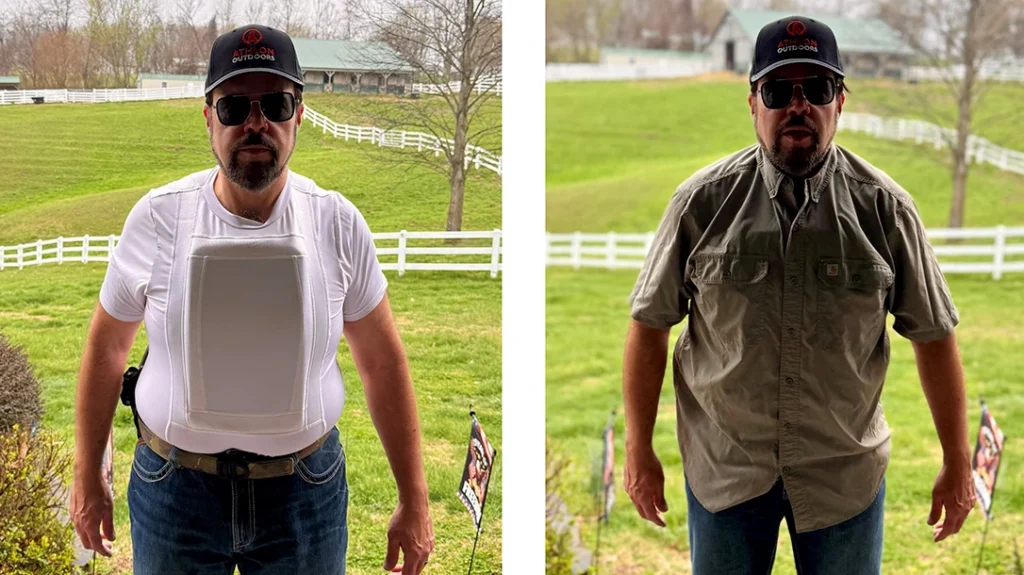
I have taught multiple classes while wearing this armor, with only a loose-fitting polo-style shirt over it. So far, none of my various students have noticed (when asked) that I am wearing armor.
Though the plates themselves offer more protection (level IIIA) compared to other options, this set was bought relatively recently. Both vests and jackets are now commonly IIIA as well. The overall weight is lower, at approximately 3 pounds (XL with side plates), but it provides less torso coverage than jackets or vests.
Is EDC Concealable Body Armor for You?
There are many options available, including companies not listed here for civilian body armor. They range in price from budget options to more premium prices. Many options allow for fully concealing body armor, but each option has advantages and disadvantages.
Like firearms, the more concealable armor in any type of clothing is generally lighter and offers less coverage. The more you are concerned with coverage and the level of protection, the harder it will be to conceal.
Consider your own personal defense plans, perceived risks, and how much you want to be more or less prepared. The biggest advantage of having body armor is that, when everything goes wrong and you are forced to defend yourself, you are somewhat protected from incoming rounds.

