

Taurus released a PCC way back in 2014, known as the CT9/40. It’s been widely forgotten about. The Taurus RPC won’t suffer that same fate. Taurus could have easily released a blowback PCC and called it a day, but they didn’t do that. They went all out, ditching straight blowback for a roller delayed design.
The Roller Delayed Taurus RPC
Roller delayed blowback became popular with the HK MP5 series of submachine guns. It helped the MP5 conquer the world, but until recently, there haven’t been many roller-delayed subguns. They pop up every now and then, but HK ditched the system with the UMP. Only recently have more companies begun to develop their roller-delayed subguns.
Advertisement — Continue Reading Below
Why Roller Delayed?
As the name implies, roller delay uses a set of rollers built into the bolt to delay the opening of the breech until the round leaves the barrel. It’s an efficient and effective system that removes some of the sting associated with straight blowback designs. We no longer need to rely purely on bolt mass and recoil spring strength to keep the breech closed.
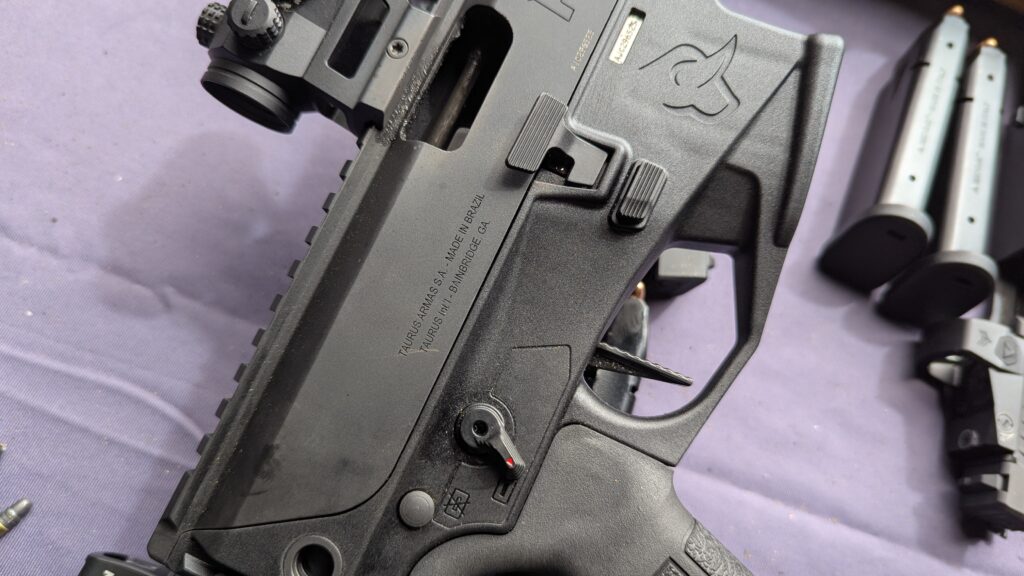
The benefits include reduced recoil and a much lighter weapon while retaining the reliability of blowback designs. It’s more complicated, which means more expensive, but the benefits are by far worth the additional cost for most shooters. In the last few years, Taurus has greatly improved its products, without drastically raising prices.
Advertisement — Continue Reading Below
The RPC is a roller-delayed gun that is priced at under a grand. In fact, I’m seeing a street price of less than $800. That makes a roller delayed gun a lot more approachable than something like an MP5 clone.
The RPC
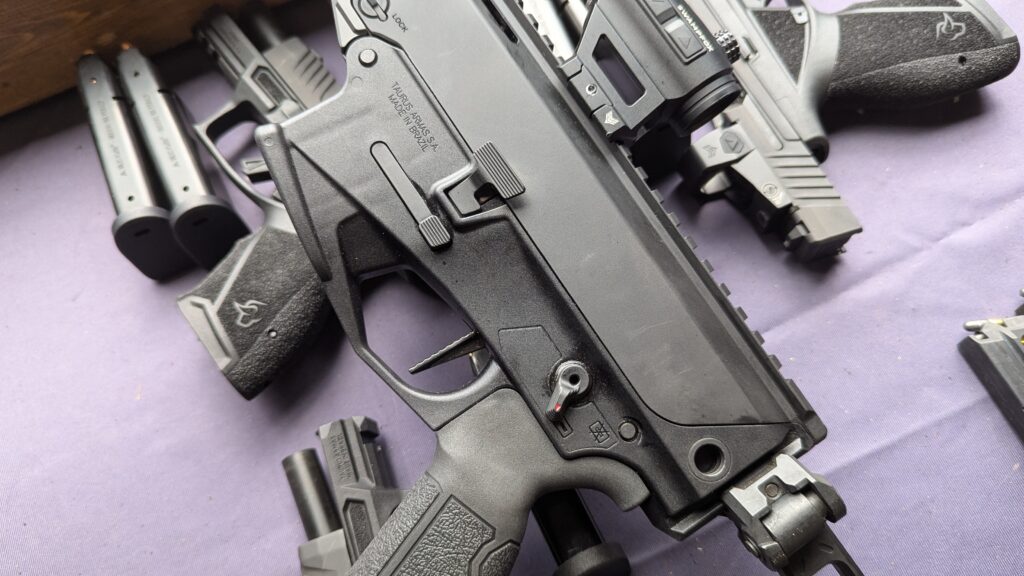
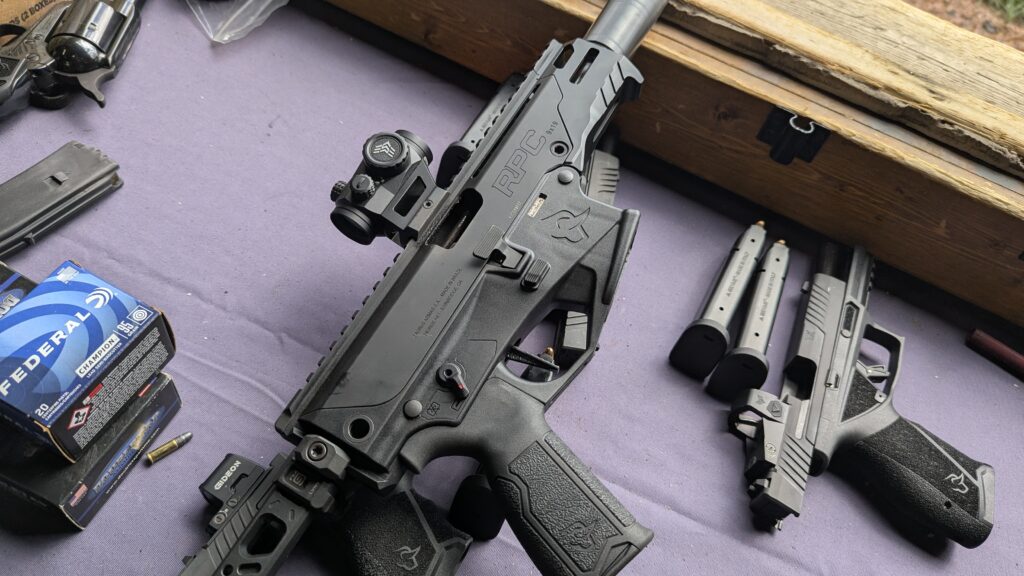
The Taurus RPC is a 9mm large-format pistol. It comes ready with a 1913 rail to add a brace, and there are models that include a brace. The gun falls into the K series of guns, making it quite compact overall. The RPC has a barrel length of 4.5 inches, an overall length of 12.2 inches without the brace and 21 inches with the brace. The gun weighs 4.9 pounds with the brace.
Advertisement — Continue Reading Below
The RPC does use a proprietary curved magazine. It’s a double-stack, double-feed magazine. Also known as a proper subgun magazine. Don’t get me wrong, I like Glock magazines too, but they are often a compromise in subguns. These magazines ensure an LRBHO, better ergonomics, and the smooth feeding that a slight curve provides the 9mm round.
The RPC is also feature-filled. The bolt release, the safety, and the magazine release are ambidextrous. The charging handle can be swapped to the left or right to accommodate all shooters. That same charging handle is non-reciprocating.
Advertisement — Continue Reading Below
The RPC comes with a full-length top rail for optics and an M-LOK handguard. The handguard and barrel can be easily removed. In the future, there are plans to produce different barrel and handguard lengths to allow for greater customization of the gun.
Finally, the last tick is that the gun uses a removable fire control group. This opens up an entirely different level of customization. How this will be used is unknown at this time, but it does open up the opportunity for a massive aftermarket.
Shooting the RPC
I had a chance to shoot about five magazines through the RPC, so this isn’t a full review, just a full preview. The RPC had a red dot installed, and we were shooting targets from 15 to 50 yards. I found the trigger to be impressive. It’s a flat-faced single-stage design. Triggers often get ignored on subguns, but this wasn’t one of those times.
Advertisement — Continue Reading Below
I sent a lot of 9mm into steel. I started up close, engaging three reduced-sized IPSC targets with two rounds each, and felt like I was flying. The gun’s light recoil and smooth shooting nature make it recover quickly. The dot doesn’t leave the window between shots fired, so it’s easy to track and settles right back to where I want it.
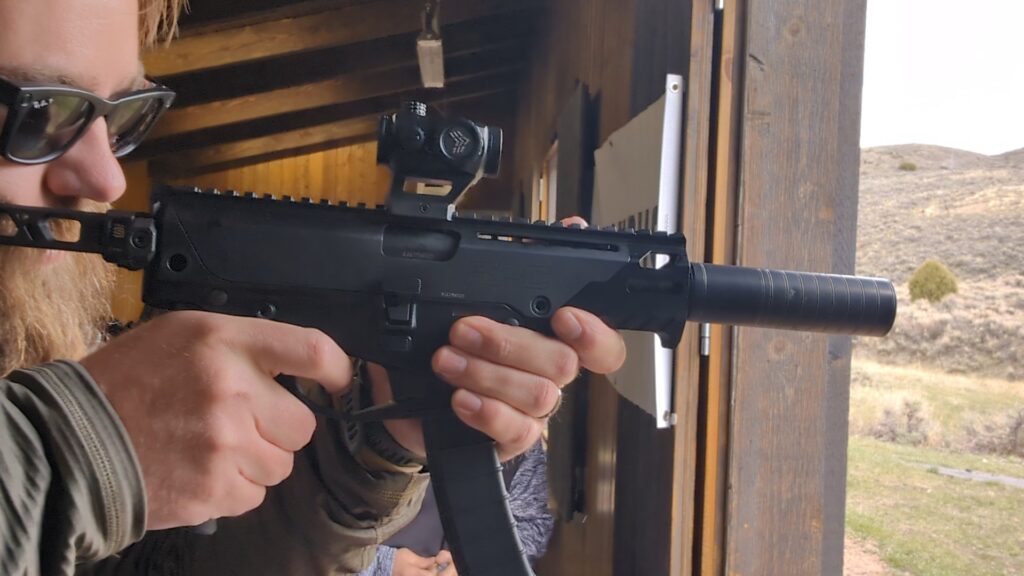
Out to distance, I had to slow it down, but could ring this fairly small red triangle at 50 yards consistently. Follow-up shots were still fast thanks to the low recoil. The dot just barely left the target with a center hold and seemed to settle right back where I wanted it.
Advertisement — Continue Reading Below
Reliability wasn’t an issue in the few magazines I fired, and the RPC got fired a ton at the event. It was one of the main draws of the meet. I didn’t hear of any issues with the RPC we had on the firing line.
The Future of the RPC
Out of the box, the promise seems to make the RPC a modular platform. It seems set to succeed, and if Taurus learned anything from the CT series, it’s to support your weapon after release. I hope to see Taurus take the RPC to the next level of modularity.
Advertisement — Continue Reading Below

