

The American Civil War has been described as the “first modern war,” as it featured combat tactics that began to move away from the massed battle lines of the Napoleonic era. It also saw increased use of trenches (a foreboding portent of the horrors to come), the introduction of armor-clad, steam-powered warships and even attempts at early military aviation in the guise of spotter balloons.
Almost as soon as hostilities began, military planners in both blue and gray sought to find new and more horrific ways of dispatching the enemy. This war saw the introduction of the Spencer repeating rifle and the Gatling gun. Other designs proved to be less ideal, and numerous “concept” weapons were introduced on both sides.
Winans Steam Gun: The Steam-Powered Oddity
One of the more unique conceptual firearms to come out of the conflict was the now largely forgotten Winans Steam Gun, a weapon that wouldn’t seem out of place in the works of Jules Verne. Part engine and part firearm, it was also arguably the largest land-based weapon to be fielded until World War I’s massive siege guns and tanks made their respective debut on the battlefield.
Advertisement — Continue Reading Below
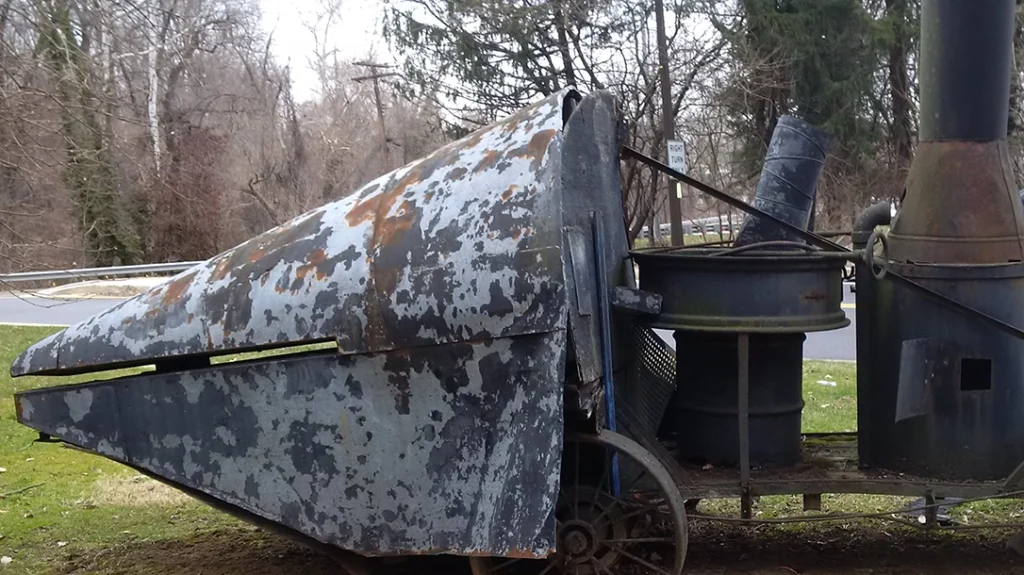
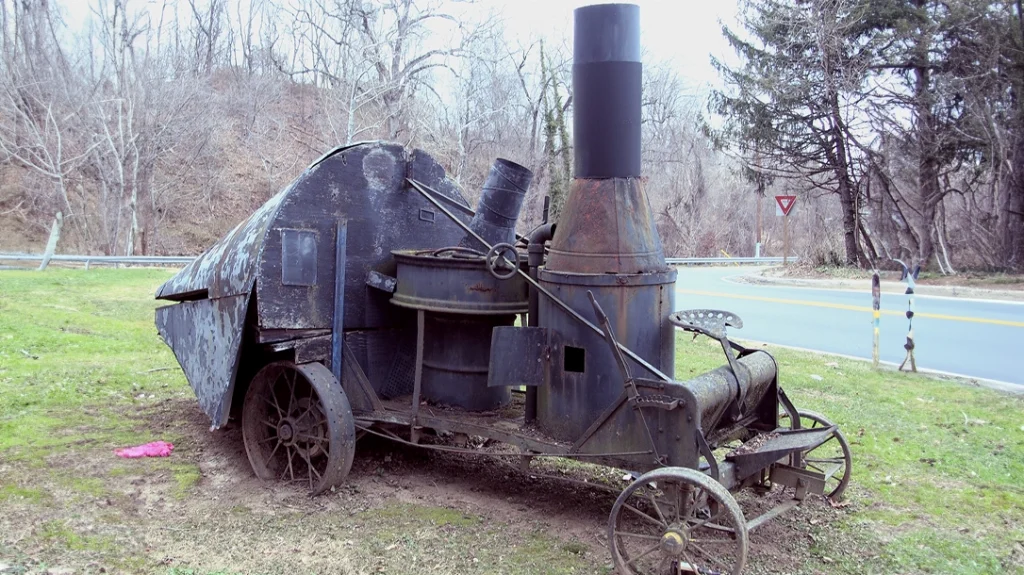
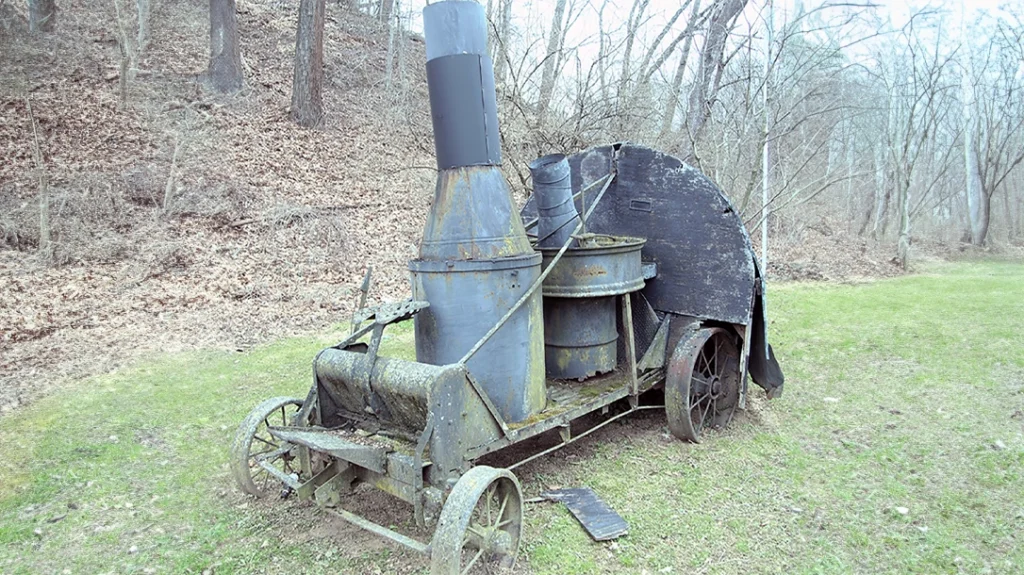
The Winans Steam Gun was actually the size of a steam-powered fire engine of the day, which gave it a menacing appearance that, to the casual observer, evokes an early tank with a curved shield to cover the inner workings of the machine.
Centrifugal Firepower
Instead of gunpowder, the weapon utilized centrifugal force—powered by its steam engine—to propel projectiles towards the enemy. In theory, it could fire up to 250 rounds per minute, far exceeding the typical muzzle-loading rifles or even early repeating rifles of the day.
Advertisement — Continue Reading Below
Early Attempts at Rapid Fire
For centuries, military planners and gun designers alike considered ways of increasing the rate of fire in small arms and cannons alike. Typically, the designs incorporated multiple barrels, as most weapons until the mid-19th century were muzzle-loading. This concept was seen in musket designs during the Napoleonic era but was tried again with the Billinghurst Requa Battery gun, which actually utilized 25 individual barrels placed side by side.
Metallic cartridges provided a big leap forward, allowing for the development of repeating rifles and even hand-cranked weapons like the Gatling gun. But gun makers were also considering other technologies born of the Industrial Revolution.
Advertisement — Continue Reading Below
McCarty’s Spinning Disc Concept
One such designer was Robert McCarty, who developed a system that used a rapidly rotating disc to create enough energy to launch projectiles in the 1850s. McCarty’s design could fire about a dozen musket balls per minute. It sparked enough interest to warrant a few tests, including one attended by Abraham Lincoln. However, the design was never adopted in part because hand cranking didn’t create enough projectile velocity.
Dahlgren’s Steam-Powered Experiment
McCarty’s design caught the eye of John A. Dahlgren, who attempted to adapt it into a steam-powered, 12-pound cannon capable of firing 15 rounds in about as many seconds. While impressive on paper, the weapon proved too inaccurate for adoption.
Failed Hand-Powered Designs
Other inventors, including William Joslin and Charles S. Dickinson, experimented with hand-powered centrifugal guns. Like earlier attempts, they failed to generate enough force to make the weapons viable in combat. Dickinson would later secure funding to build a steam-powered version, setting the stage for its brief moment in history.
Advertisement — Continue Reading Below
Winans Steam Gun Goes to War
Following the bombardment of Fort Sumter on April 12, 1861, Dickinson’s steam gun was pressed into service by local officials in Baltimore. It was taken to a foundry owned by Ross Winans, a prominent inventor and locomotive builder.
The weapon saw limited use during the Pratt Street Riots on April 19, 1861, as local forces attempted to resist Union troop movements through Baltimore. While its role was minimal, rumors quickly spread about its supposed power.
Advertisement — Continue Reading Below
A Name That Stuck
Though Winans had little to do with its design, the weapon became permanently associated with his name due to its presence in his facility and his reputation as a manufacturer of war materials.
Dickinson attempted to sell the weapon to Confederate forces, but it was captured by Union troops and later used to guard key infrastructure, including the Thomas Viaduct in Maryland.
Battlefield Game-Changer?
Throughout much of the war, the steam gun remained more curiosity than combat asset. However, in an era of tightly packed infantry formations, its theoretical rate of fire could have been devastating.
Advertisement — Continue Reading Below
Other rapid-fire weapons of the time, including the Gatling gun and Requa Battery, were also large and cumbersome. The steam gun’s size may not have been a decisive disadvantage, especially if mounted on railcars or ships.
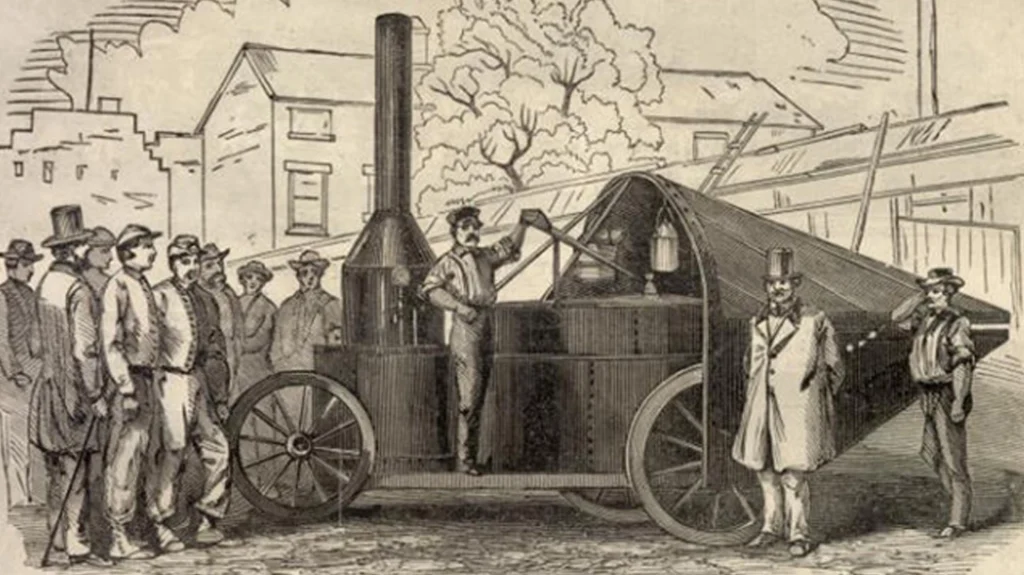
A Harper’s Weekly article from May 1, 1861, praised the weapon’s potential, suggesting it could outperform traditional artillery and devastate enemy formations both on land and at sea.
Lost to Time
After the war, the steam gun was eventually scrapped, and much of its design, particularly the drivetrain, has been lost. What remains are engravings and written accounts that offer only partial insight into its function.
In 1961, a full-scale replica was constructed for the Civil War centennial and is now displayed in Elkridge, Maryland, near the site where the original once stood guard.
Myth vs. Reality
In 2007, the concept was tested on MythBusters, which found that while the weapon could achieve a range of up to 700 yards, it lacked lethal force beyond point-blank distances.
A Fascinating “What If”
Today, the Winans Steam Gun stands as a reminder of a time when innovation often outpaced practicality. It remains one of the Civil War’s most intriguing experimental weapons, a bold idea that ultimately couldn’t deliver on its battlefield promise.
WHY OUR ARTICLES/REVIEWS DO NOT HAVE AFFILIATE LINKS
Affiliate links create a financial incentive for writers to promote certain products, which can lead to biased recommendations. This blurs the line between genuine advice and marketing, reducing trust in the content.

